1656–1661
Vaux-le-Vicomte
André Le Nôtre (garden), with Louis Le Vau (architect) and Charles Le Brun (interiors) · Maincy, near Melun, Seine-et-Marne, France
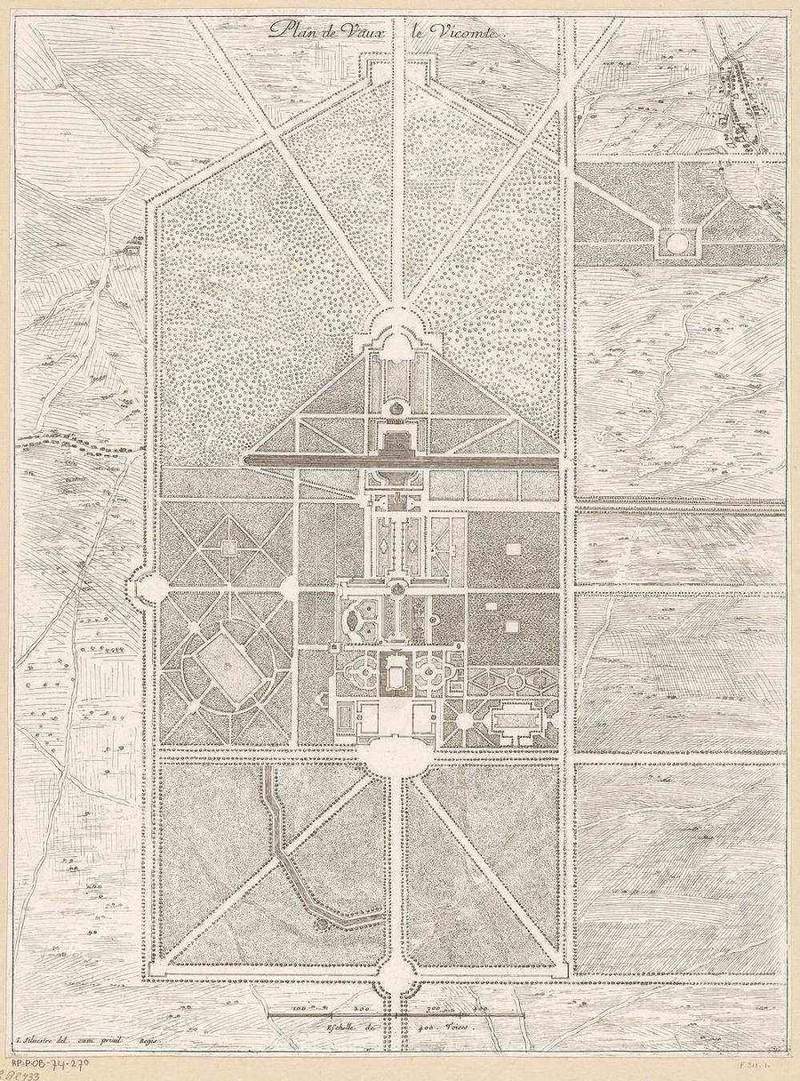
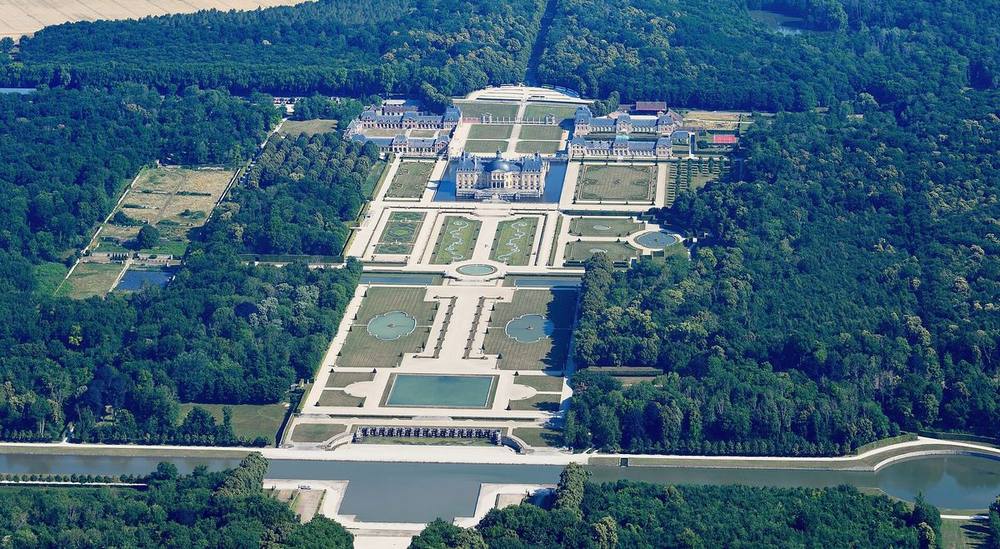
A château and garden made for Nicolas Fouquet, where Le Vau, Le Brun and Le Nôtre worked as one team. Le Nôtre's 33-hectare garden is organised on a perspective more than three kilometres long, and its water runs by gravity.
How it came about and changed
- 1641
Nicolas Fouquet acquired Vaux, according to the Universalis chronology already cited by Field Method. The estate's own site says Le Nôtre worked there 'as early as 1641' (see notes).49
- 1652/1653–1661
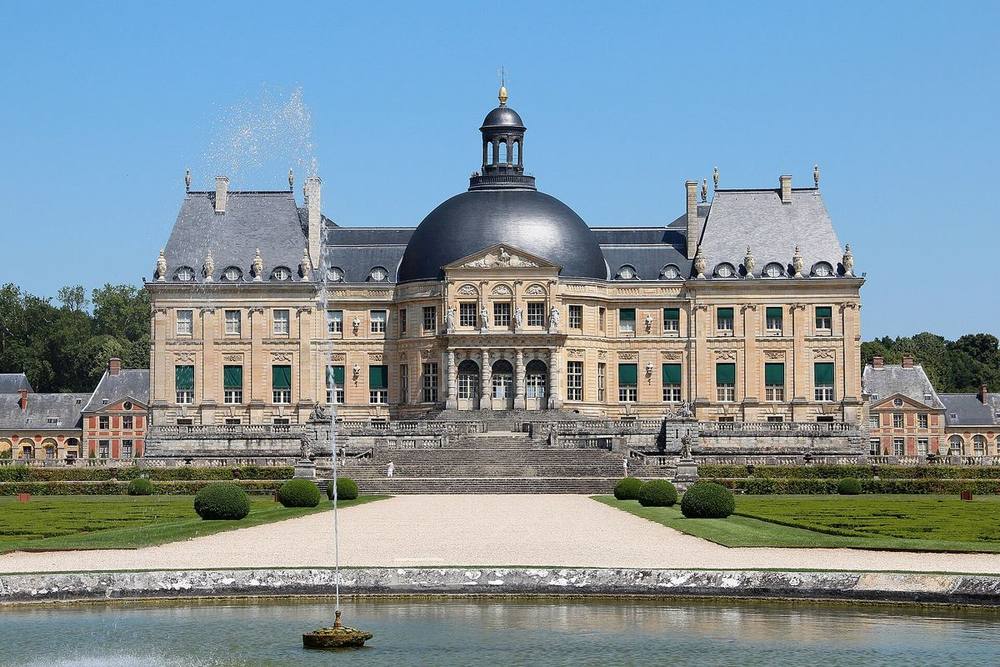
Fouquet, Louis XIV's Superintendent of Finances, began building the estate. The official site gives 1653 and Le Vau's commission; the Mérimée record gives 1652 as the construction campaign; Texas Tech's library record dates the château 1656–1661. The official site says the estate took nine years to complete.2685
- 1650s–1661
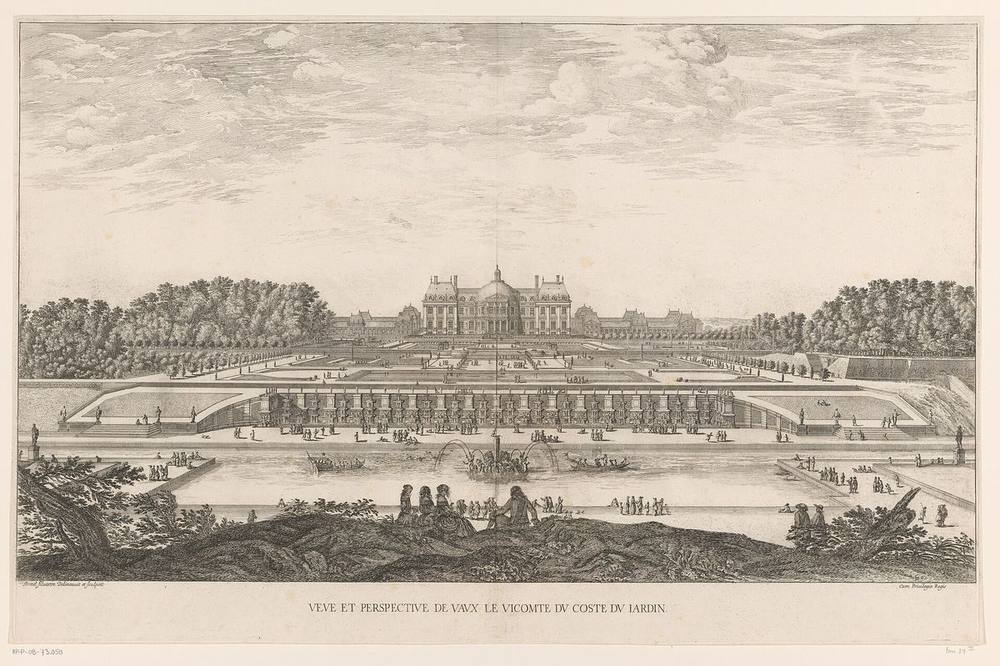
André Le Nôtre laid out the gardens with the architect Louis Le Vau, while Charles Le Brun decorated the interiors. The estate describes 33 hectares of garden on a perspective of more than three kilometres, with a water system that works by gravity. Fouquet commissioned sculpture from Michel Anguier, Philippe de Buyster, François Girardon, Mathieu Lespagnandel and Thibaut Poissant, among others.186
- 1661
On 17 August 1661 Fouquet held a fête for Louis XIV at Vaux, with a feast, a Molière play and fireworks; François Vatel was his maître d'hôtel. Fouquet was arrested at Nantes on 5 September 1661, and the king seized his assets and dispersed the château's contents.32
- 1673–1875
Fouquet's wife, Marie-Madeleine de Castille, recovered the estate in 1673. Marshal de Villars bought it in 1705, and his family sold it in 1764 to the Choiseul-Praslin family. The Praslins held it for over a century, including about 30 years of abandonment, until the estate was sold at auction in July 1875 with the gardens in ruins.2
- 1875–early 20th century
The industrialist Alfred Sommier bought the estate and restored it. The Mérimée record says he had the house renovated by Hippolyte Destailleur and the gardens re-laid by Achille Duchêne. The estate's garden page notes Duchêne's early-20th-century arabesque parterre patterns.261
- 1929–1994
The château, gardens and park were protected as monuments historiques in stages (see approvals).6
- 1967–1968
Patrice de Vogüé, a Sommier descendant, received the château in 1967 and opened the estate to the public in 1968.2
- 1983–present
The Friends of Vaux-le-Vicomte association was founded in 1983 and recognised as a public-interest body in 2004. Jean-Charles and Alexandre de Vogüé took over management in 2012, and Ascanio de Vogüé joined in 2015. The estate remains a private residence.2
- 2019
Dying box in the bowling-green parterres was replaced by a temporary artwork, Patrick Hourcade's 'The Ephemeral Ribbons': 390 tilted aluminium plates inspired by Duchêne's arabesques. The head gardener redesigns the flower parterre each year.1



Approvals and legal steps
- 1929 (22 November) and 1939 (4 April) Monument historique classification of the château, outbuildings, enclosures, gates, gardens with their terraces and statues, basins, water features and reservoirs, part of the surrounding park, and the north rond-point and Allée des Tilleuls.6
- 1965 (23 June) Classification of the whole park as a monument historique.6
- 1968 (11 March) Classification of park parcels in the commune of Moisenay.67
- 1994 (26 December) Classification of a section of departmental road RD 215, described as an old access route to the estate.6
Funding
- 1641–1661 The estate was a private project of Nicolas Fouquet, Superintendent of Finances, built as a sign of his power and taste. No construction costs are given in the sources consulted.23
- 1875 onward Alfred Sommier, a wealthy industrialist, bought the estate at auction and paid for its restoration. No amounts are given.26
- 1968–present The de Vogüé family runs the estate as a private property open to paying visitors; the official site also advertises event and location hire and asks for donations. No figures were found.2
People
- Nicolas Fouquet Client and owner; Superintendent of Finances to Louis XIV
- André Le Nôtre Garden designer
- Louis Le Vau Architect of the château
- Charles Le Brun Painter and decorator
- Michel Anguier, Philippe de Buyster, François Girardon, Mathieu Lespagnandel, Thibaut Poissant Sculptors commissioned by Fouquet
- François Vatel Fouquet's maître d'hôtel; organised the 1661 fête
- Israël Silvestre 17th-century draughtsman and etcher of views and plan of Vaux
- Marie-Madeleine de Castille Fouquet's wife; recovered the estate in 1673
- Marshal de Villars; Choiseul-Praslin family Later owners (1705; 1764–1875)
- Alfred Sommier Industrialist; bought the estate in 1875 and restored it
- Hippolyte Destailleur Architect; renovated the house for Sommier
- Achille Duchêne Landscape architect; re-laid the gardens for Sommier
- Patrice and Cristina de Vogüé Owners from 1967; opened the estate to the public in 1968; founded the Friends association in 1983
- Jean-Charles, Alexandre and Ascanio de Vogüé Current managers (from 2012 and 2015)
- Patrick Hourcade Artist of 'The Ephemeral Ribbons' (2019)
Sources for this page
- Château de Vaux-le-Vicomte (official site), The Garden
- Château de Vaux-le-Vicomte (official site), Three centuries of history
- Château de Vaux-le-Vicomte (official site), Famous figures
- Château de Vaux-le-Vicomte (official site), The estate
- Château de Vaux-le-Vicomte (official site), Vaux-le-Vicomte through the centuries
- Ministère de la Culture, POP / base Mérimée, Château de Vaux-le-Vicomte (également sur commune de Moisenay), notice PA00087074
- Ministère de la Culture, POP / base Mérimée, Château de Vaux-le-Vicomte, notice PA00087106 (Moisenay)
- Texas Tech University Libraries, Architecture Library exhibits, Château de Vaux le Vicomte
- Encyclopædia Universalis, Château de Vaux-le-Vicomte (repères chronologiques)
- Wikidata, Vaux-le-Vicomte (Q739976)
Researched on 2026-11-19 from the sources listed; a fact that could not be confirmed in a source was left out. Pictures are public domain or under an open licence, credited as their file page asks.
The question it brings · interpretation
If one long sightline had to organise your whole site, which decisions about water, planting and buildings would you settle together rather than in sequence?
Each question is Field Method’s interpretation, not a claim made by the source.
The date
Main building campaign 1656–1661 for Nicolas Fouquet: château under Le Vau 1656–1660, interiors under Le Brun 1658–1661, gardens in their final state from 1656 under Le Nôtre. 1661 is the completion year, used for ordering.