from 1661
Gardens of Versailles
André Le Nôtre for Louis XIV, with Jean-Baptiste Colbert, Charles Le Brun and later Jules Hardouin-Mansart · Versailles, France
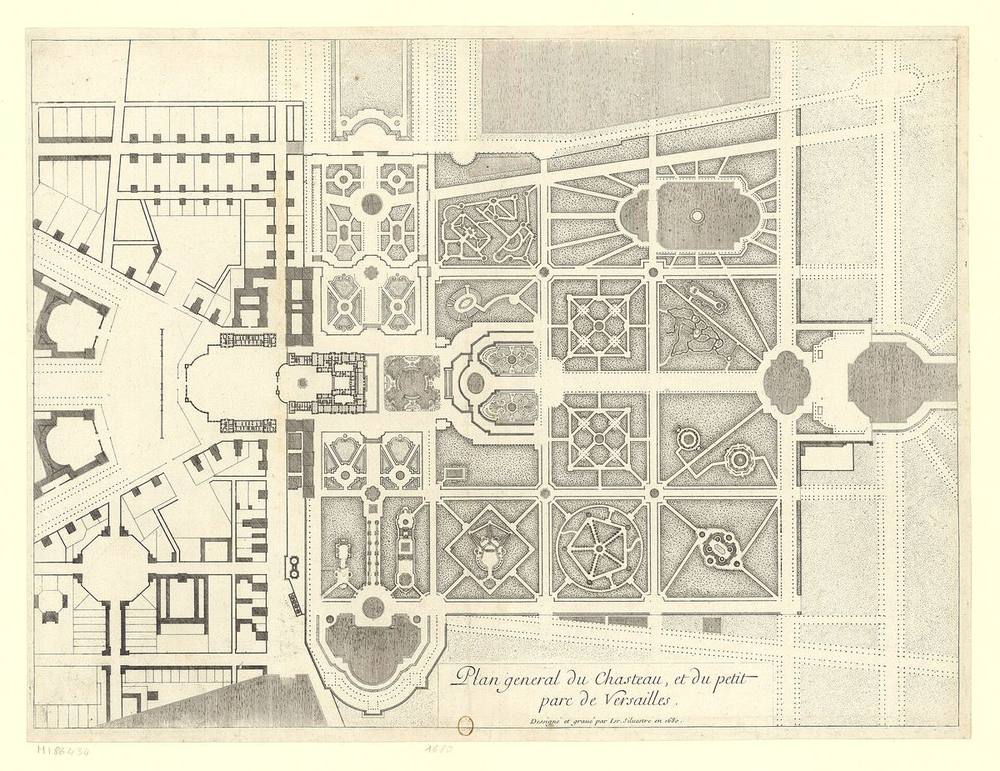
Le Nôtre reworked Louis XIII's garden into parterres beside the palace, groves, and an east-west axis extended as a long perspective. Meadow and marsh were levelled by thousands of men, at times whole regiments, over about forty years.
How it came about and changed
- 1620s–1661
Louis XIII built a small brick-and-stone château at Versailles in 1624 (per ICOMOS) with an initial garden that Le Nôtre later redesigned.122
- 1661–1668
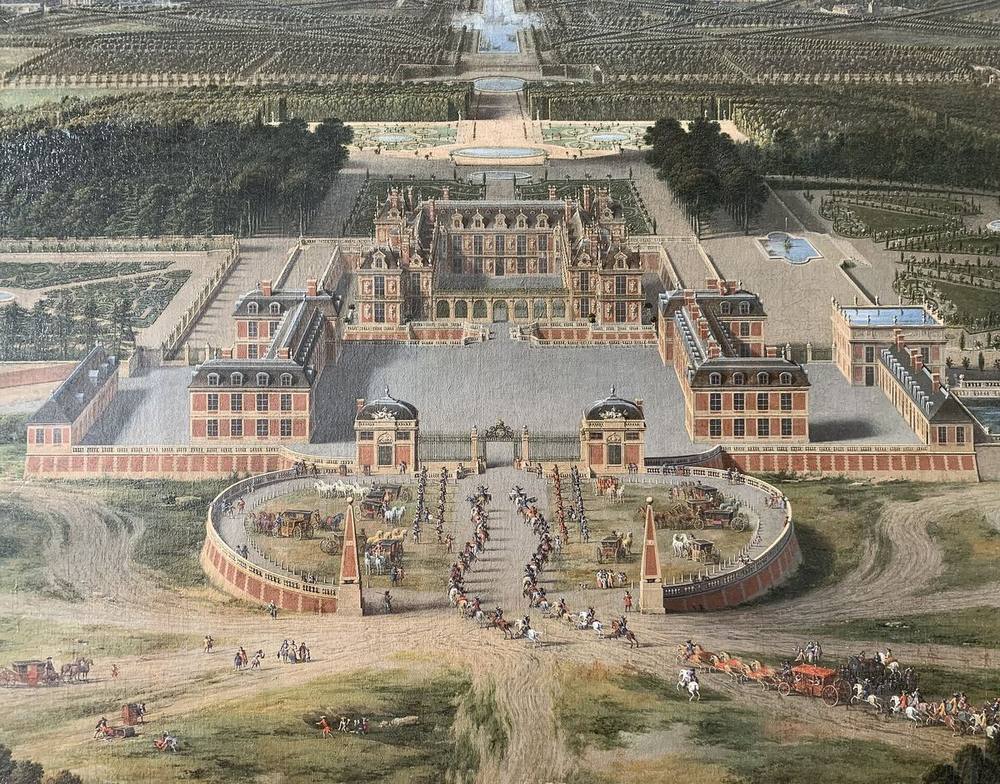
In 1661 Louis XIV entrusted André Le Nôtre with creating and renovating the gardens, alongside work on the palace; Le Nôtre created large north and south parterres near the palace and redesigned and extended the east-west axis. The Orangery was first built by Louis Le Vau in 1663.124
- 1664–1683
Jean-Baptiste Colbert, Superintendent of Buildings, managed the project; Charles Le Brun, First Painter from 1664, drew many statues and fountains; the King reviewed each project. The Four Seasons fountains date from 1672–1677.15
- 1668–1679
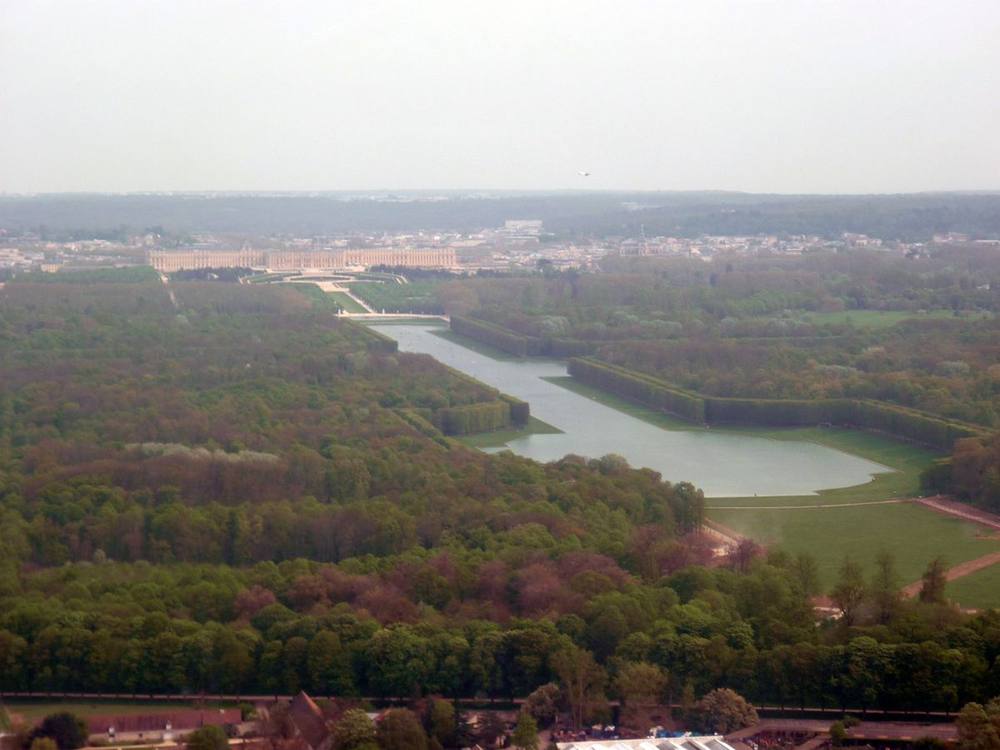
Le Nôtre's Grand Canal (1,670 m) was dug over 11 years; it carried the King's boats from 1669.3
- 1678–1688
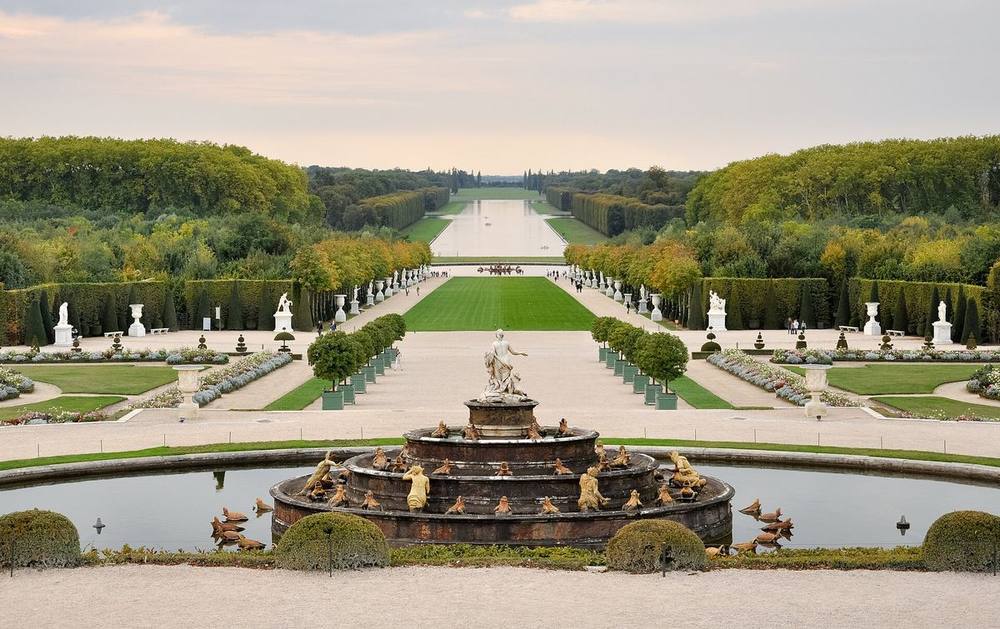
After 1678 Jules Hardouin-Mansart, First Architect, rebuilt and doubled the Orangery and simplified the park, modifying or opening up groves; the Lake of the Swiss Guard was dug 1679–1686, the Neptune Fountain built 1679–1682 under Le Nôtre, and in 1680 Le Nôtre laid out the Great Lawn (Tapis Vert). Versailles became the seat of government in 1682.16354
- 1689–1705
Louis XIV wrote seven versions of 'How to show the gardens of Versailles', an itinerary through the gardens.7
- 1774–1870
The gardens needed replanting roughly every century: Louis XVI replanted early in his reign and the next replanting took place under Napoleon III.1
- 1789–1799
After the court left in 1789 the Grand Canal was drained, trees were cut for firewood and by the end of the Revolution no fountain worked; a 1794 decree nevertheless kept Versailles from sale, to be maintained at the Republic's expense.8
- 1990–2000s
Storms in February 1990 and on 25–26 December 1999 (winds of 210 km/h) damaged over 10,000 of the park's 200,000 trees; a replanting campaign begun in 1991 was accelerated, about 50,000 trees were planted and the Palace gardens were replanted according to their state under Louis XIV.91
- present
The estate is State property assigned to the public establishment of the Château, Musée et Domaine national de Versailles; restorations continue with patronage, e.g. the Dragon Fountain, scheduled to be completed in 2027.105



Approvals and legal steps
- 1661 Royal commission: Louis XIV entrusted André Le Nôtre with the gardens; the works were managed through the Superintendent of the King's Buildings (Colbert, 1664–1683).1
- 1793–1794 On 8 July 1793 the Convention declared the palace a public establishment; a 1794 decree ruled that the buildings and gardens of Versailles would not be sold but preserved and maintained at the expense of the Republic.8
- 1862, 1905, 1906 Protected as a monument historique: included on the 1862 list, an arrêté of 29 July 1905, then classement by arrêté of 31 October 1906 covering the palace, petit parc, Trianons and grand parc.10
- 1964 Decree of 15 October 1964 classed a protection perimeter (a 5,000 m radius from the King's Bedchamber plus a zone along the axis of the Grand Canal).10
- 1979 Palace and Park of Versailles inscribed on the World Heritage List (ICOMOS recommendation of 8 March 1979, criteria i, ii and vi).1213
- 2024 Decree no. 2024-472 of 24 May 2024 added the Domaine du château de Versailles to the list of domaines nationaux and set its perimeter.11
Funding
- 1661–1715 A royal undertaking for Louis XIV, managed by Colbert as Superintendent of Buildings; thousands of workers, sometimes whole regiments, took part. No cost figures are given in the sources read.1
- 2000 After the 1999 storm an international public appeal launched in 2000 raised €2 million, in addition to €19 million from the State.9
- current Patronage funds specific restorations, e.g. the Dragon Fountain (patron: Jacquemus), and the public can sponsor topiaries of the South Parterre.51
People
- Louis XIV Client; reviewed every project
- André Le Nôtre (1613-1700) Garden designer from 1661
- Jean-Baptiste Colbert Superintendent of the King's Buildings 1664–1683; managed the project
- Charles Le Brun First Painter to the King from 1664; drew many statues and fountains
- Louis Le Vau Architect; first Orangery (1663) and palace enlargement after 1661
- Jules Hardouin-Mansart First Architect; rebuilt the Orangery, simplified the park, designed fountains (1687)
- Louis XIII Builder of the first château and garden
- Établissement public du château, du musée et du domaine national de Versailles Current manager (State property)
- Alain Baraton Head gardener of the Trianon estate and Grand Park (post-1999 replanting)
Sources for this page
- Château de Versailles, The Gardens
- Château de Versailles, André Le Nôtre
- Château de Versailles, The Park
- Château de Versailles, The Orangery
- Château de Versailles, Fountains
- Château de Versailles, Versailles, capital of the kingdom (1682)
- Château de Versailles, Louis XIV's guide to the gardens of Versailles
- Château de Versailles, Versailles after the French Revolution
- Château de Versailles, The storm at Versailles, 1999
- Ministère de la Culture, POP, Domaine national de Versailles (Mérimée PA00087673)
- Ministère de la Culture, POP, Domaine du château de Versailles (domaine national) (Mérimée DN00000020)
- UNESCO World Heritage Centre / ICOMOS, ICOMOS evaluation No. 83: Palace, Trianons and Park of Versailles (8 March 1979)
- UNESCO World Heritage Centre (archived copy; not re-opened, Wayback unavailable), Palace and Park of Versailles
- Wikidata, Gardens of Versailles (Q3162464)
Researched on 2026-11-19 from the sources listed; a fact that could not be confirmed in a source was left out. Pictures are public domain or under an open licence, credited as their file page asks.
The question it brings · interpretation
When a design depends on reshaping wet ground at this scale, what does the drawing leave out about the labour, water and upkeep needed to hold it in place?
Each question is Field Method’s interpretation, not a claim made by the source.
The date
Year Louis XIV entrusted the gardens to Le Nôtre, per the Palace of Versailles gardens page; the palace says the work then ran for about forty years.