from 1711
Stowe landscape gardens
Charles Bridgeman, William Kent and Lancelot 'Capability' Brown, for Viscount Cobham and his successor Earl Temple · Stowe, Buckinghamshire, England
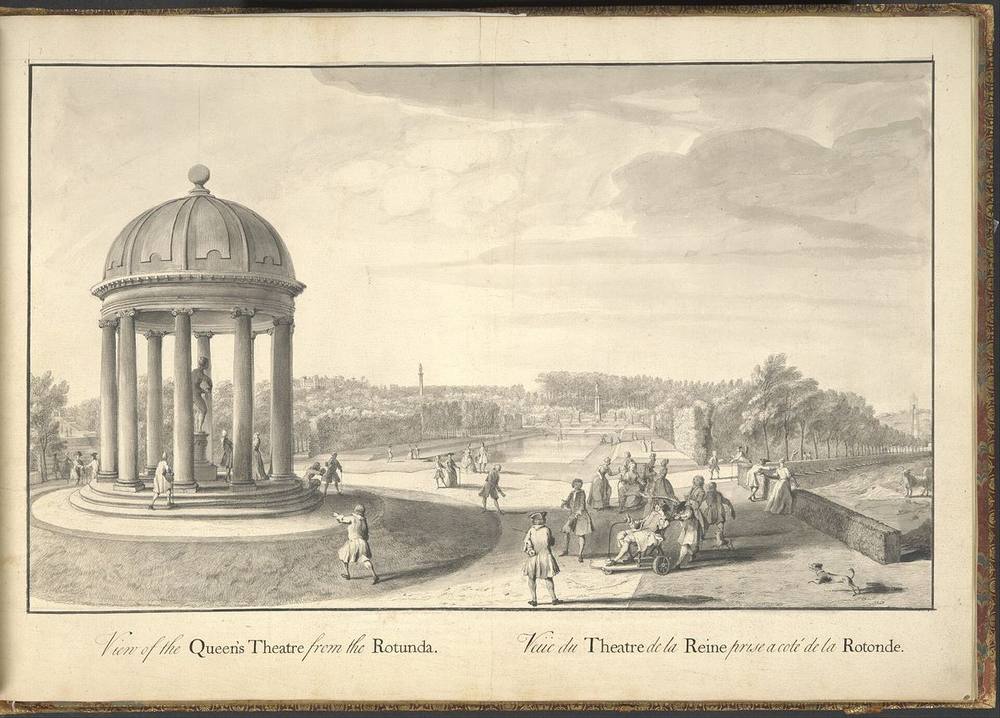
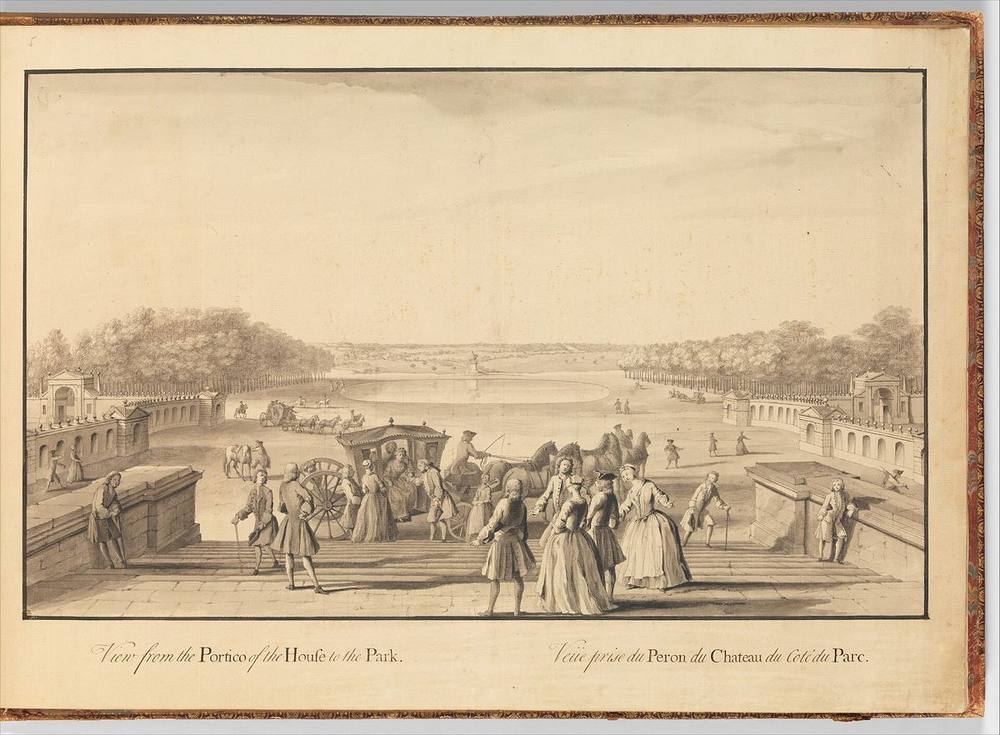
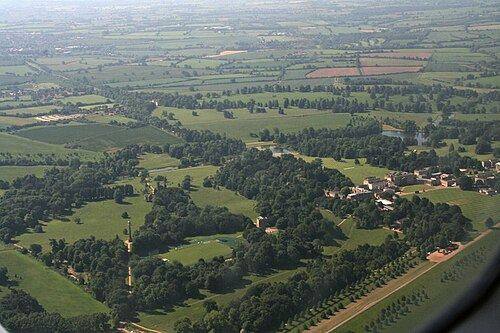
One estate reworked across decades: Bridgeman's semi-formal layout, Kent's Elysian Fields buildings in the 1730s, then Brown as head gardener from 1741 and the Grecian Valley. After 1749, straight edges of the lake and canals were removed.
How it came about and changed
- 1571–1697
The Temple family leased Stowe in 1571 and bought the manor in 1589. Sir Richard Temple, 3rd Baronet, built a new mansion (begun 1677 per the Register; 1660s per the National Trust) with a formal terraced garden, walled kitchen garden and Parlour Garden (c.1680).23
- 1711–1730s
Sir Richard Temple, later Viscount Cobham (inherited 1697), began enlarging the garden from 1711–1714. Charles Bridgeman laid out a semi-formal scheme (1713–1734 per the Register) with the Octagon and Eleven Acre lakes, avenues and an early ha-ha; by 1724 it covered 14 ha with more than ten buildings.132
- 1719–1748
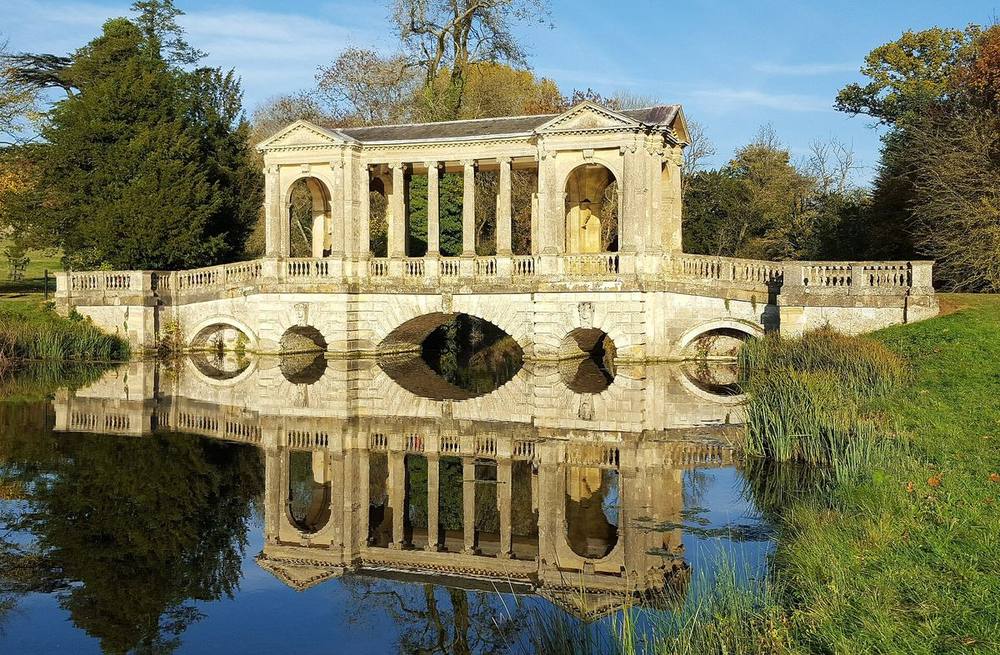
Architects Sir John Vanbrugh (1719–1726: Rotunda, Lake Pavilions) and James Gibbs (1726–29 and 1737–48: Boycott Pavilions, Palladian Bridge, Temple of Friendship, Queen's Temple) added garden buildings.13
- 1730–1748
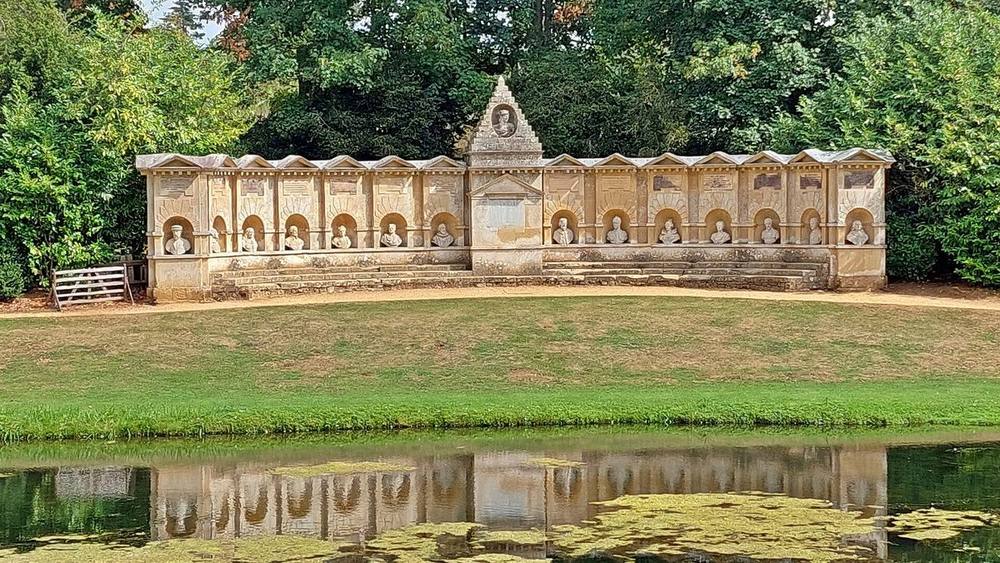
William Kent designed buildings and the Elysian Fields in a more naturalistic style (Temple of Venus 1731, Temple of British Worthies 1734–35, Temple of Ancient Virtue 1737); the iconography is read as a political statement of Cobham's opposition to Walpole.132
- 1741–1751
Lancelot 'Capability' Brown, head gardener and clerk of works from 1741, made the Grecian Valley (begun 1746, about 24,000 m3 of soil dug out per the National Trust) and naturalised the lake edges. Cobham died in 1749 leaving over 39 buildings in about 100 ha of garden; Brown left in 1750–51.123
- 1749–1813
Richard Grenville, Earl Temple, softened the landscape, relocated and classicised buildings and built the Corinthian Arch (1765) and the Grand Avenue; the 1st Marquess of Buckingham enlarged the estate.23
- 1820s–1921
The 1st Duke created a Japanese Garden in the 1820s; debts led to the 2nd Duke's bankruptcy and the 1848 sale of the house contents. The 3rd Duke reopened Stowe to the public in 1862; the estate was sold in 1921.23
- 1922–1989
Harry Shaw bought the house and gardens and in 1922 sold them to a committee that founded Stowe School (opened 1923); the school did some restoration but could not maintain the many garden buildings.243
- 1989–present
In 1989 Stowe School gave the gardens and much of the park to the National Trust, which has run a long-term restoration of buildings, statuary, planting and views; the New Inn visitor centre opened in March 2012.245




Approvals and legal steps
- 1589 Purchase of Stowe manor and estate by John Temple (land acquisition by the family that later built the garden).2
- Register entry (description May 1998, edited Sept 2000) Registered Park and Garden, Grade I, on the National Heritage List for England (list entry 1000198; register reference GD1105). Many garden buildings are separately listed (e.g. Boycott Pavilions, Corinthian Arch, Wolfe's Obelisk at Grade I).3
- 1989 Transfer of the gardens and park from Stowe School to the National Trust, supported by an NHMF grant awarded 25 May 1989.42
Funding
- 1711–1749 Created at the expense of Viscount Cobham as private landowner. The National Trust notes his 1715 marriage to Anne Halsey brought a dowry of £20,000, but does not state how the garden works were paid for.2
- 1989 NHMF grant of £4,884,160 (award date 25/05/1989) to the National Trust for endowment and capital repairs; NHMF's page also says an anonymous donor offered £1.8 million, NHMF offered £4.5 million and the Trust was to raise a further £1 million by appeal.4
- 1998 Heritage Lottery Fund 'Parks' programme award of £956,000 to the National Trust for Stowe Gardens (date awarded 10/09/1998).6
- 1989–2012 About £10 million spent on restoring the gardens over 20 years (HLF, 2012).5
- 2012 £9 million New Inn restoration and visitor centre: HLF £1.5m, private donation £1m, Stowe appeal and local fundraising, smaller grants (WREN) £500k and National Trust funds.5
People
- Sir Richard Temple, 1st Viscount Cobham (1669/1675–1749) Client and owner who commissioned the 18th-century garden
- Richard Grenville-Temple, 2nd Earl Temple (1711–1779) Successor who naturalised and classicised the garden
- Charles Bridgeman Garden designer, from 1711/1714 to the 1730s
- Sir John Vanbrugh Architect of garden buildings, 1719–1726
- James Gibbs Architect of garden buildings, 1726–29 and 1737–48
- William Kent Designer of the Elysian Fields and many temples, 1730–1748
- Lancelot 'Capability' Brown Head gardener and clerk of works, 1741–1750/51; Grecian Valley
- Sarah Bridgeman; Jacques Rigaud and Bernard Baron Publisher and artists/engravers of the 1739 views of Stowe
- Stowe School Owner 1922–1989
- National Trust Owner and manager of the gardens and most of the park since 1989
Sources for this page
- National Trust, The gardeners that made Stowe
- National Trust, History of Stowe
- Parks and Gardens UK (includes Historic England Register text), Stowe
- National Heritage Memorial Fund, Stowe Landscape Park (grant record)
- National Lottery Heritage Fund, Stowe's £9m makeover allows visitors to follow in the footsteps of 18th century tourists (10/03/2012)
- National Lottery Heritage Fund, Stowe Gardens - Buckingham (project record)
- Wikidata, Wikidata item Q76400187 (Stowe Park and Garden)
Researched on 2026-11-19 from the sources listed; a fact that could not be confirmed in a source was left out. Pictures are public domain or under an open licence, credited as their file page asks.
The question it brings · interpretation
When you inherit a strong earlier layout, which parts do you keep as structure and which do you soften, and can a visitor still read both hands on the ground?
Each question is Field Method’s interpretation, not a claim made by the source.
The date
1711 is the year the National Trust gives for Charles Bridgeman's start at Stowe, and the year the Parks and Gardens record says Cobham began reshaping the garden; that record gives 1714 for Bridgeman being called in. The garden was made over several decades.