2005
Al-Azhar Park, Cairo
Aga Khan Trust for Culture; Sites International (lead consultant and landscape architects) · Cairo, Egypt
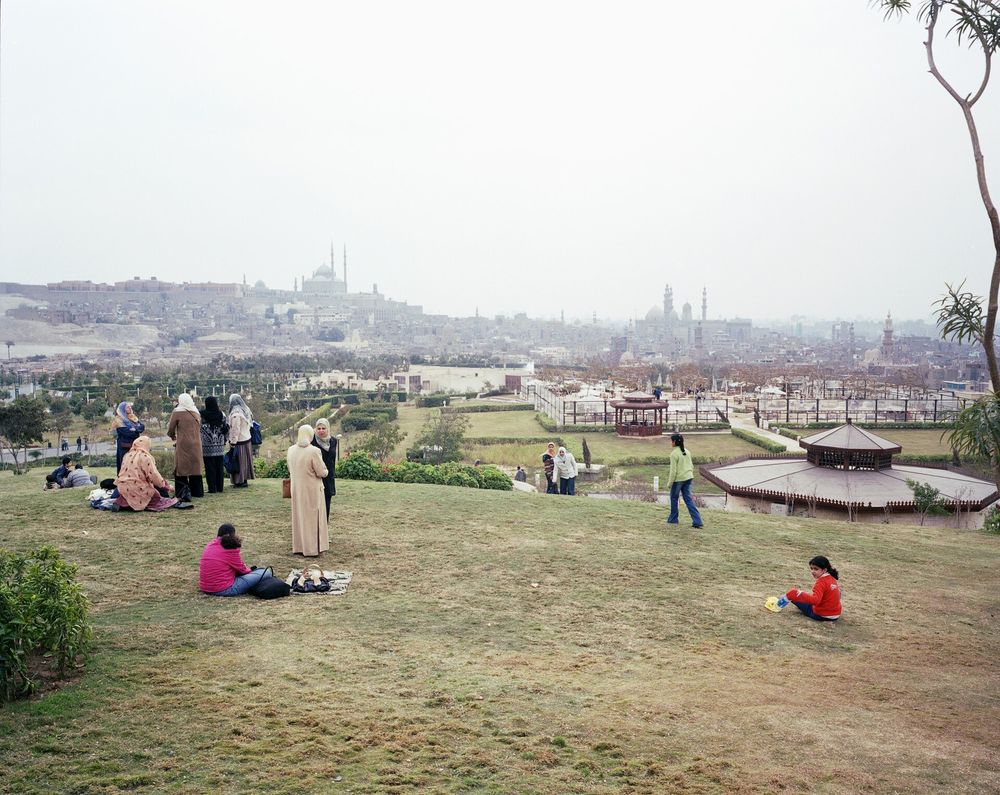
A 30-hectare public park made on a hill of fill and debris that had built up beside historic Cairo since the fifteenth century. Earthworks uncovered a buried twelfth-century Ayyubid city wall, since restored as the boundary with Darb al-Ahmar.
How it came about and changed
- 1984
At the Aga Khan Award for Architecture conference 'The Expanding Metropolis: Coping with the Urban Growth of Cairo' (11-15 November 1984), the Aga Khan announced his decision to donate a park to the citizens of Cairo; the 30-hectare al-Darassa site, a rubble dump since about the 15th century, was selected soon after.564
- c. 1985-1996
The General Organisation for Greater Cairo Water Supply reclaimed part of the site for three large drinking-water reservoirs (each 80 m in diameter), funded by USAID. A 1990 protocol between the Cairo Governorate and AKTC restarted the project, now integrating the reservoirs into the park design; the reservoir system was completed in the mid-1990s and AKTC took over the site from the Governorate in 1996.5
- 1990s-1998
A new master plan was developed with Sasaki Associates (Boston) while soil conditions and horticulture were investigated and a preliminary on-site nursery was run; a 20-hectare off-site nursery was created in early 1998. Sites International was appointed lead consultant for the final master plan, landscape architecture, selected architecture and site supervision; its principal dates the start of the park design to 1998.523
- 1997-2004
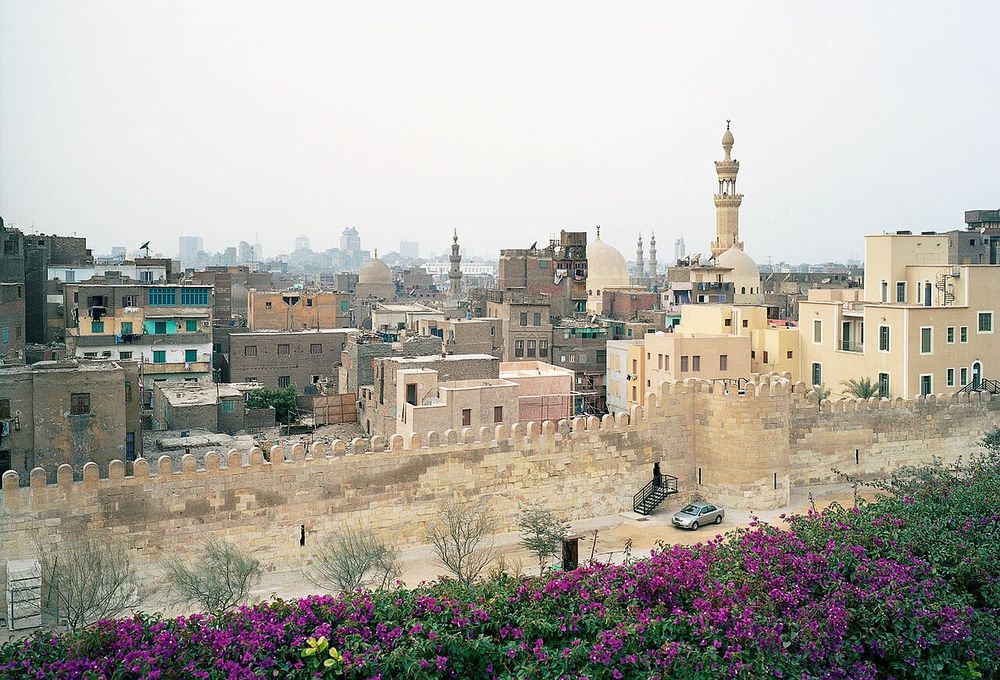
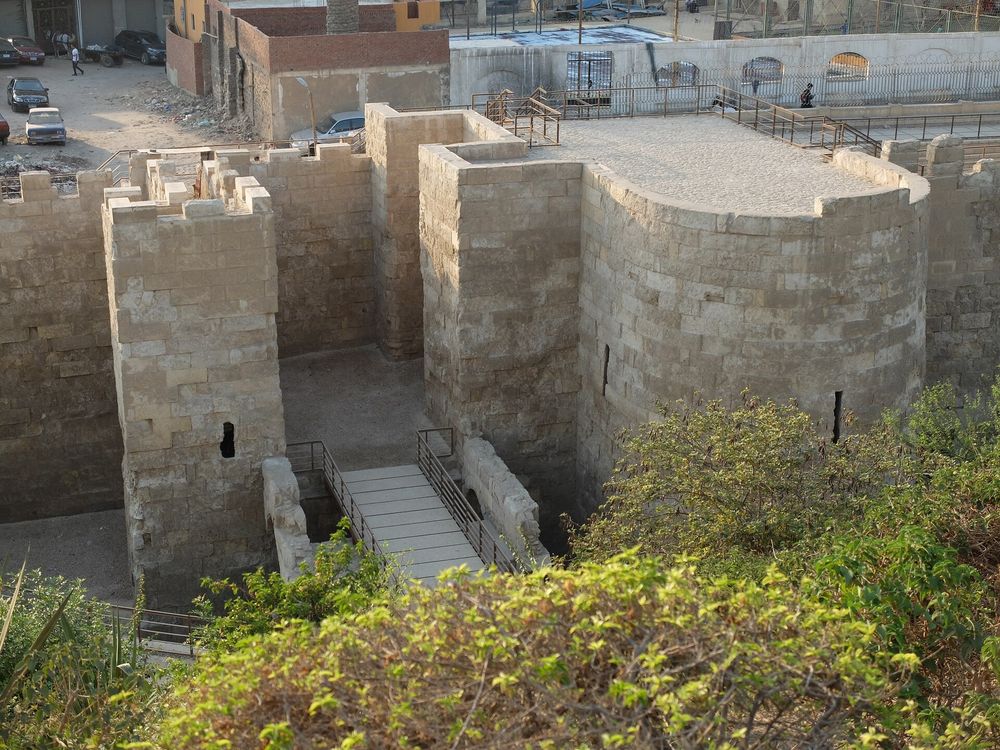
Earthworks and master grading began in 1997. Some 765,000 m3 of debris and soil were removed or reworked, a 0.5 m clay layer was placed beneath new topsoil, and over 655,000 plants had been planted by the opening. Regrading of the western slope uncovered the 12th-century Ayyubid wall, buried up to its battlements.521
- 2005
The 30-hectare park was formally inaugurated on 25 March 2005 by Suzanne Mubarak in the presence of the Aga Khan. The project had grown to include excavation and restoration of the Ayyubid wall, restoration of monuments in Darb al-Ahmar, and a social programme of housing rehabilitation, micro-credit, training and health care.1
- 2005-present
The park is operated by Aga Khan Cultural Services-Egypt, a local company created by AKTC; revenue from tickets, parking and restaurants pays for maintenance and supports rehabilitation in the adjacent district. AKDN reported over a million visitors in 2006 and close to two million a year by 2015.274
- 2007
The Cairo Governorate and AKTC signed a public-private partnership (17 July 2007) linking the park, a planned 'Urban Plaza' mixed-use project at its northern end, and AKTC's work in Darb al-Ahmar.7
- 2015
Restoration of 1.5 km of the Ayyubid wall (Bab al-Wazir to al-Azhar Street), now the boundary between the park and Darb al-Ahmar, and of the Tarabay al-Sherif complex at the park's southern entry, was inaugurated on 16 June 2015.4



Approvals and legal steps
- 1990 Protocol between the Cairo Governorate and the Aga Khan Trust for Culture setting a new start for the park on the al-Darassa site, with the water reservoirs integrated into the design.5
- 1996 AKTC took over the site from the Cairo Governorate.5
- 2007 Public-private partnership agreement signed by the Governor of Cairo and AKTC's General Manager linking the park, the planned Urban Plaza and Darb al-Ahmar work.7
- 2001 (as described) Conservation of the Ayyubid wall was set up in cooperation with the Supreme Council of Antiquities; the 2015 restoration was inaugurated by the Minister of Antiquities and the Governor of Cairo.54
Funding
- 1984 The Aga Khan announced he would finance the creation of the park (a donation to the citizens of Cairo).52
- 2005 AKDN describes the park as a US$ 30 million project; partners named by the Aga Khan include the Swiss Egyptian Development Fund, the Ford Foundation, the World Monuments Fund, the French Institute of Archaeology, the city of Stuttgart and the Social Development Fund (these supported the wider programme, notably Darb al-Ahmar and monuments).17
- 1990s The three drinking-water reservoirs on the site were built by the General Organisation for Greater Cairo Water Supply with funding from USAID.5
- 2015 Restoration of the Tarabay al-Sherif complex was supported by the World Monuments Fund Robert W. Wilson Challenge to Conserve Our Heritage.4
- ongoing Operating income from tickets, parking and restaurants funds maintenance and supports neighbourhood rehabilitation; Sites International states the park generates revenues exceeding operation and maintenance costs.23
People
- Aga Khan IV (His Highness the Aga Khan) Initiator and donor of the park
- Aga Khan Trust for Culture / Historic Cities Support Programme Client, developer and manager of the park and Darb al-Ahmar programme
- Sites International (principal Maher Stino) Lead consultant: final master plan, landscape architecture, selected architecture, site supervision and project management
- Sasaki Associates, Boston Consultant on the master plan / main design principles
- Cairo Governorate Landowner partner (1990 protocol; 2007 PPP)
- General Organisation for Greater Cairo Water Supply Built the three on-site drinking-water reservoirs
- Supreme Council of Antiquities Partner in Ayyubid wall conservation
- Aga Khan Cultural Services-Egypt Operator of the park
- Suzanne Mubarak Inaugurated the park, 25 March 2005
Sources for this page
- Aga Khan Development Network, Aga Khan and Madame Mubarak inaugurate Cairo's Al-Azhar Park
- The Cairo Review of Global Affairs, American University in Cairo, A Garden in Cairo (Maher Stino)
- Sites International, Al-Azhar Park
- Aga Khan Development Network, Inauguration of the Ayyubid Wall and Tarabay al-Sherif complex projects, Cairo (2015)
- Aga Khan Trust for Culture, The Azhar Park Project in Cairo and the Conservation and Revitalisation of Darb al-Ahmar (brochure, 2001)
- Aga Khan Development Network, The Azhar Park Project in Cairo and the Conservation and Revitalisation of Darb al-Ahmar (publication page)
- Aga Khan Development Network, Cairo governorate and Aga Khan Trust for Culture in public-private partnership for Historic Cairo revitalisation projects
- Wikidata, Al-Azhar Park (Q286446)
Researched on 2026-11-19 from the sources listed; a fact that could not be confirmed in a source was left out. Pictures are public domain or under an open licence, credited as their file page asks.
The question it brings · interpretation
When the only open land left in a dense district is a dump or a made-ground hill, what would you want to learn about the site's history before drawing anything?
Each question is Field Method’s interpretation, not a claim made by the source.
The date
Inauguration on 25 March 2005, per the Aga Khan Development Network release of that date. The landscape architect's later essay says the park opened in 2004; see review.
Checked against
- Aga Khan Development Network, Aga Khan and Madame Mubarak inaugurate Cairo's Al-Azhar Park
- Aga Khan Development Network, Inauguration of Cairo's Al-Azhar Park (event record, 25 March 2005)
- Aga Khan Development Network, Inauguration of the Ayyubid Wall and Tarabay al-Sherif complex projects, Cairo (2015)
- The Cairo Review of Global Affairs, American University in Cairo, A Garden in Cairo (Maher Stino)
- Sites International, Al-Azhar Park