2012
Queen Elizabeth Olympic Park (London 2012 parklands)
LDA Design with Hargreaves Associates; planting by Nigel Dunnett, James Hitchmough and Sarah Price; for the Olympic Delivery Authority · London, England
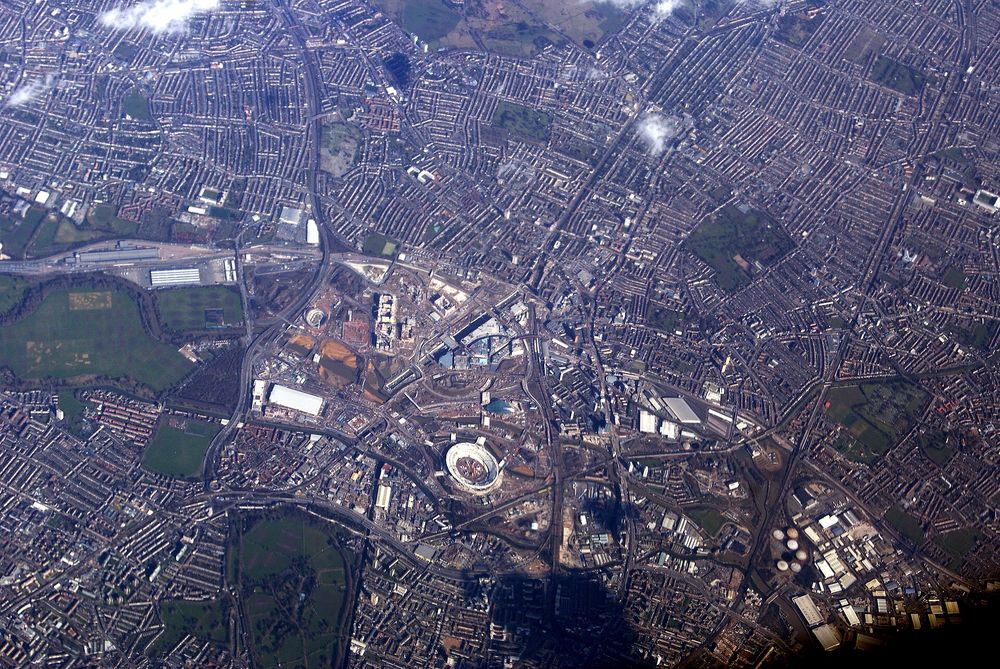
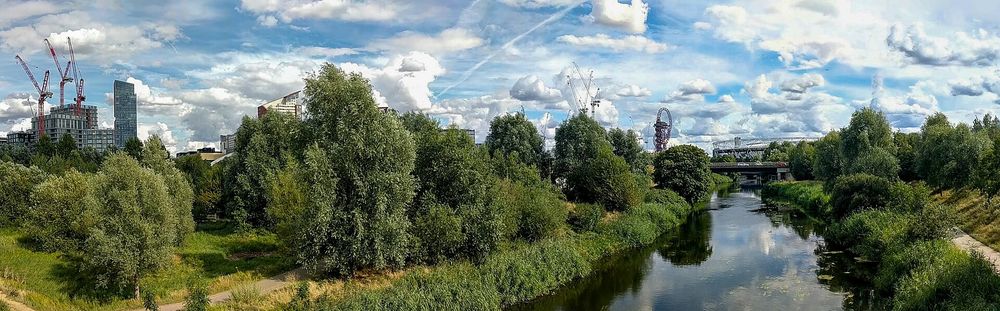
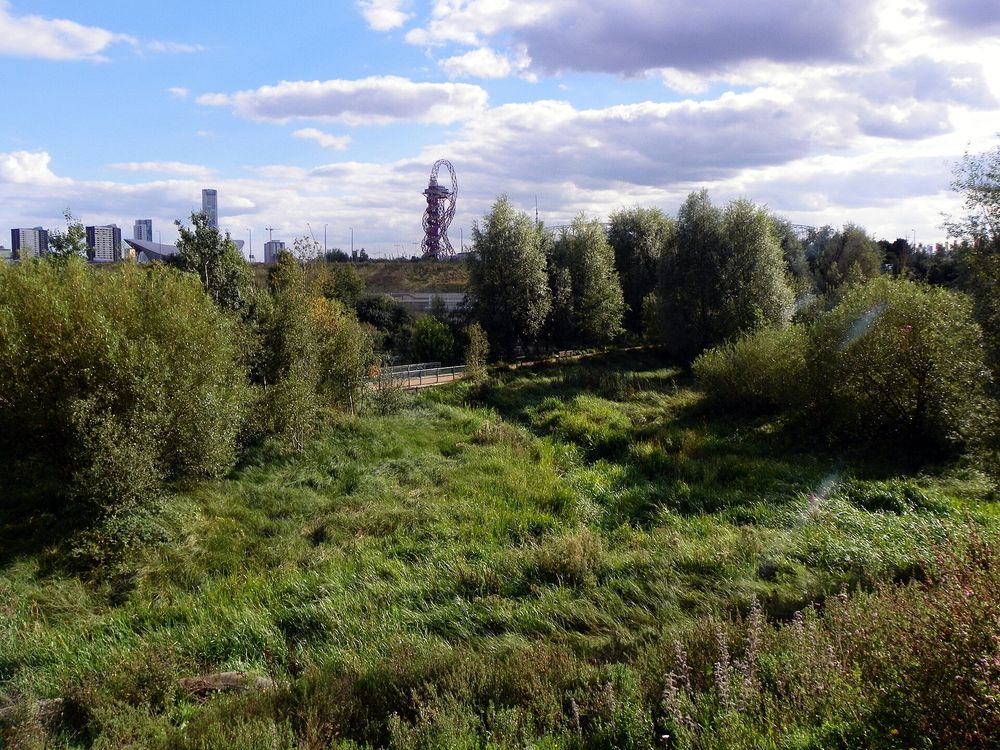
About 100 hectares of parkland on contaminated land in the Lower Lea Valley, built for the 2012 Games, with a river valley park of wetlands, meadows and woodland, parts designed to hold flood water, and gardens on manufactured soils.
How it came about and changed
- before 2006
The Lower Lea Valley site was, in the ODA's words, a cradle of industrial development in long-term decline, made up mostly of post-industrial land, neglected waterways and pylons carrying overhead power lines. The creation of a parkland setting for the Games venues, to be kept as legacy, was a key element of London's bid.21
- 2006–2007
The London Olympic Games and Paralympic Games Act 2006 established the Olympic Delivery Authority (ODA) with planning functions. In February 2007 the ODA submitted the Olympic, Paralympic and Legacy Transformation Planning Applications, a 10,000-page application for the 246-hectare site, split into a site preparation application (remediation, demolition, earthworks, river walls and flood defences, roads and bridges) and a facilities and legacy transformation application.52
- 2007–2012
The landscape was transformed from a contaminated post-industrial landscape into the Olympic Park. Government reported in 2010 that more than 300 hectares had been cleaned of industrial contamination (nearly 2 million tonnes of soil) and 5.5 km of waterways improved. All soils were manufactured for their location and planting. LDA Design and Hargreaves Associates designed the parklands; the 2012 Gardens' planting was developed by Sarah Price, Nigel Dunnett and James Hitchmough.138
- 2012
The parklands combined permanent landscape infrastructure with temporary herbaceous plantings designed to peak during the Games. The London Legacy Development Corporation was established in April 2012 to take over the park and lead the regeneration.167
- 2012–2016
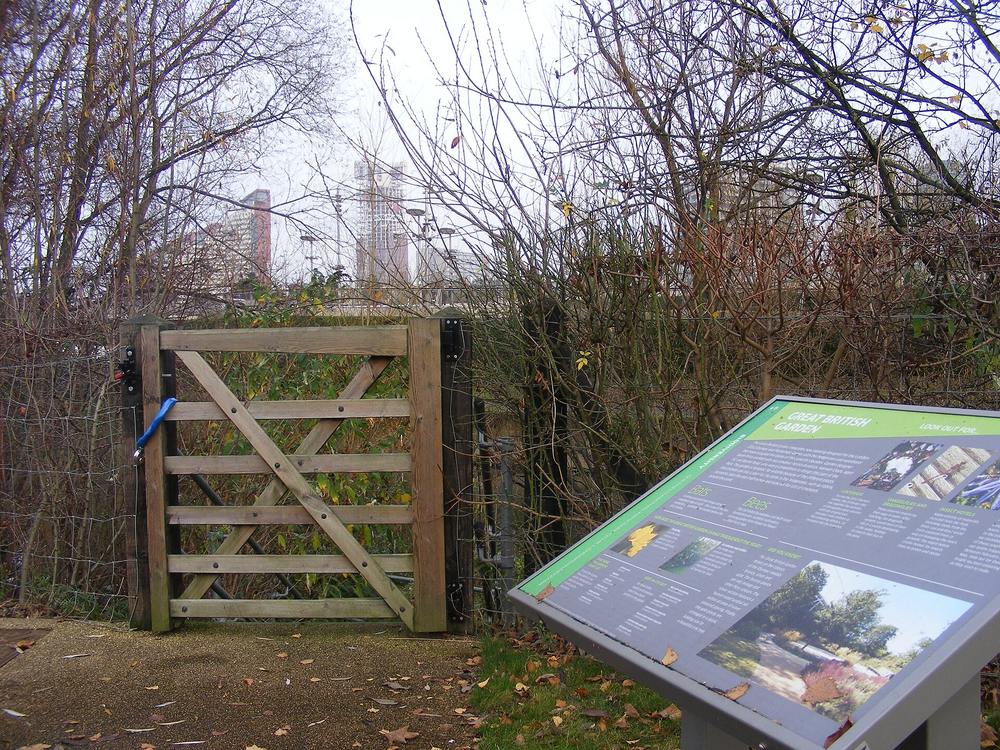
From 2012 to 2014 the park was transformed from Games-time park to public park, following what Hargreaves calls the Transformation Plan: in the South Park, Games-time hardstanding was replaced by a series of spaces linked by a herbaceous ribbon along the Tessa Jowell Boulevard, while the 2012 and Great British Gardens were kept. The park reopened in two phases in 2013 and 2014; Tumbling Bay play area and Timber Lodge were added to the North Park, and Canal Park opened in 2016.110
- 2016–present
Hargreaves Associates received the 2016 Rosa Barba International Landscape Prize for the park. LLDC manages about 100 ha of parklands within a 226-ha estate under a Park Management Plan (first issued 2014) and a Biodiversity Action Plan, with an estimated 13,000 trees, reduced chemical use, declining irrigation and parts of the North Park designed to absorb flood water.91



Approvals and legal steps
- 2006 London Olympic Games and Paralympic Games Act 2006 (c. 12): established the Olympic Delivery Authority and gave it functions including planning (section 5).5
- 2007 The ODA submitted the Olympic, Paralympic and Legacy Transformation Planning Applications (site preparation; facilities and their legacy transformation) in February 2007; the ODA's Planning Decisions Team handled its planning applications.2
- 2012 The London Legacy Development Corporation (Establishment) Order 2012 (SI 2012/310) designated a Mayoral development area and established the LLDC, which is also the local planning authority for its area.61
Funding
- 2007–2012 The park was built within the Games' Public Sector Funding Package, agreed in 2007 and set at £9,298 million; the NAO's December 2012 review gave an anticipated final cost of £8,921 million. The 2007 package included £2,175 million from the National Lottery, with an agreement for the Lottery to share in future receipts from the sale of Olympic Park land up to £675 million.4
- 2012–present Post-Games management and regeneration passed to the London Legacy Development Corporation, a Mayoral development corporation.61
People
- Olympic Delivery Authority (ODA) Client and planning authority for the Olympic Park, 2006–2012 (2006 Act; ODA Annual Report)
- LDA Design Landscape architects for the parklands with Hargreaves Associates; describes itself as lead consultant (LLDC 2012 Gardens page; LDA Design portfolio)
- Hargreaves Associates (Mary Margaret Jones accepted the Rosa Barba Prize per press reports) Landscape architects for the parklands and the post-Games Transformation Plan (Hargreaves)
- Nigel Dunnett, James Hitchmough, Sarah Price Planting design for the 2012 Gardens (LLDC)
- London Legacy Development Corporation (LLDC) Owner/manager of the park since 2012 and local planning authority (LLDC; SI 2012/310)
- Canal & River Trust Manages Carpenters Lock waterways with LLDC (Park Management Plan)
Sources for this page
- London Legacy Development Corporation (hosted by Green Flag Award), Queen Elizabeth Olympic Park: Park Management Plan, Executive Summary
- Olympic Delivery Authority (GOV.UK), Olympic Delivery Authority Annual Report and Accounts 2006–2007
- HM Government (GOV.UK), Plans for the legacy from the 2012 Olympic and Paralympic Games (December 2010)
- National Audit Office, The London 2012 Olympic Games and Paralympic Games: post-Games review (HC 794, 5 December 2012), summary
- legislation.gov.uk (The National Archives), London Olympic Games and Paralympic Games Act 2006
- legislation.gov.uk (The National Archives), The London Legacy Development Corporation (Establishment) Order 2012 (SI 2012/310)
- Queen Elizabeth Olympic Park (London Legacy Development Corporation), Our story
- Queen Elizabeth Olympic Park (London Legacy Development Corporation), 2012 Gardens
- Hargreaves Associates, Rosa Barba International Landscape Prize
- Hargreaves Associates, Queen Elizabeth Olympic Park (project page)
- LDA Design, Portfolio (Queen Elizabeth Olympic Park entry)
- Wikidata, Queen Elizabeth Olympic Park (Q525481)
Researched on 2026-11-19 from the sources listed; a fact that could not be confirmed in a source was left out. Pictures are public domain or under an open licence, credited as their file page asks.
The question it brings · interpretation
If a park has to perform for a few weeks of peak use and then for decades as a neighbourhood park, which parts of the landscape should be built as permanent infrastructure and which planned from the start to be taken out?
Each question is Field Method’s interpretation, not a claim made by the source.
The date
2012 marks the completion of the parklands for the London 2012 Olympic and Paralympic Games (LLDC Park Management Plan). The ODA submitted the Olympic Park planning applications in February 2007 (ODA Annual Report 2006–07); after the Games the park was transformed in 2012–2014 and reopened to the public in two phases in 2013 and 2014; Canal Park opened in 2016 (LLDC Park Management Plan).