1867
Parc des Buttes-Chaumont
Adolphe Alphand (engineer), with landscape gardeners Jean-Pierre Barillet-Deschamps and Édouard André and architect Gabriel Davioud, for the City of Paris under Napoleon III and Prefect Haussmann · Paris, France
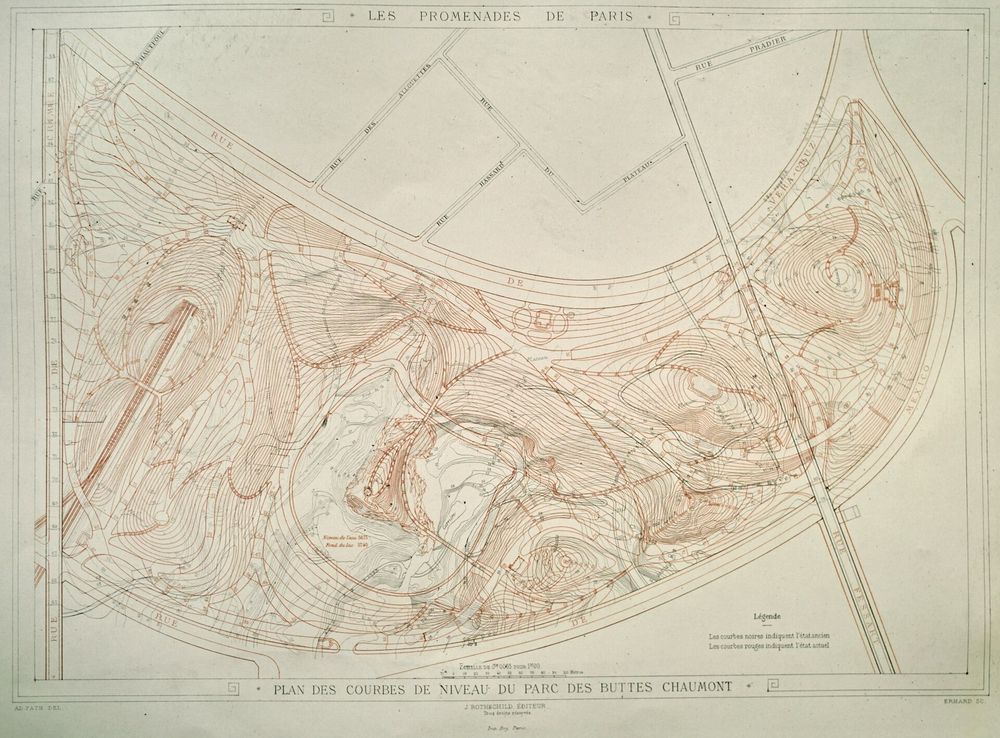
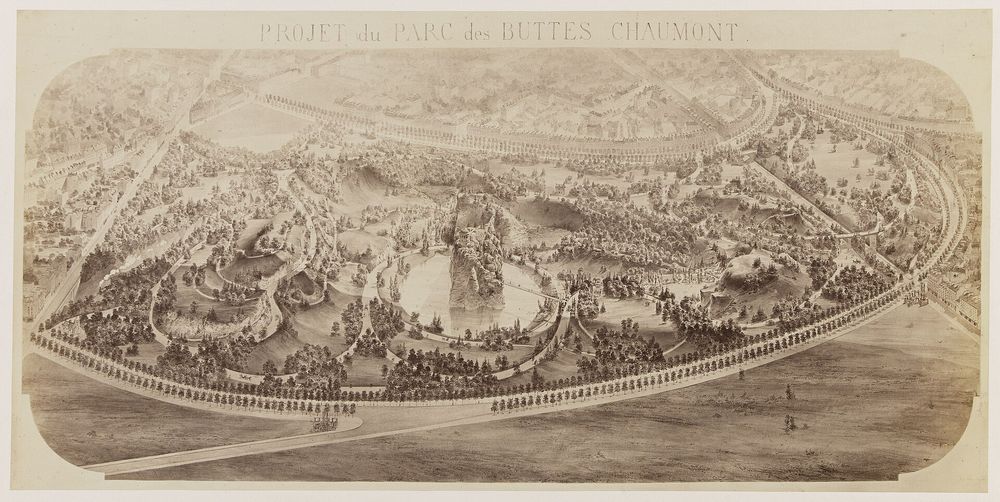
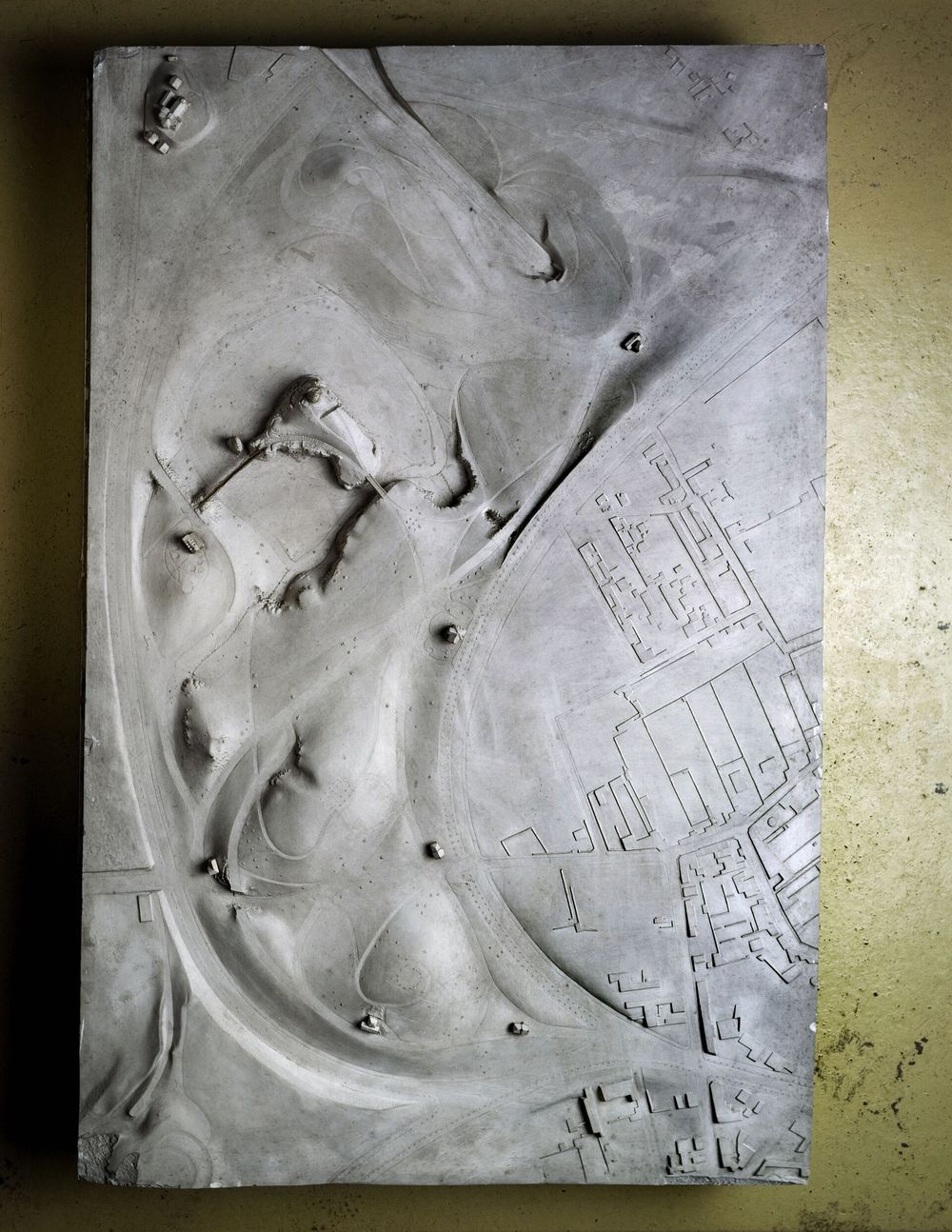
A 25-hectare park built from 1864 to 1867 on exhausted gypsum quarries in north-east Paris, where Alphand's team made cliffs, a grotto with a cascade and a lake island from earthworks and imitation rock. Its unstable ground still needs consolidation.
How it came about and changed
- c. 1790–1860
After the Revolution the Buttes-Chaumont hill was quarried for gypsum (plaster), employing up to 800 workers until the resource ran out around 1860; the site was also used for dumping and as a knackers' ground outside the city limits. It lay in the commune of Belleville, annexed to Paris in 1859.12
- 1862–1863
Napoleon III, wishing to give Paris parks inspired by London's, entrusted Prefect Haussmann with modernising the capital, including a network of green spaces (Buttes-Chaumont, Montsouris, Monceau). The land was bought in 1862 from the Société civile des carrières du centre (per the City's 2025 dossier; the park page says the State acquired it in 1863).21
- 1864–1867
Works led by engineer Adolphe Alphand with landscape gardeners Jean-Pierre Barillet-Deschamps and Édouard André and architect Gabriel Davioud consolidated and reshaped the quarries, brought in topsoil and built an artificial relief. The City cites some 1,000 workers, about 100 horses, 450 wagons on 39 km of rails, two steam engines and dynamite; the island cliffs imitate Étretat by facing gypsum with cement and millstone rockwork, and an artificial grotto holds a 32 m cascade. The park opened on 1 April 1867 for the Exposition universelle.21
- 1867–1911
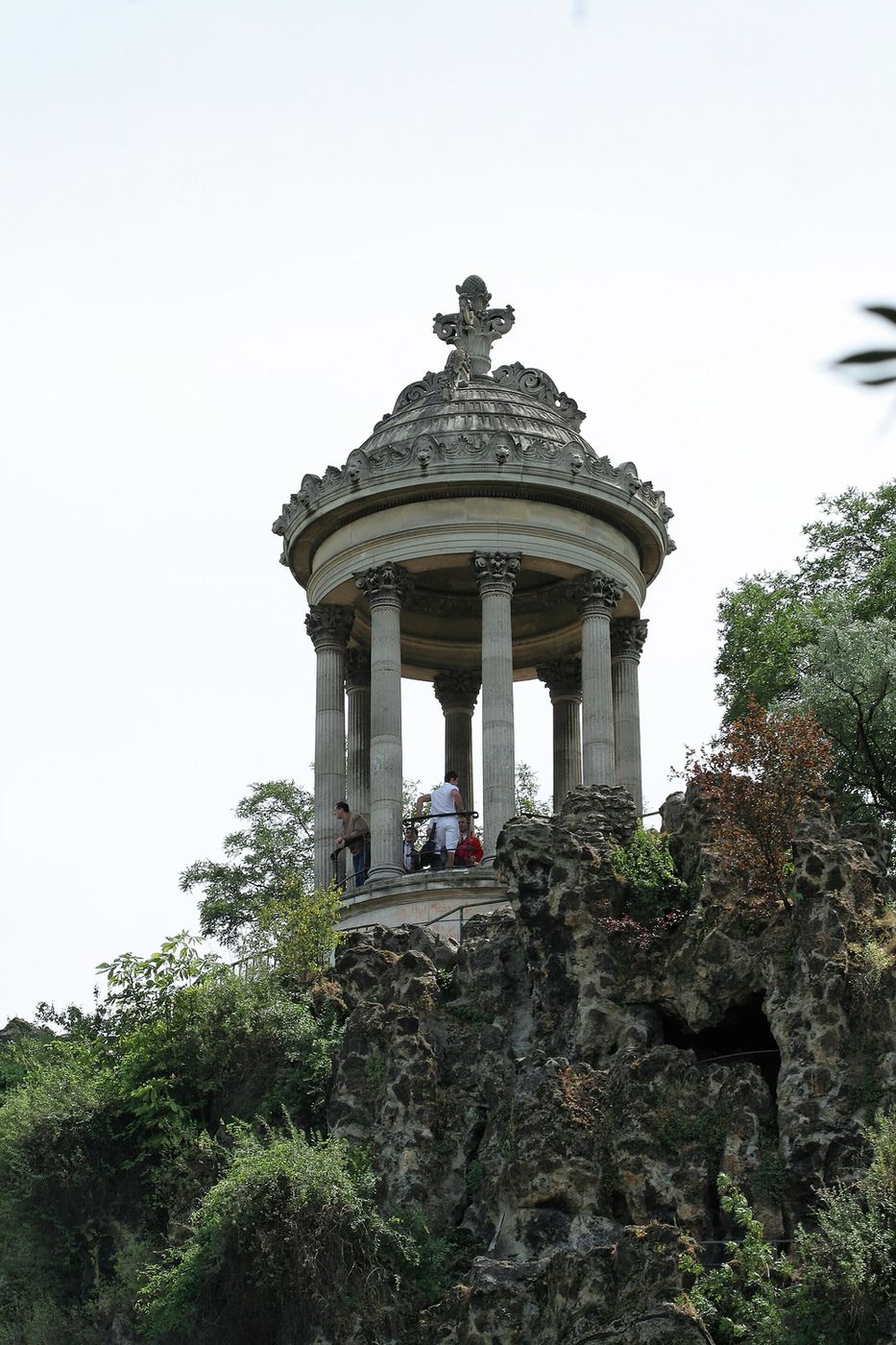
The hurried completion left unstable gypsum and thin soils: banks were added to keep lake water off the gypsum and planting struggled. A fire on the lake bed in 1870–71 and fighting during the Commune damaged the cliffs. Davioud's Temple de la Sibylle on the island dates from 1869. Between 1876 and 1911 the suspension bridge, railway bridge, grotto and island cliffs were reinforced.21
- 1956–1973
By 1956 the park was degraded: the lake was drained after the lake bed partly collapsed and the temple, grotto and suspension bridge were closed; demolition was even considered. Classification as a protected site on 23 June 1958 allowed repairs to continue until 1970; the suspension footbridge stayed closed from 1956 to 1973.2
- 2000–2024
Safety measures (rockfall nets, railings, grouting) were added; between 2012 and 2016 the water system, irrigation, paths, landforms and planting were renovated. Since 2015 parts of the centre have been progressively closed; a 2021 study by the Inspection générale des carrières and BRGM confirmed the risk of major rockfall, monitoring began, and from late 2023 the lake was drained, cleaned and repaired. Late mowing has been introduced to support biodiversity.2
- 2025–
The City of Paris and the 19th arrondissement launched a major restoration of the park's central part with a 100-year horizon, through a design-and-build public contract chosen by competitive dialogue (team to be selected in early 2026), preceded by a public consultation from 22 September to 20 October 2025.2



Approvals and legal steps
- 1958 Classified as a protected site (site classé) on 23 June 1958 for its picturesque character, under what is now the Code de l'environnement; this halted plans for demolition.2
- 2025 Preliminary public consultation (concertation préalable) under the Code de l'environnement (arts. L.121-15-1, L.121-16, L.121-17, R.121-19 to R.121-21) held 22 September – 20 October 2025, before an application for environmental authorisation for the restoration.2
Funding
- 1862/1863 The City's 2025 dossier states the City of Paris bought the land in 1862 from the Société civile des carrières du centre; the City's park page says the State acquired it in 1863.21
- 2012–2016 €12 million invested in maintenance and renovation of the park (City of Paris).2
- 2025–2026 Restoration procured by the City of Paris as a design-and-build public contract; no budget stated in the dossier.2
People
- Napoleon III Emperor who wanted London-inspired parks for Paris and decided on the park
- Georges-Eugène Haussmann Prefect of the Seine, in charge of the modernisation programme
- Jean-Charles-Adolphe Alphand Engineer in charge of design and works
- Jean-Pierre Barillet-Deschamps Landscape gardener (paysagiste)
- Édouard André Landscape gardener (paysagiste)
- Gabriel Davioud Architect; Temple de la Sibylle (1869) and park buildings
- Société civile des carrières du centre Quarry company that sold the land
- Ville de Paris, Direction des Espaces Verts et de l'Environnement Owner and manager; current restoration client
- Inspection générale des carrières (IGC) and BRGM 2021 geotechnical study of the cliffs
Sources for this page
- Ville de Paris (paris.fr), Parc des Buttes-Chaumont
- Ville de Paris / Mairie du 19e arrondissement, Parc des Buttes-Chaumont: dossier de concertation (September 2025)
- Wikidata, parc des Buttes-Chaumont (Q532113)
Researched on 2026-11-19 from the sources listed; a fact that could not be confirmed in a source was left out. Pictures are public domain or under an open licence, credited as their file page asks.
The question it brings · interpretation
When a park is built over unstable made ground, how should the design budget for the century of structural maintenance its landforms will demand?
Each question is Field Method’s interpretation, not a claim made by the source.
The date
Inaugurated 1 April 1867 for the Exposition universelle (Ville de Paris park page and 2025 concertation dossier). Works ran 1864–1867; quarrying ended about 1860; land bought 1862 (dossier: City of Paris from the Société civile des carrières du centre) or 1863 (park page: acquired by the State); classified as a protected site on 23 June 1958.