1920
Meiji Jingu forest plan
Honda Seiroku, Hongō Takanori and Uehara Keiji · Tokyo, Japan
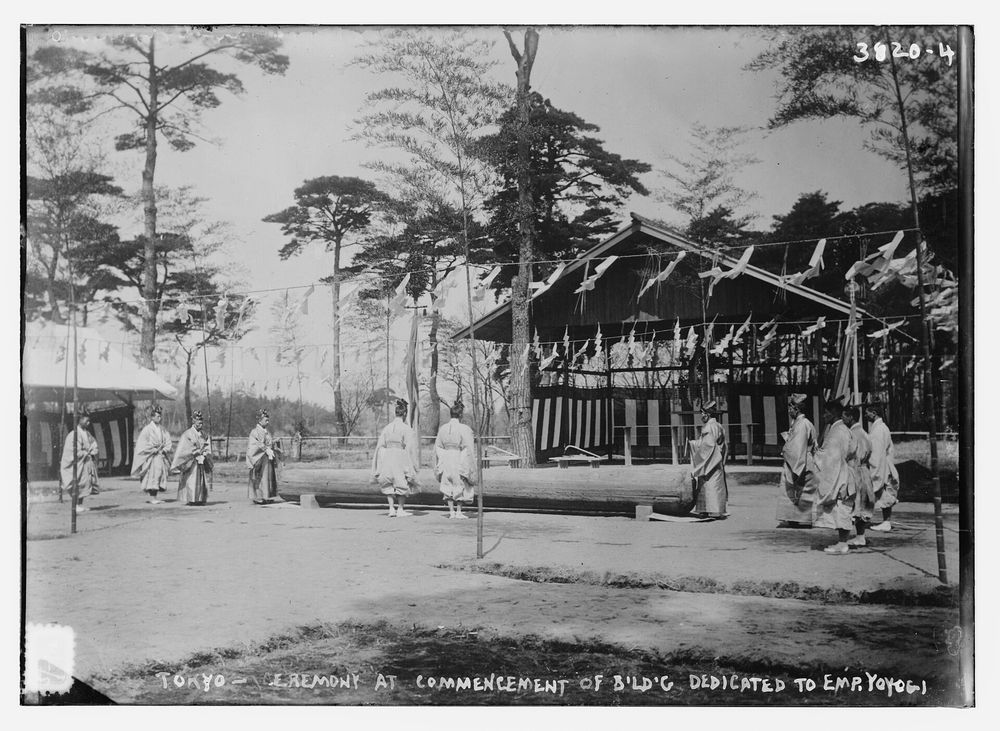
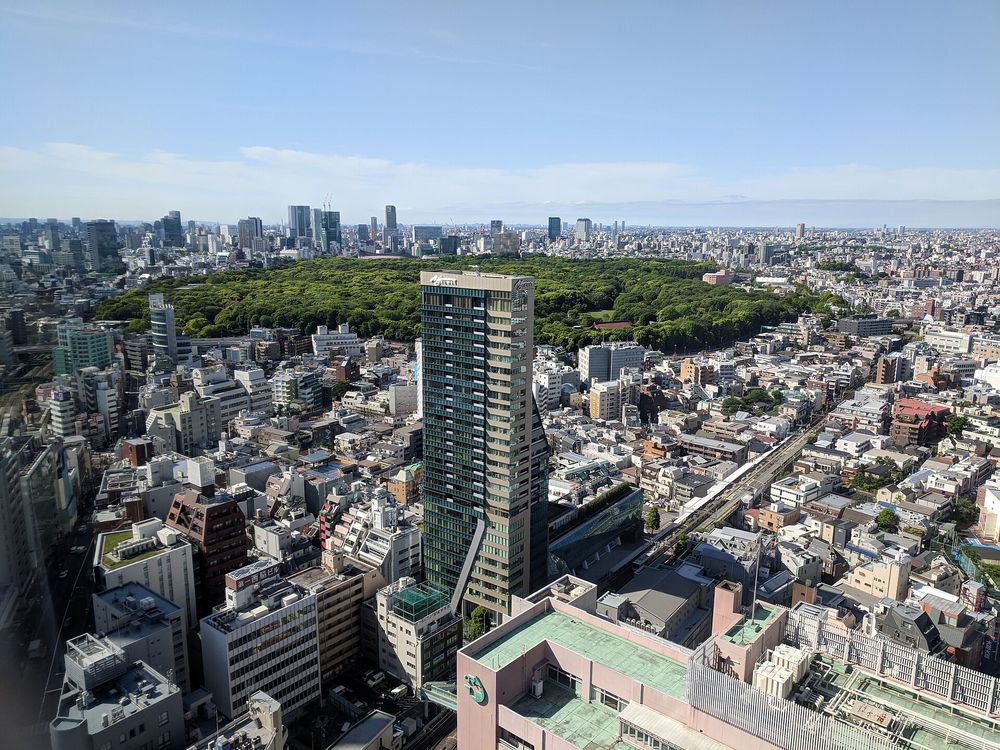
A 70-hectare shrine forest in Tokyo, planted by about 110,000 volunteers with donated trees. Its long-term plan, credited to Hongō Takanori on a team with Honda Seiroku and Uehara Keiji, set four fifty-year stages toward a self-regenerating broadleaf evergreen forest.
How it came about and changed
- 1912–1914
After Emperor Meiji's death in July 1912, Tokyo Mayor Sakatani Yoshirō and the industrialist Shibusawa Eiichi proposed a shrine to commemorate him; public support turned it into a national project funded by the government and public donations. Empress Shōken died in 1914.32
- 1913–1915
A government committee formed in 1913 selected about 70 ha at Yoyohata (now Yoyogi) for the inner garden and a separate 27 ha parcel, the site of the Emperor's funeral hall, for the outer garden. In 1915 the Home (Interior) Ministry set up a shrine construction bureau, which appointed the design teams: Itō Chūta and Sekino Tadasu for the buildings, the forestry experts Kawase Zentarō and Honda Seiroku for the forest.3
- 1915–1920
Honda Seiroku, Hongō Takanori and Uehara Keiji led the forest planning on a site that was mainly fields and grassland with only about 8 ha of woodland. Uehara surveyed the forests of 88 historic shrines; the team rejected the officials' preference for cedar and cypress in favour of mixed native broad-leaved evergreens (camphor, oak) and conifers (pine), with Hongō's plan setting out four 50-year stages toward a self-regenerating evergreen forest in which litter and fallen trees are left in place.3
- 1915–1920
About 122,000 trees of 365 species (95,000 of them from the public) were donated from across Japan and planted by hand by roughly 110,000 volunteers. The shrine was established on 1 November 1920.31
- 1926
The outer garden, with the Meiji Memorial Picture Gallery, formal tree rows and sports grounds, was completed in a Western idiom, in contrast to the inner garden forest.3
- 1945–1958
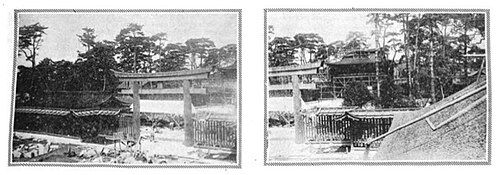
Air raids in 1945 destroyed the main hall and other principal buildings; a reconstruction support association formed in 1953 raised donations, and the rebuilt shrine buildings, designed by Sunami Takashi, were completed in 1958.45
- 1980–2013
A large-scale survey of the forest was carried out in 1980; a comprehensive survey involving about 1,000 plant and wildlife experts began in 2010 and its 2013 results found the forest had nearly completed the planners' second (100-year) stage and was a hub of urban biodiversity.3
- 1920–present
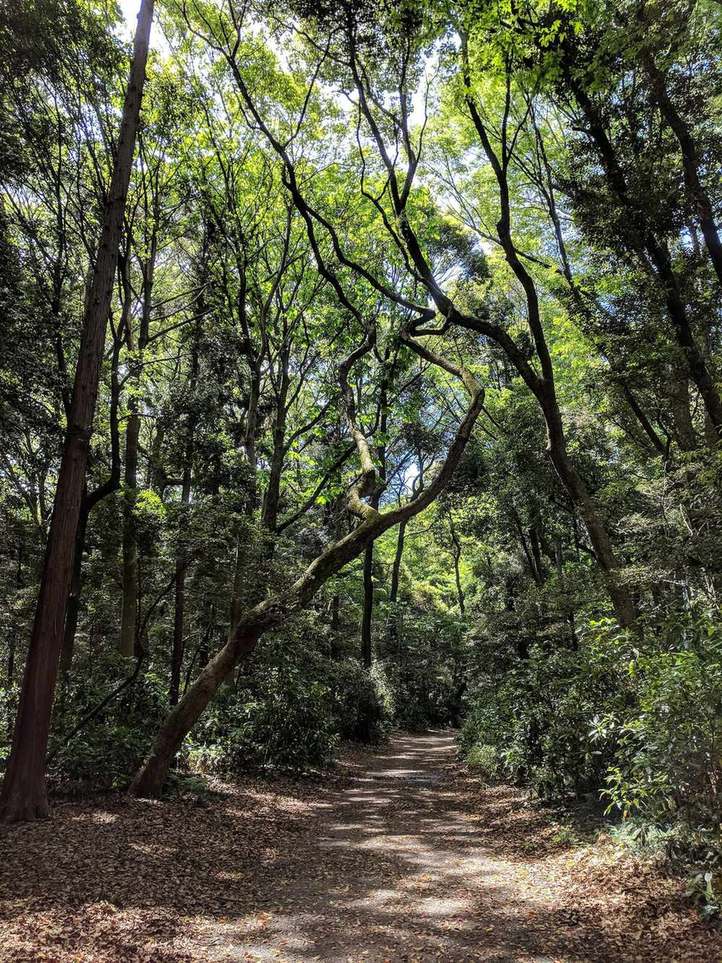
The shrine describes the 70 ha forest as sacred and managed without intervention: nothing is added or removed and fallen trees are left to return to the soil. It reports 234 tree varieties today.1



Approvals and legal steps
- 1913 The national government established a committee to plan the shrine and select its site.3
- 1915 The Home (Interior) Ministry established a shrine construction bureau to oversee the project and appoint its experts.3
- 2020 The shrine buildings were designated an Important Cultural Property (structures) by the national government on 23 December 2020; the managing body is the religious corporation Meiji Jingu. The designation text notes the shrine grove provides extensive green space in central Tokyo.4
Funding
- 1912–1920 Nippon.com describes the shrine as a national project funded by the national government and through public donations; about 122,000 trees were donated (95,000 from the public) and planting was done by roughly 110,000 volunteers.3
- 1953–1958 Postwar reconstruction of the shrine buildings was funded by donations from Japan and abroad raised through the Meiji Jingu reconstruction support association formed in 1953.5
People
- Honda Seiroku Forestry scientist; led the forest project
- Hongō Takanori Forestry professor; drew up the long-term development plan for the forest
- Uehara Keiji Landscape architect; species selection and planning; later founded the Japanese Institute of Landscape Architecture (1925)
- Kawase Zentarō Forestry expert appointed to plan the shrine forest
- Itō Chūta and Sekino Tadasu Architect and architectural historian responsible for the original shrine buildings
- Andō Tokizō and Ōe Shintarō Home Ministry Shrine Bureau designers of the original buildings under Itō Chūta (per the Agency for Cultural Affairs)
- Sunami Takashi Designer of the 1958 reconstruction of the shrine buildings
- Fukuba Hayato and Hara Hiroshi Oversaw green spaces of the outer garden
- Sakatani Yoshirō and Shibusawa Eiichi Tokyo mayor and industrialist who first proposed the shrine
- Home (Interior) Ministry shrine construction bureau Government body overseeing construction from 1915
- About 110,000 volunteers Planted the donated trees
- Meiji Jingu (religious corporation) Current owner and manager
- Shinji Isoya Headed the 2010 comprehensive forest survey committee; author of the Nippon.com article
Sources for this page
- Meiji Jingu, Forest (What to see)
- Meiji Jingu, 明治神宮について (About Meiji Jingu)
- Nippon.com (Nippon Communications Foundation), Creating Serenity: The Construction of the Meiji Shrine Forest (Shinji Isoya, 8 July 2020)
- Agency for Cultural Affairs, 国指定文化財等データベース, 明治神宮 (Important Cultural Property record)
- Meiji Jingu Sukeikai (Meiji Jingu support association), 明治神宮崇敬会について
- Wikidata, Meiji Jingū (Q287165)
Researched on 2026-11-19 from the sources listed; a fact that could not be confirmed in a source was left out. Pictures are public domain or under an open licence, credited as their file page asks.
The question it brings · interpretation
What would your planting plan look like if it were drawn as stages over a hundred and fifty years instead of as a single opening-day condition?
Each question is Field Method’s interpretation, not a claim made by the source.
The date
Opening: the forest was planted for the shrine's establishment on 1 November 1920. The Interior Ministry's shrine construction bureau was set up in 1915, so planning predates 1920; no single publication year for the forest plan was confirmed.