about 1615–1662
Katsura Imperial Villa
Prince Toshihito and Prince Toshitada (Hachijō-no-miya family) · Kyoto, Japan
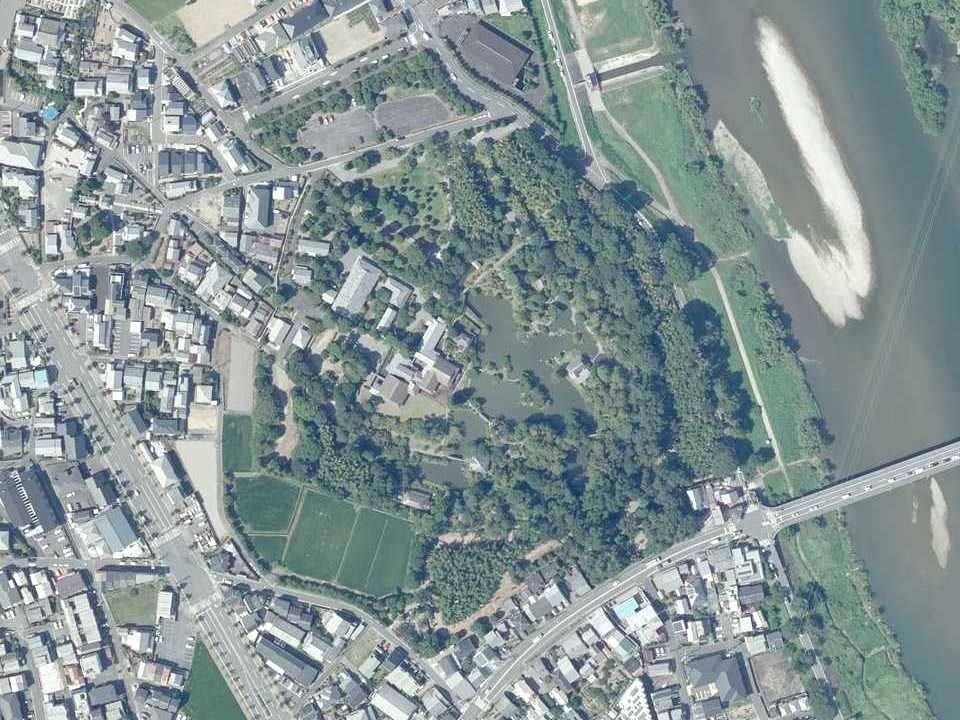
Prince Toshihito began a country villa for the Hachijō-no-miya house around 1615; his son Toshitada revived and enlarged it by about 1662. Buildings in the sukiya manner sit within a stroll garden (kaiyū-shiki teien).
How it came about and changed
- early 17th century – c. 1615
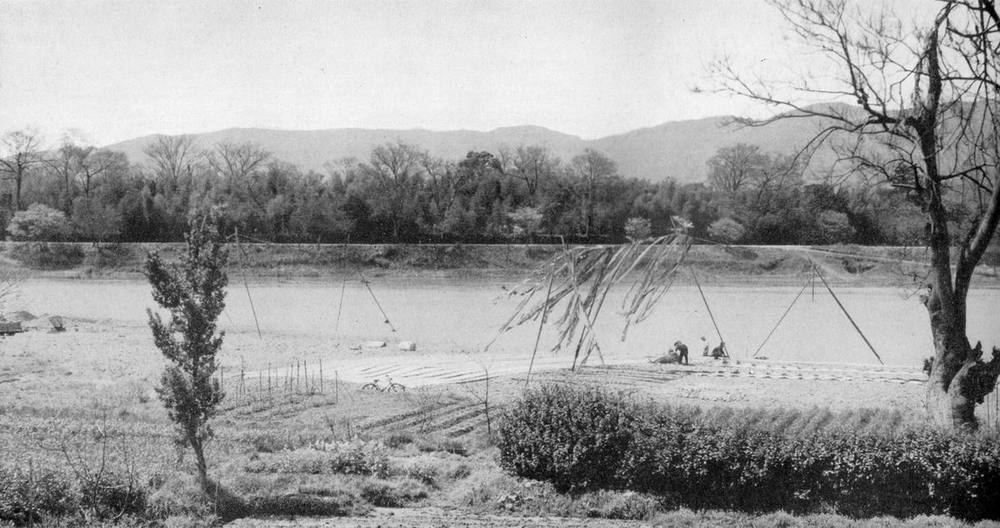
Prince Hachijō-no-miya Toshihito (1579–1629), younger brother of Emperor Go-Yōzei and first head of the Hachijō-no-miya house, acquired land beside the Katsura River and began building a villa around 1615 (Genna 1); within a few years the Katsura Sansō (mountain villa) was complete.13
- 1616–1620s
There is evidence of a modest structure, perhaps an extended teahouse, by 1616, and a more ambitious building in the early 1620s; this first phase corresponds to the Old Shoin.3
- 1629 – c. 1640
After Toshihito's death the villa was neglected for some ten years.1
- c. 1640s – c. 1662
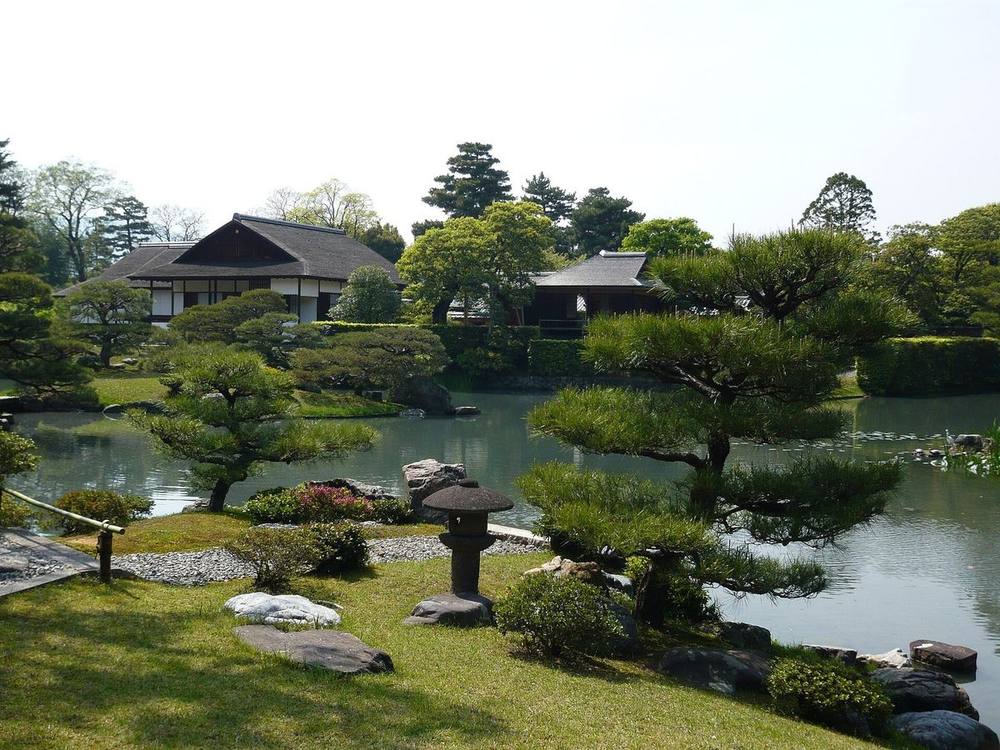
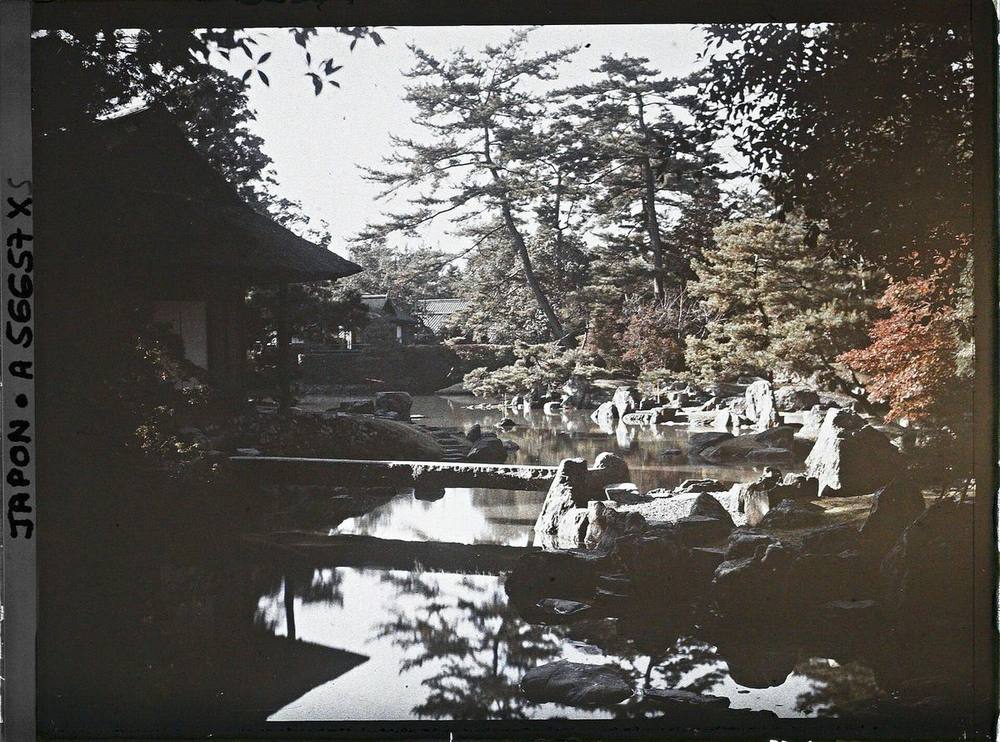
The second prince, Toshitada (Noritada), married Fu-hime, daughter of the Kaga domain lord Maeda Toshitsune, which gave him financial backing; by about 1662 (Kanbun 2) he added the Middle Shoin, the New Palace and the Gepparō, Shōkintei, Shōkatei and Shōiken teahouses and reworked the pond and garden into substantially the form seen today. The New Palace and the Miyuki-michi approach are said to have been remodelled to receive the retired Emperor Go-Mizunoo.13
- 17th–19th centuries
The princely house was successively renamed Tokiwai-no-miya, Kyōgoku-no-miya and Katsura-no-miya. The villa escaped fire and survives in nearly its original form; the pond has been altered somewhat, losing one island and a long bridge. The Miyuki-mon gate, built for Go-Mizunoo's visit, was later lost and rebuilt under Prince Yakahito.132
- 1881–1883
The Katsura-no-miya line ended with the death of the twelfth head, Princess Sumiko, in 1881; in 1883 the villa came under the Imperial Household Ministry and was renamed Katsura Rikyū (Katsura Imperial Villa).1
- 1964
The Imperial Household Agency bought about 7,000 m² of adjoining farmland to protect the villa's landscape setting.1
- 1976–1982
The 'Shōwa great repair' (Shōwa no daishūri) of the palace buildings, a full dismantling and repair, was carried out from 1976 to 1982 (Shōwa 51–57) by the Imperial Household Agency's Kyoto office, with Obayashi Corporation as contractor; completion was marked in 1982 and the Agency published the works record (桂離宮御殿整備記録) in 1984–1986.4567
- present
Katsura Imperial Villa is Imperial property (皇室用財産) managed by the Imperial Household Agency together with the Kyoto Imperial Palace, Kyoto Ōmiya Palace, Sentō Palace and Shūgakuin Imperial Villa; the estate covers about 69,000 m² including ancillary land, and visits are by Agency-run tours.1



Approvals and legal steps
Funding
- c. 1615–1620s Built as the private villa of the Hachijō-no-miya princely house by Prince Toshihito; no costs documented.1
- c. 1640s–1662 Prince Toshitada's marriage to Fu-hime, daughter of the Kaga lord Maeda Toshitsune, provided the financial backing for the restoration and enlargement of the villa.1
- 1964; 1976–1982 The sources read do not say who paid for the 1964 land purchase or the Shōwa great repair; Obayashi's history records about 40,000 craftsman-days (延べ4万人) on the repair. No monetary amounts were found.15
People
- Prince Hachijō-no-miya Toshihito (1579–1629) Founder; began the villa c. 1615
- Prince Toshitada (Noritada) Second prince; restored and enlarged the villa and garden by c. 1662
- Maeda Toshitsune / Fu-hime Kaga domain lord and his daughter, Toshitada's wife; source of financial backing
- Retired Emperor Go-Mizunoo Imperial guest for whose visit the New Palace and Miyuki-michi are said to have been remodelled
- Kobori Enshū Tea master traditionally associated with the design; the pamphlet says the prevailing view is that he was not directly involved, though his taste is evident
- Imperial Household Ministry / Imperial Household Agency (Kyoto office) Owner-manager since 1883; client for the 1976–1982 repair
- Obayashi Corporation Contractor for the 1976–1982 dismantling and repair of the palace buildings
- Saitō Hidetoshi Architect seconded from the Agency for Cultural Affairs to the Imperial Household Agency's Kyoto office; worked on the Shōwa repair and wrote on it
Sources for this page
- 公益財団法人菊葉文化協会 (Kikuyo Bunka Kyokai); photographs and material from the Imperial Household Agency, 桂離宮 Katsura Imperial Villa (pamphlet, July 2024)
- 公益財団法人菊葉文化協会 (Kikuyo Bunka Kyokai), 桂離宮 Katsura Imperial Villa (visit guide)
- Bowdoin College, Katsura Imperial Villa (Japanese Gardens)
- National Diet Library Search, 桂離宮 : 日本建築の美しさの秘密 (斎藤英俊), catalogue record
- Obayashi Corporation, Company history: 1982 (桂離宮御殿整備竣工)
- Nara National Research Institute for Cultural Properties, Comprehensive Database of Archaeological Site Reports, 桂離宮御殿整備記録 図録編2 (Imperial Household Agency, 1986), record
- Nara National Research Institute for Cultural Properties, How Modern Techniques Are Chosen for the Restoration Work on the Main Houses of Katsura Imperial Villa (髙野麗, 2023)
- Wikidata, Katsura Imperial Villa (Wikidata item Q1736808)
Researched on 2026-11-19 from the sources listed; a fact that could not be confirmed in a source was left out. Pictures are public domain or under an open licence, credited as their file page asks.
The question it brings · interpretation
If a garden is experienced as a walk rather than from one viewpoint, what should each stopping place show, and what should it hold back for later?
Each question is Field Method’s interpretation, not a claim made by the source.
The date
Nominal year for ordering: the pamphlet says building of the villa began around Genna 1 (1615) under Prince Toshihito; Prince Toshitada's additions and garden works ran to about Kanbun 2 (1662). It came under the Imperial Household Ministry in 1883 and was then named Katsura Imperial Villa.