from 1764
Blenheim Park remodelled by Lancelot Brown
Lancelot Brown · Blenheim Palace, Woodstock, Oxfordshire, England
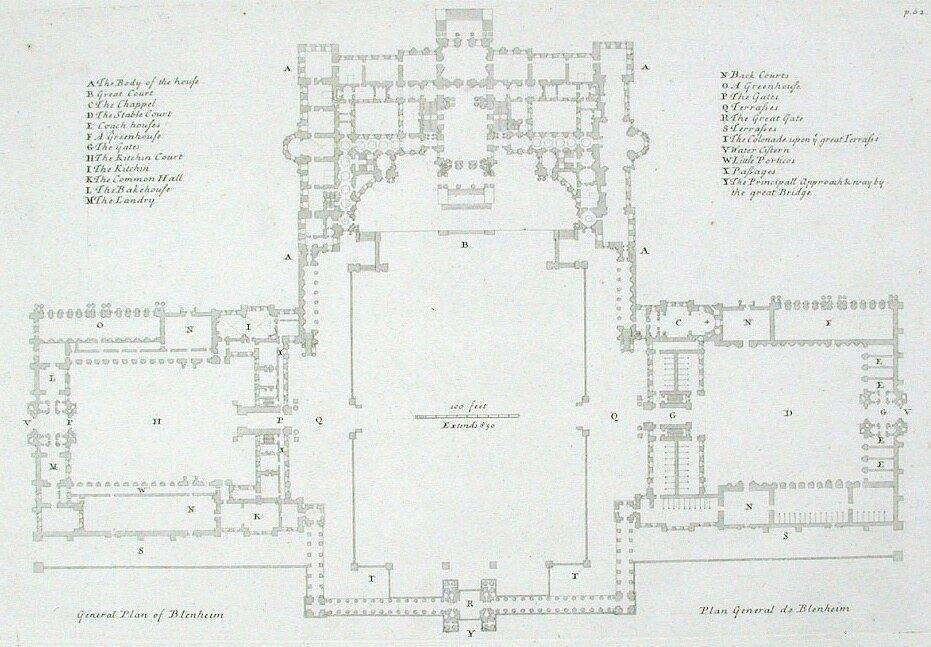
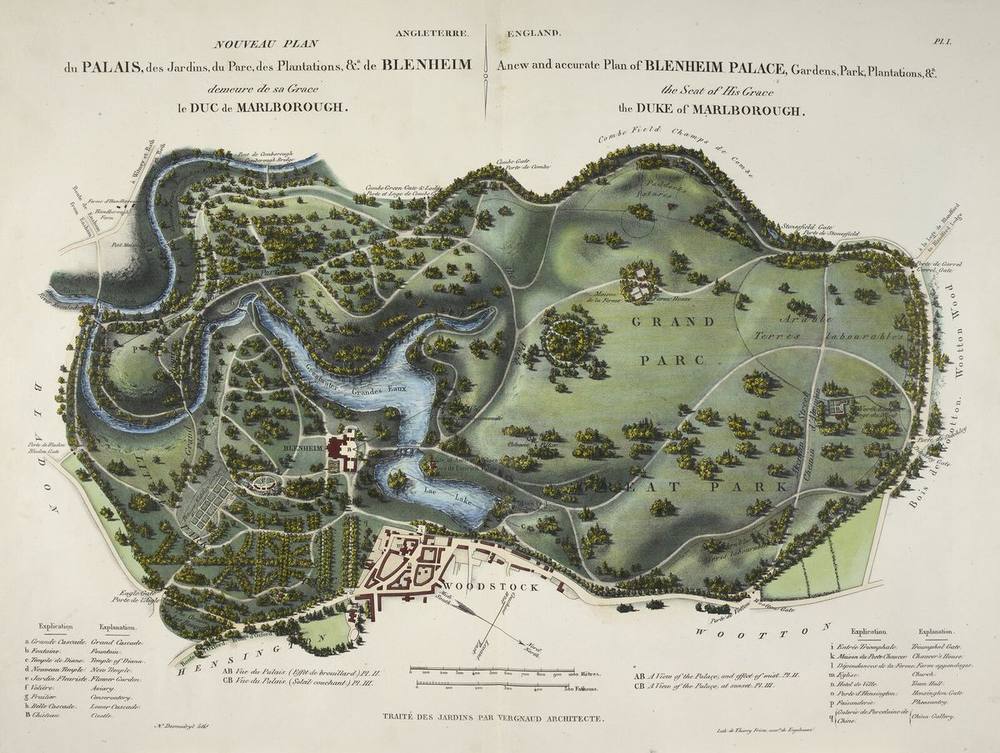
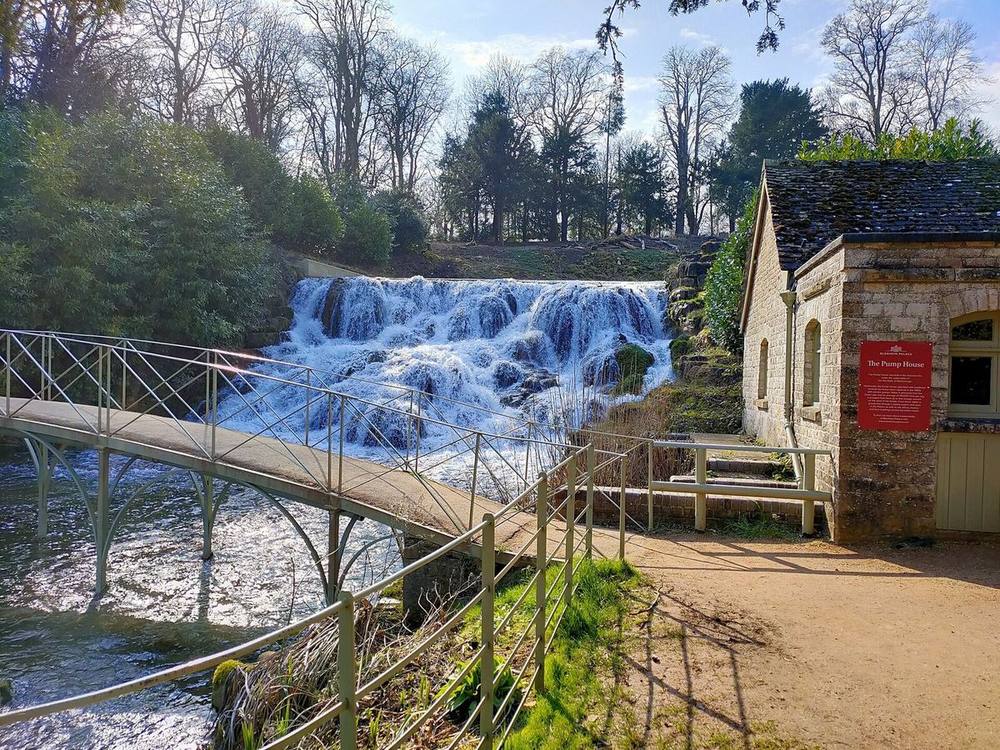
Brown's plan flooded the Glyme valley to form a large lake held by an earth dam with a rocky cascade, removed the formal parterre south of the palace, and wrapped the park boundary in new belt plantings.
How it came about and changed
- 1705–1722
The estate was given by the nation to John Churchill, 1st Duke of Marlborough, after his 1704 victory; the palace was built to Vanbrugh's design 1705–1722. From 1705 Henry Wise, the royal gardener, laid out the gardens and park (the design probably owed much to Vanbrugh): a great elm avenue, the walled 'military' parterre garden south of the palace, a walled kitchen garden and the canalising of the Glyme.21
- 1708–1731
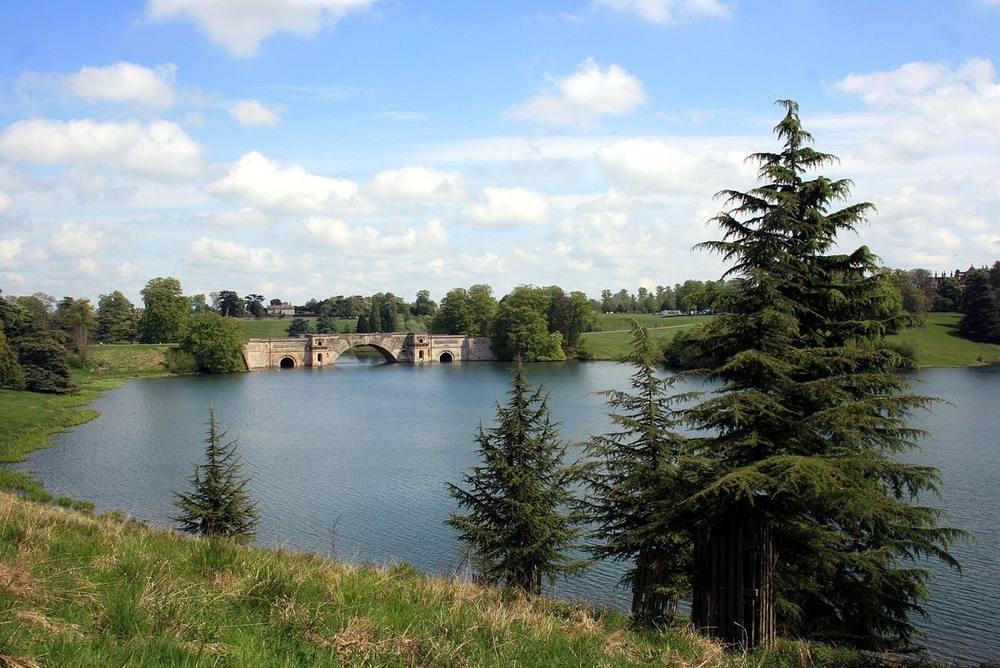
Vanbrugh's Grand Bridge was begun in 1708 and completed after 1721 by Townesend and Peisley; Duchess Sarah engaged them in 1722–25 to build Col. John Armstrong's canals, a shallow lake and cascade (complete by 1724). The Triumphal Arch (1722–23) and Column of Victory (1727–31) were added and the park wall rebuilt in the 1720s.1
- 1763/1764–1774
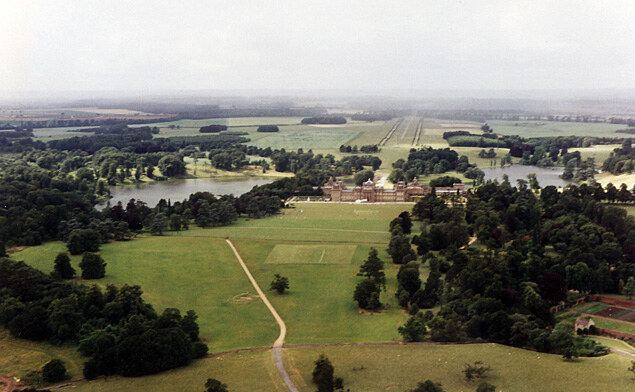
The 4th Duke commissioned Lancelot Brown, who dammed the Glyme to create the great lake, built the Grand Cascade at the dam, swept away the formal military garden for a lawn, planted perimeter belts and clumps and laid winding drives. The VCH dates his work 1764–1774; Blenheim Palace says he was commissioned in 1763 and the work took 11 years.13
- 1767–1817
After the 1767 inclosure of Bladon the lower Glyme was brought into the park; Sir William Chambers designed New Bridge (1772–73) and park buildings, and much detail attributed to Brown may have been done later under gardener Benjamin Read. The 4th Duke added formal flower gardens that owed little to Brown.1
- 1817–1892
The 5th Duke built elaborate botanical and private gardens (largely lost); an Act of 1840 let the 6th Duke sell trees for repairs, and the avenues and formal plantings decayed through the mid 19th century.1
- 1892–1930
The 9th Duke dredged the lake, replanted the northern avenue (1896, 1902) and the Mall, planted nearly half a million trees 1893–1919, and with Achille Duchêne made the Italian Garden (1908–10) and the Water Terraces (1925–30).1
- 1970s–present
After Dutch elm and beech bark disease in the 1970s the avenues were replanted (limes in the late 1970s) and a long-term park plan was made. Inscribed as a World Heritage Site in 1987; a management plan has been in place since 2006 and the Blenheim Dam was strengthened in 2009. The estate reports a recent first dredge of the Queen Pool in over 100 years, removing over 300,000 cubic metres of silt (undated on the page).124




Approvals and legal steps
- early 18th century The estate was bestowed on the 1st Duke by Acts of Parliament; the plinth of the Column of Victory recites these Acts. The Acts' dates are not given in the VCH passage read.12
- 1767 The Duke acquired the north part of Bladon parish at inclosure, allowing Brown's treatment of the lower Glyme within the park.1
- 1840 An Act empowered the 6th Duke to sell trees to raise money for repairs.1
- 1987 Inscribed on the UNESCO World Heritage List, criteria (ii) and (iv).2
- not verified The park is registered Grade I on the Register of Parks and Gardens (list entry 1000434); it is also protected through listed buildings, scheduled monuments and SSSI designations, and received National Heritage tax exemption status in 1999. The registration date could not be read because the Historic England page was blocked.25
- 2009 The Blenheim Dam was strengthened and reinstated to comply with safety legislation.2
Funding
- 1705–1709 Henry Wise's bills exceeded £13,000 by 1709, and an estimated £20,000 was spent on the gardens in the first years, excluding walls (VCH, citing a summary of expenditure to 1709). UNESCO describes Blenheim as built by the nation to honour the Duke.12
- 1724 Townesend and Peisley's contract for the southern canal, cascades and reshaping of valley slopes was for over £3,000.1
- 1764–1774 The 4th Duke paid Lancelot Brown over £21,500 for work at Blenheim.1
People
- Lancelot 'Capability' Brown Landscape designer of the park remodelling, 1760s–1770s
- George Spencer, 4th Duke of Marlborough Client who commissioned and paid Brown
- Sir John Vanbrugh Architect of the palace and Grand Bridge; probable influence on the first garden design
- Henry Wise Royal gardener who laid out the first gardens and park from 1705
- Sarah, Duchess of Marlborough Directed completion of bridge, canals and lake in the 1720s
- Col. John Armstrong Engineer of the 1720s canal scheme
- William Townesend and Bartholomew Peisley Contractors for the bridge, canals and walls, 1720s
- Benjamin Read Gardener recommended by Brown; much detail attributed to Brown may be his
- Sir William Chambers Architect of New Bridge and park buildings, 1770s
- Achille Duchêne Designer of the Italian Garden and Water Terraces for the 9th Duke, 1908–30
- Land & Water Contractor for the Queen Pool dredge
Sources for this page
- Victoria County History, via British History Online, Blenheim: Park from 1705, A History of the County of Oxford, volume 12 (1990)
- UNESCO World Heritage Centre (UNESCO open data portal), World Heritage List open dataset (whc001), record 425: Blenheim Palace
- Blenheim Palace, The Importance of Blenheim Palace for Capability Brown
- Blenheim Palace, Lake Dredge
- Historic England, Blenheim Palace, Register of Parks and Gardens, list entry 1000434 (not readable from this environment)
- Wikidata, Blenheim Palace (Q208181)
Researched on 2026-11-19 from the sources listed; a fact that could not be confirmed in a source was left out. Pictures are public domain or under an open licence, credited as their file page asks.
The question it brings · interpretation
Which single landform or water move would reorganise your whole site, and what earlier layers would it erase or leave readable?
Each question is Field Method’s interpretation, not a claim made by the source.
The date
Year Lancelot Brown was called in and produced his plan, per the Historic England register entry. Other opened sources differ: the Blenheim estate says he was commissioned in 1763, and the UNESCO record says his designs date from 1761 onwards.
Checked against
- Historic England, Blenheim Palace, Register of Parks and Gardens, list entry 1000434 (Grade I)
- UNESCO World Heritage Centre, Blenheim Palace (World Heritage List no. 425)
- Blenheim Palace, Capability Brown (Blenheim stories)
- Victoria County History, via British History Online (Institute of Historical Research), Blenheim: Park from 1705, A History of the County of Oxford, volume 12