1949
Sítio Roberto Burle Marx
Roberto Burle Marx with his brother Guilherme Siegfried Marx (owners and makers); later managed by IPHAN · Rio de Janeiro, Brazil
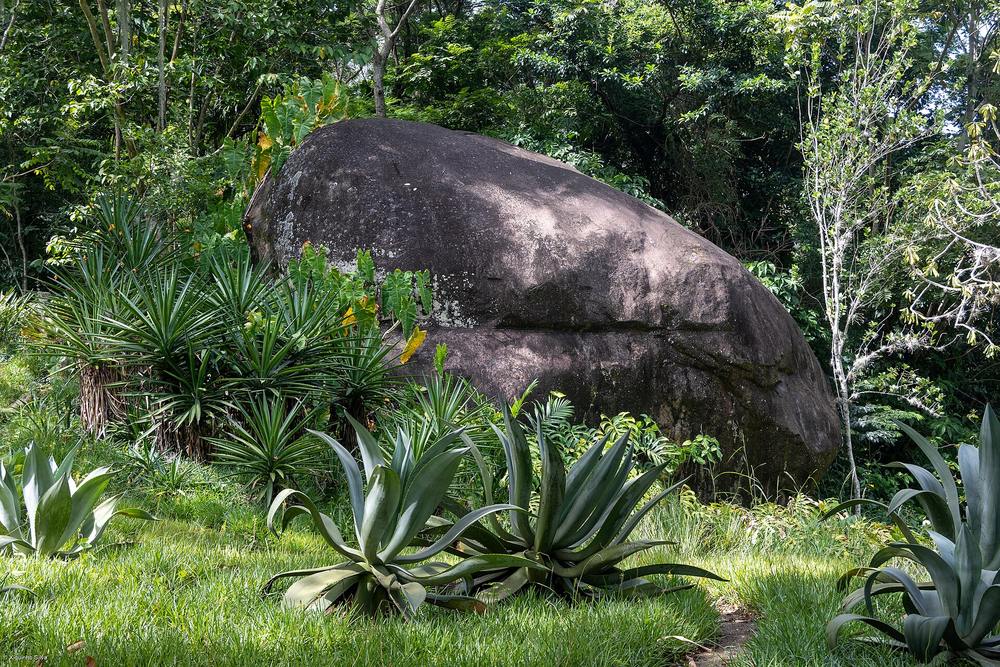
The estate in Barra de Guaratiba that Roberto Burle Marx developed from 1949 as a landscape laboratory, with a collection of more than 3,500 plant species. IPHAN calls it the greatest record of his work; World Heritage since 2021.
How it came about and changed
- 1949
Roberto Burle Marx and his brother Guilherme Siegfried bought the Sítio Santo Antônio da Bica in Barra de Guaratiba to house a botanical collection, test new plant associations and grow plants; they later bought adjoining properties.12
- 1950s–1990s
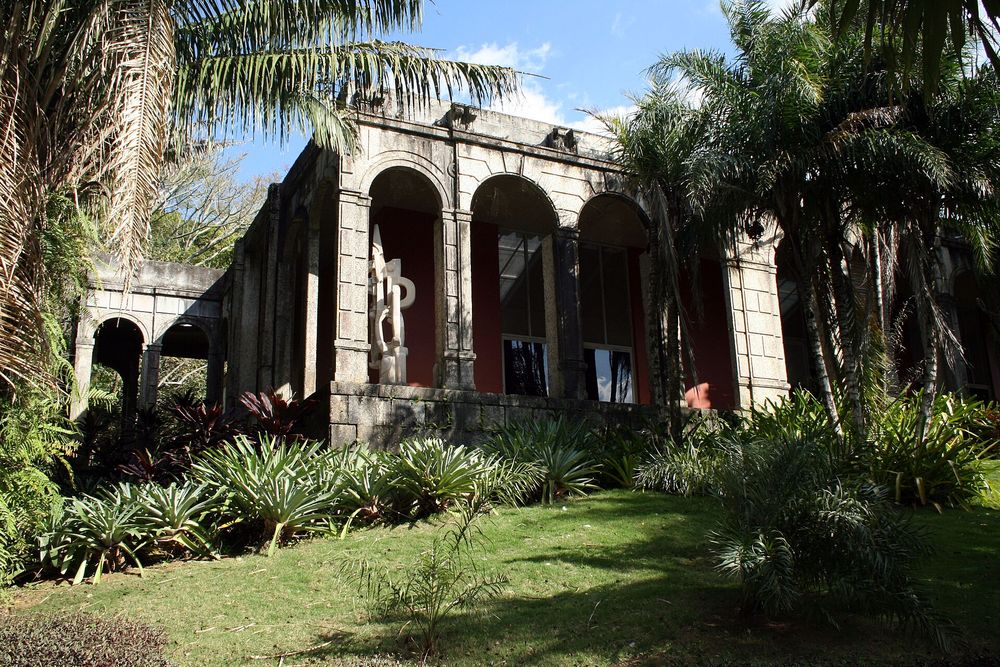
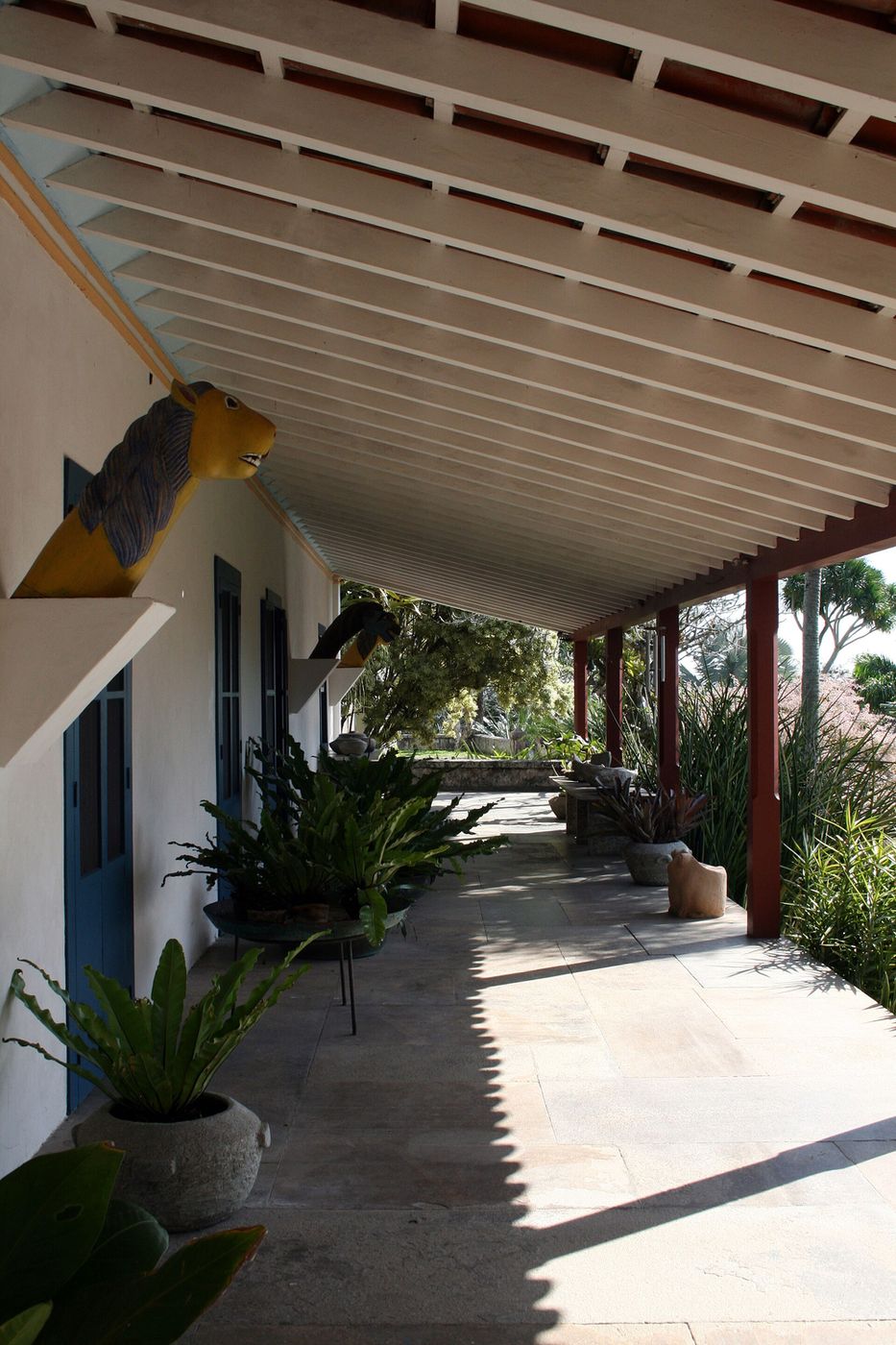
The house was repeatedly altered and enlarged and the loggia, the party hall (Cozinha de Pedra), the Casa de Pedra, the administration building and the studio were built; the 17th-century chapel of Santo Antônio da Bica was restored and kept in community use. Schlee notes the site answered 'not to a landscape or architectural project, but to a life project'. Burle Marx lived there from 1973 to 1994, collecting plants from Brazilian biomes and abroad.13
- 1983–1985
Rio de Janeiro state's heritage institute INEPAC provisionally listed the site in October 1983, mainly for its botanical value. In September 1984 nine citizens, including Lucio Costa and botanist Graziela Maciel Barroso, petitioned the federal heritage service for listing; its advisory council approved national listing unanimously on 22 January 1985. By deed no. 41 of 11 March 1985 the site was transferred to the Fundação Nacional Pró-Memória, renamed Sítio Roberto Burle Marx, with the brothers keeping use of it for life and the foundation obliged to fund conservation and run it as a centre for study of landscape design and nature conservation.3
- 1994–2002
After Burle Marx's death in 1994 IPHAN took over management and the site became a cultural centre. A 1999 inventory recorded 3,125 museum objects; the listing was re-ratified as 'Sítio Roberto Burle Marx e sua coleção museológica e bibliográfica', approved by the advisory council on 10 August 2000 and homologated by Culture Minister Francisco Weffort on 12 June 2002.13
- 2015–2021
The site entered Brazil's World Heritage tentative list in 2015; IPHAN submitted the final dossier in January 2019 and ICOMOS made its evaluation mission in the second half of 2019. A requalification of visitor areas, accessibility and research facilities ran from October 2018 to February 2021. The World Heritage Committee's 44th session inscribed it as a cultural landscape on 27 July 2021.12
- 2021–present
The site is a special unit of IPHAN, receiving about 30,000 visitors a year (2021 figure); IPHAN named a World Heritage management plan for the site and its surroundings as a next step.1



Approvals and legal steps
- 1983 Provisional state listing (tombamento provisório) by INEPAC, Rio de Janeiro, ten days after the file was sent on 7 October 1983; favourable opinion for definitive state listing in April 1984.3
- 1985 Federal listing process no. 1.131-T-1984: the Advisory Council of national heritage approved the listing unanimously on 22 January 1985; the owners consented to provisional listing in January 1985.3
- 1985 Deed no. 41 of 11 March 1985 (22º Ofício de Notas, Rio de Janeiro) transferred the site to the Fundação Nacional Pró-Memória under conditions of use and maintenance.3
- 2000–2002 Re-ratified listing including the museum and bibliographic collection, approved 10 August 2000 and homologated by the Minister of Culture on 12 June 2002 (books of Fine Arts and Archaeological, Ethnographic and Landscape were recommended).3
- 2021 UNESCO World Heritage inscription as a cultural landscape, 44th session of the World Heritage Committee (Fuzhou), 27 July 2021.12
Funding
- 1949 onward The property was bought and developed by Roberto Burle Marx and his brother Guilherme Siegfried; no amounts are given.1
- 1985 Under the 1985 deed the Fundação Nacional Pró-Memória took responsibility for financing and carrying out conservation works and for paying the staff needed for maintenance.3
- 2018–2021 Through the federal Cultural Incentive Law, BNDES invested about R$ 5.4 million in projects and works to improve visitor areas, accessibility, public access and research, under a partnership between IPHAN and the Associação Intermuseus (an OSCIP).12
People
- Roberto Burle Marx (1909–1994) Landscape architect, artist and plant collector; owner and maker of the site
- Guilherme Siegfried Marx Brother and co-owner (purchase 1949)
- INEPAC (Ítalo Campofiorito, Leonel Kaz) Rio de Janeiro state heritage institute; provisional listing 1983
- Lucio Costa, Graziela Maciel Barroso, Luiz Emygdio de Mello Filho and six others Signatories of the 1984 petition for federal listing
- Dora Alcântara; Augusto da Silva Telles; Alcídio Mafra de Souza Federal heritage officials and council rapporteur in the 1984–1985 listing
- Fundação Nacional Pró-Memória Federal foundation that received the site in 1985
- IPHAN Manager since 1994; the site is a special unit of IPHAN
- Claudia Storino Director of the Sítio (2021)
- BNDES and Associação Intermuseus Funder and partner of the 2018–2021 requalification
Sources for this page
- IPHAN, gov.br, Sítio Roberto Burle Marx recebe título de Patrimônio Mundial da Unesco
- Agência Brasil (EBC), Sítio Roberto Burle Marx chosen as Unesco world heritage (July 2021)
- Congresso em Foco, Sítio Roberto Burle Marx: a história de um processo de tombamento (Andrey Rosenthal Schlee; excerpt from Sítio Roberto Burle Marx, Intermuseus/SRBM, 2020), 1 August 2021
- Wikidata, Sítio Roberto Burle Marx (Q56695607)
Researched on 2026-11-19 from the sources listed; a fact that could not be confirmed in a source was left out. Pictures are public domain or under an open licence, credited as their file page asks.
The question it brings · interpretation
How can a designer's own working garden, nursery and plant collection be kept as a living laboratory rather than frozen as a monument once the designer is gone?
Each question is Field Method’s interpretation, not a claim made by the source.
The date
1949 marks the purchase of the former Sítio Santo Antônio da Bica by Roberto Burle Marx and his brother Guilherme Siegfried to house a plant collection, test plant associations and grow stock (IPHAN). The site has no single completion date: buildings and gardens were added over decades, Burle Marx lived there 1973–1994, donated it to the federal government in 1985, IPHAN has managed it since 1994, it was nationally listed (tombamento approved 1985, re-ratified and homologated 2002) and inscribed as a UNESCO World Heritage cultural landscape on 27 July 2021.
Checked against
- IPHAN (Instituto do Patrimônio Histórico e Artístico Nacional), gov.br, Sítio Roberto Burle Marx recebe título de Patrimônio Mundial da Unesco
- Congresso em Foco, Sítio Roberto Burle Marx: a história de um processo de tombamento (Andrey Rosenthal Schlee, excerpt of his chapter in Sítio Roberto Burle Marx, Intermuseus/SRBM, 2020)