1967
Paley Park
Zion & Breen Associates (Robert Zion, landscape architect); commissioned by William S. Paley as a memorial to his father, Samuel Paley · New York City, United States
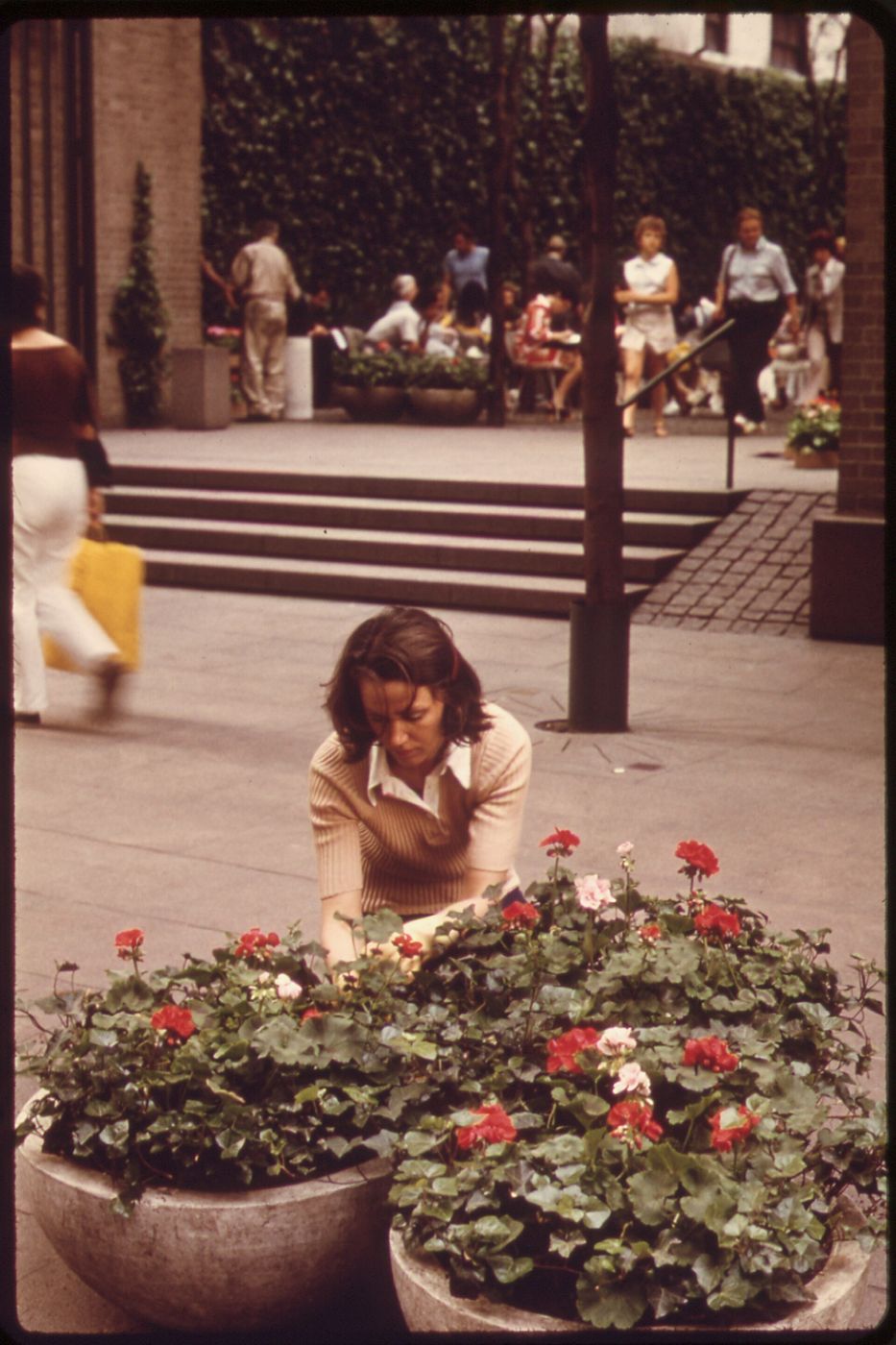
A privately owned public park of about a tenth of an acre on East 53rd Street, with a water wall, ivy-covered walls, honey locusts and movable chairs. TCLF calls it the original vest-pocket park, by Zion & Breen.
How it came about and changed
- 1963
Zion & Breen Associates described a new kind of small, privately owned public space in a proposal shown at a 1963 exhibition at the Architectural League of New York.1
- 1960s
William S. Paley, chairman of CBS, offered the site of the former Stork Club on East 53rd Street, commissioned Zion and Breen Associates and worked closely with the firm on the details, as a memorial to his father Samuel Paley.14
- 1967
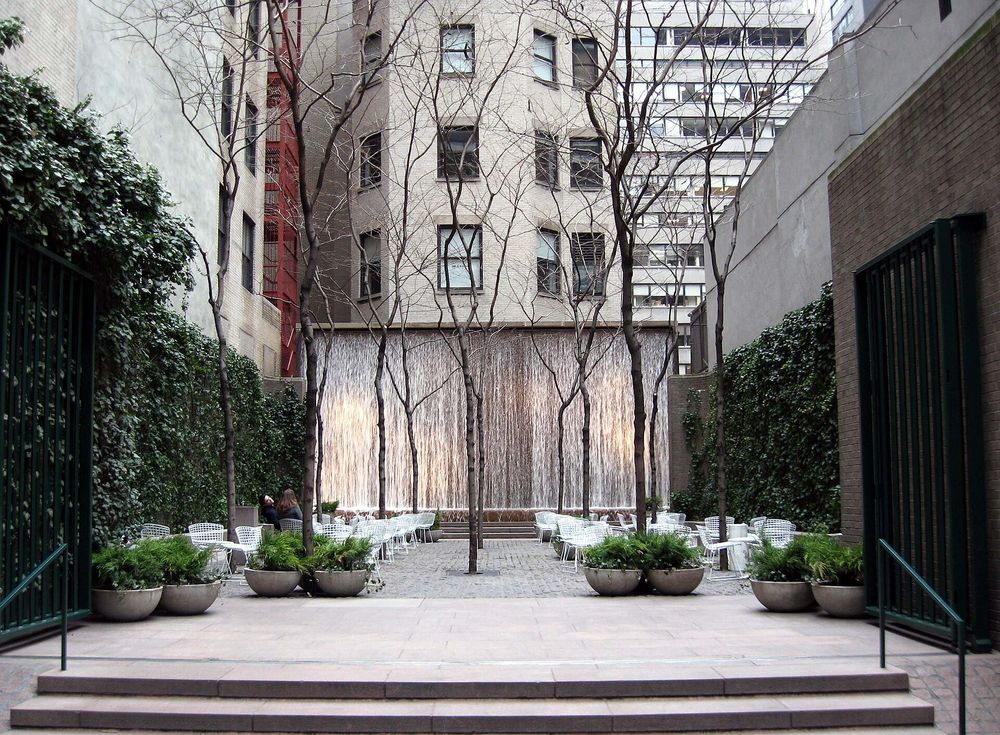
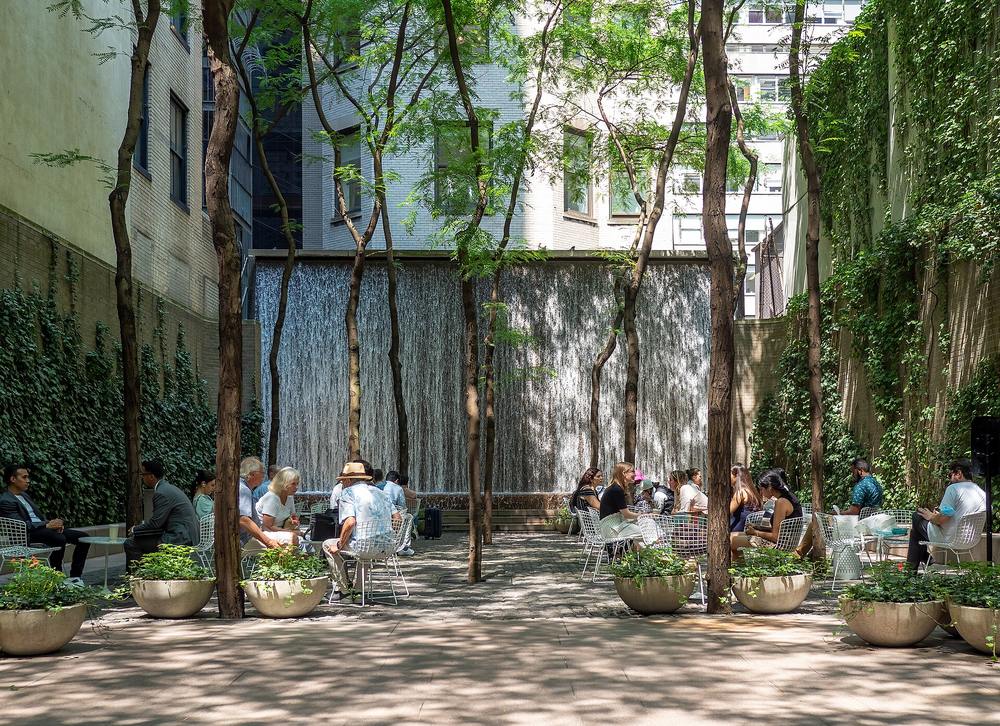
The park opened to the public on 23 May 1967: a 42 x 100 ft lot enclosed on three sides, set back and raised slightly above the street, with a 20-foot water wall, ivy-covered side walls, honey locusts on a grid, Bertoia chairs and Saarinen tables, a refreshment kiosk and an iron gate for night closure.546
- 1970s–1980s
The park was featured in William H. Whyte's film The Social Life of Small Urban Spaces, which praised its access from the sidewalk, shade and movable seating and helped make it a model for vest-pocket parks nationally.4
- present
The park is owned and operated by The Greenpark Foundation, Inc. and supported by the William S. Paley Foundation, Inc.; the waterfall recirculates through a 50-horsepower variable-rate pump at about 1,400 gallons a minute.56



Approvals and legal steps
No zoning approval, permit, landmark designation or other legal step for Paley Park was documented in the sources opened. SAH Archipedia describes it as a forerunner of the later privately owned public spaces (POPS), not as a zoning-bonus space; whether it has any formal public-access agreement was not established.
Funding
- 1960s William S. Paley established the park as a memorial to his father and commissioned its design; the official site says it was 'established by CBS founder, William S. Paley'. Construction cost is not stated in any source opened.54
- present Owned and operated by The Greenpark Foundation, Inc. and supported by the William S. Paley Foundation, Inc. (official site); SAH Archipedia says it is maintained by the William S. Paley Foundation.54
People
- William S. Paley Founder and client; chairman of CBS; offered the Stork Club site and worked closely with the designers (TCLF; SAH Archipedia; official site)
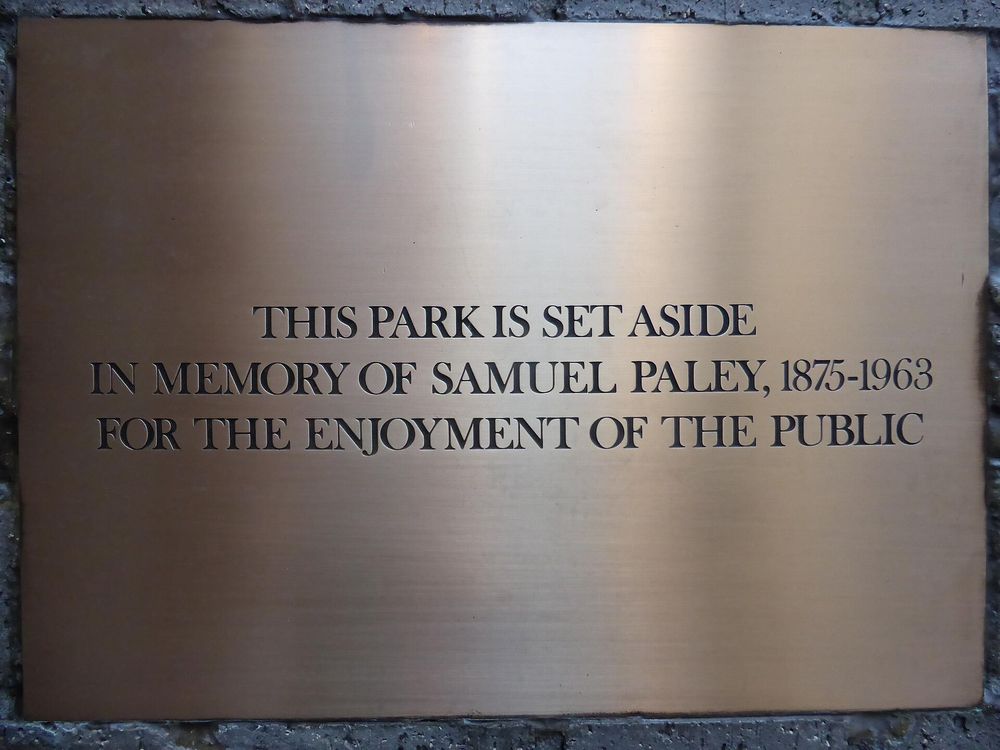
- Samuel Paley (1875–1963) Father of William S. Paley, to whom the park is a memorial (official site; plaque)
- Robert Zion Landscape architect who designed the park (TCLF)
- Zion & Breen Associates (Robert Zion and Harold Breen; later Zion Breen Richardson Associates) Landscape architecture firm credited with the design (official site FAQ; TCLF; SAH Archipedia)
- Harry Bertoia; Eero Saarinen Designers of the chairs and tables used in the park (official site FAQ)
- The Greenpark Foundation, Inc. Owner and operator (official site)
- William S. Paley Foundation, Inc. Supporter/maintainer (official site; SAH Archipedia)
- William H. Whyte Urbanist whose film The Social Life of Small Urban Spaces featured the park (SAH Archipedia)
Sources for this page
- The Cultural Landscape Foundation, Paley Park
- The Cultural Landscape Foundation, Robert Zion (Pioneers)
- The Cultural Landscape Foundation, Zion & Breen Associates (Pioneers)
- SAH Archipedia, Society of Architectural Historians / University of Virginia Press, Samuel Paley Plaza (Leslie Rose Close)
- Paley Park (official site), About Paley Park
- Paley Park (official site), Frequently Asked Questions
- Terrapin Bright Green, Paley Park: Urban Refuge (biophilic design case study, Fall 2015)
Researched on 2026-11-19 from the sources listed; a fact that could not be confirmed in a source was left out. Pictures are public domain or under an open licence, credited as their file page asks.
The question it brings · interpretation
In a very small urban space, which few elements (sound, shade, movable seating, a threshold) do most of the work of making people stay, and can they be kept that simple through decades of maintenance?
Each question is Field Method’s interpretation, not a claim made by the source.
The date
Opened to the public on 23 May 1967 (Paley Park official site, About page; TCLF and SAH Archipedia give 1967). Zion & Breen Associates proposed the vest-pocket park idea in a 1963 exhibition at the Architectural League of New York (TCLF; the Terrapin case study names the exhibition 'New York Parks for New York').