1994
Landschaftspark Duisburg-Nord
Latz + Partner (Peter Latz), a project of the International Building Exhibition (IBA) Emscher Park · Duisburg, North Rhine-Westphalia, Germany
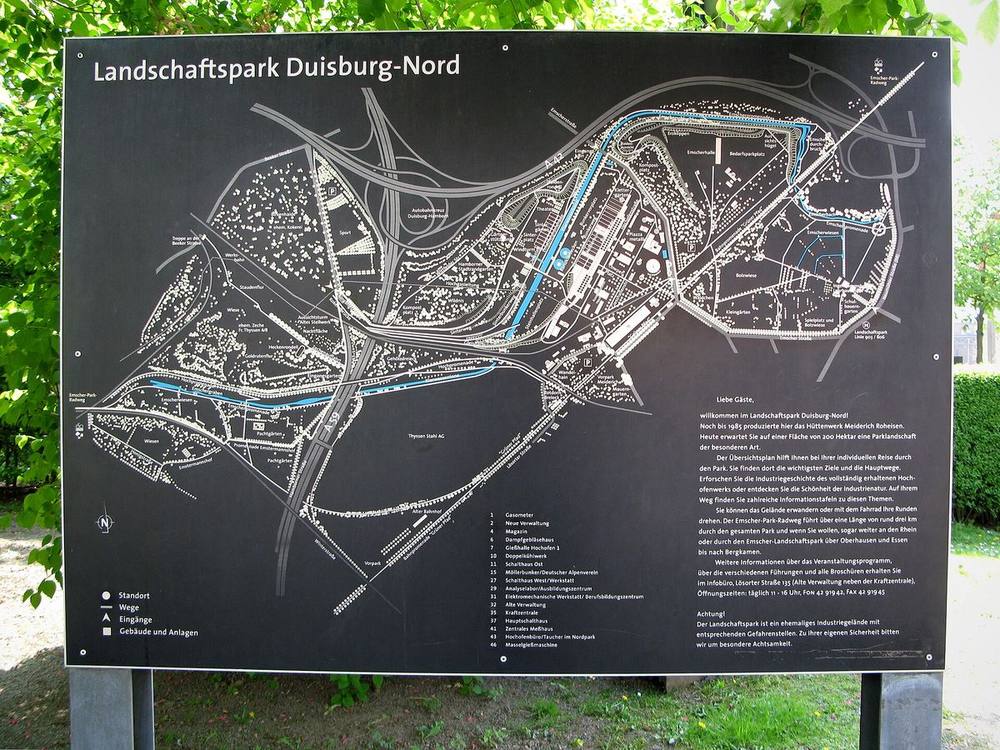
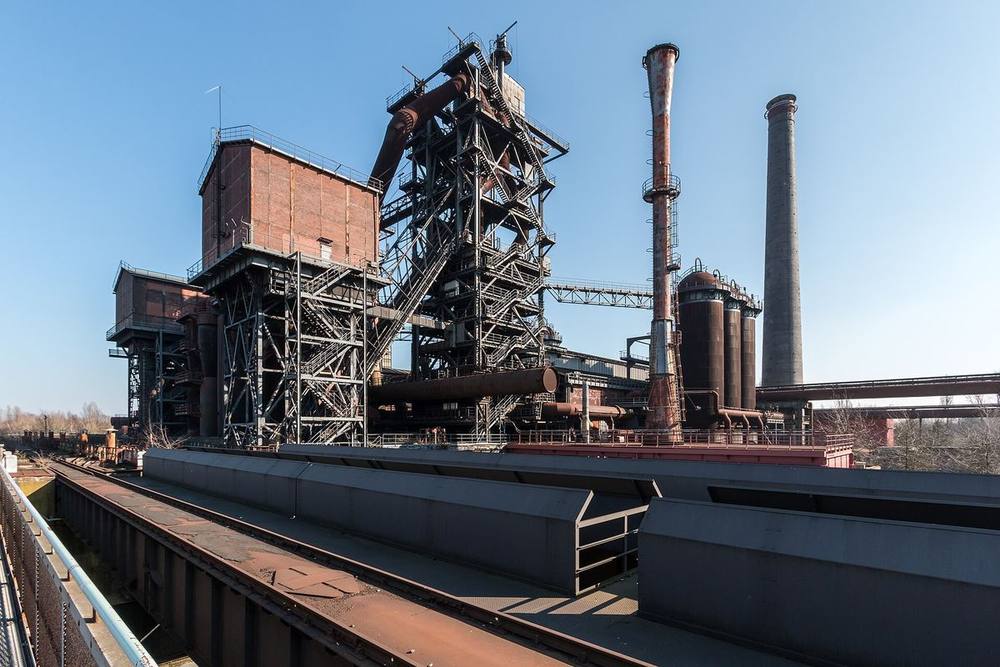
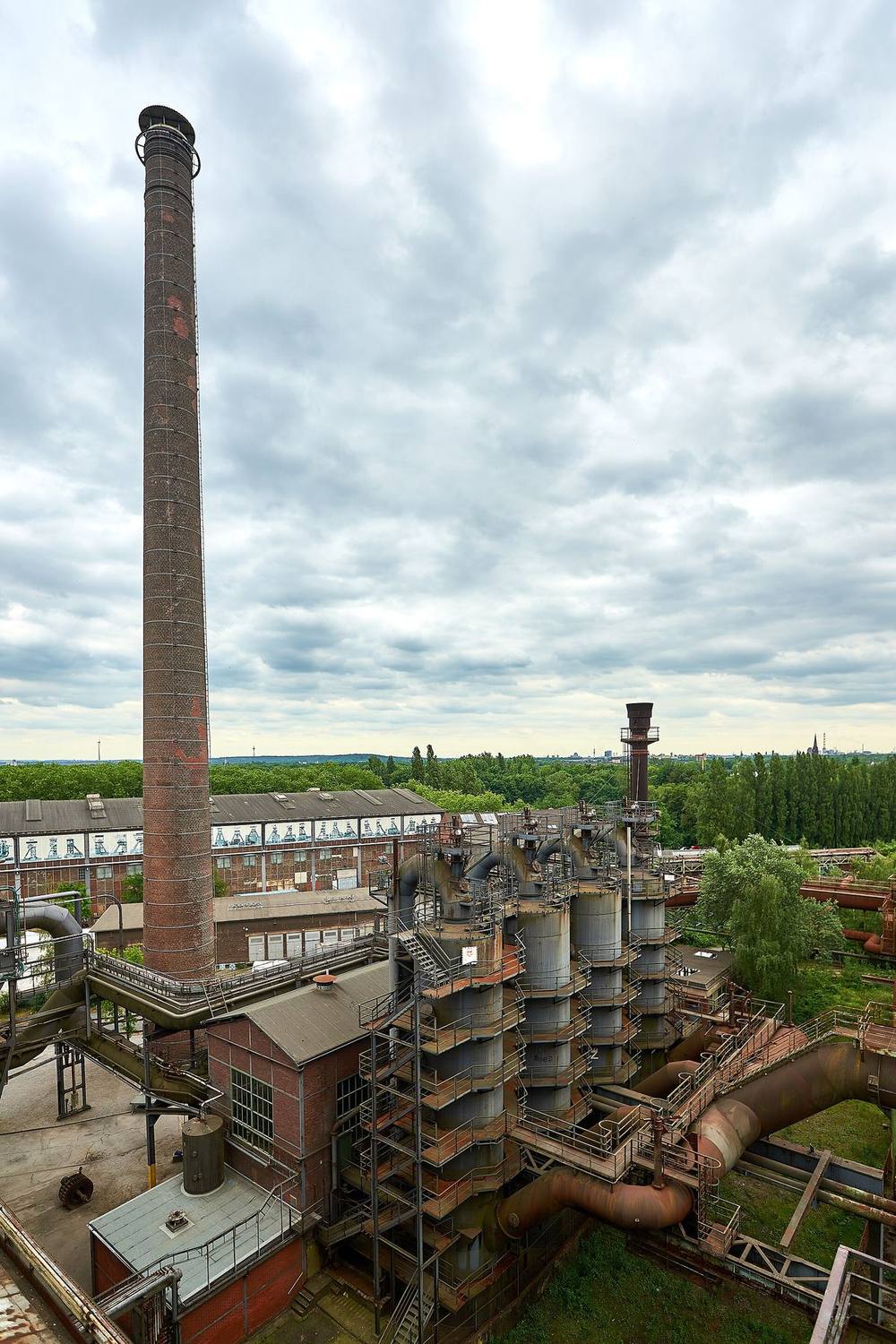
A park made on a disused ironworks where Blast Furnace 5 was last tapped in 1985. The council chose in 1992 to keep the works, and the plan also kept the plants and animals that had settled since closure.
How it came about and changed
- 1901–1912
August Thyssen began building a blast-furnace plant at Meiderich in July 1901. Blast furnace 1 was first blown on 16 May 1903, and by 1912 all five furnaces were working, making special pig irons.43
- 1914–1982
The works went through war-time crises, standstill after air raids in 1944, and post-war recommissioning. New blast furnaces were built from 1954. Blast furnaces 1 and 2 closed in the early 1980s, and furnace 5 was relined in 1982.35
- 1985
Production ended with the last tapping of blast furnace 5 on 4 April 1985. Over 82 years the works produced 37 million tonnes of pig iron.25
- 1988–1989
The state of North Rhine-Westphalia acquired the site and made it a project of the International Building Exhibition (IBA) Emscher Park. IBA, run 1990–1999 by the state, the federal government and local authorities, comprised 120 projects. In 1989 an international competition for landscape architects was announced, and five teams took part.31
- 1991–1992
In May 1991 Peter Latz (Latz + Partner, Kranzberg) won the competition and was commissioned to plan and build the park. An expert commission examined the ironworks that year and found most demolition options would cost more than preservation. In April 1992 Duisburg City Council decided to keep the disused works.13
- 1990–2002
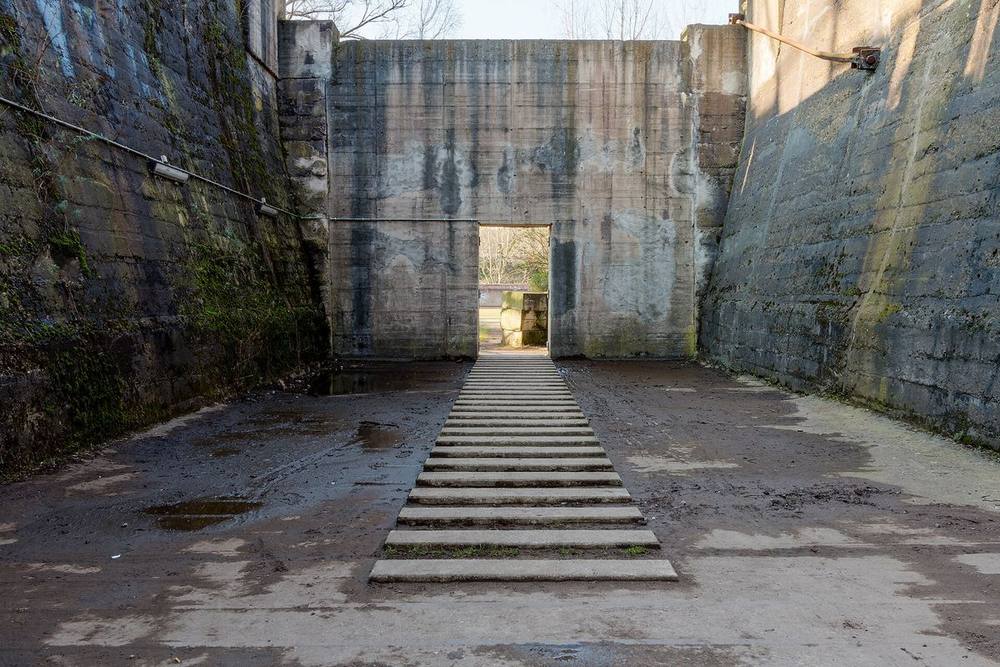
Latz + Partner designed and built the park in parts: Blast Furnace Park, Sinter Park, Waterpark (Old Emscher), railway park, adventure playground and Ore Bunker Gallery. Work was helped by citizens' action, associations and employment schemes. The water concept collects rainwater from roofs and sealed areas to feed the Old Emscher, now a clean-water canal, while wastewater runs in an underground pipe.86
- 1994
The first areas opened to the public on 17 June 1994. At first the State Development Company NRW (LEG) ran the project on behalf of the city.13
- 1997–2017
The city-owned Landschaftspark Duisburg-Nord GmbH was founded in 1997. Later work included a visitors' centre and youth hostel (2001), conversion of the blower house and casting house into event venues (2002–2003), founding membership of the European Route of Industrial Heritage (2008), conversion of the light installation to LED (from 2009), opening of ore bunkers 2–5 (2012), major repairs to blast furnace 5 (2013), and a ten-year Route of Industrial Heritage contract with the RVR (2017).31
- 2024–present
In February 2024 the Düsseldorf district government placed the park, with its infrastructure and industrial relics, under protection as a garden monument (Gartendenkmal). The park is now run by Duisburg Kontor Hallenmanagement GmbH, a city company, with continuing support from the state, the Ruhr Regional Association (RVR) and the city.71



Approvals and legal steps
- 1988 The state of North Rhine-Westphalia bought the site and designated it an IBA Emscher Park project.31
- 1989–1991 An international landscape architecture competition ran from 1989; Peter Latz won it in May 1991 and received the planning commission.13
- 1992 (April) Duisburg City Council decided to preserve the disused ironworks rather than demolish it.1
- 2024 (announced 7 February) Listed as a garden monument (Gartendenkmal) under the NRW Monument Protection Act of 2022, which created that category. The Düsseldorf district government applied for listing after expert assessment by the Office for Monument Preservation (Amt für Denkmalpflege).7
Funding
- 1988 onward The state of North Rhine-Westphalia acquired the site. IBA Emscher Park was jointly organised by the state, the federal government and local authorities.13
- 1990–2002 Clients for the design and construction were Landesentwicklungsgesellschaft NRW (LEG), Stadt Duisburg, Emschergenossenschaft (Essen) and Kommunalverband Ruhrgebiet (now RVR). Work was also carried out through citizens' action, associations and employment schemes.8
- 1992 Duisburg City Council's decision to preserve the works was informed by a cost comparison showing most demolition options cost more than preservation.1
- present The park is maintained and developed with continuing support from the state of NRW, the RVR and the city of Duisburg. The 2024 listing application followed the state's call for its 2024 monument funding programme (Denkmalförderung).17
People
- Peter Latz / Latz + Partner (with Latz-Riehl and G. Lipkowsky) Landscape architects; won the 1991 competition; design and realisation 1990–2002
- August Thyssen Founder of the Meiderich ironworks (1901)
- State of North Rhine-Westphalia Acquired the site; co-organiser of IBA Emscher Park
- IBA Emscher Park International Building Exhibition (1990–1999) under which the park was made
- Landesentwicklungsgesellschaft NRW (LEG) Client and early project operator on behalf of the city
- City of Duisburg Client; council decided in 1992 to preserve the works; owns the operating company
- Emschergenossenschaft; Kommunalverband Ruhrgebiet (now Regionalverband Ruhr) Clients / funders
- Landschaftspark Duisburg-Nord GmbH (1997); Duisburg Kontor Hallenmanagement GmbH City-owned operating companies
- Jonathan Park Artist of the park's light installation (named in the 2024 press release)
- Bezirksregierung Düsseldorf; Amt für Denkmalpflege Garden-monument listing (2024)
Sources for this page
- Landschaftspark Duisburg-Nord, International Building Exhibition (Background Knowledge)
- Landschaftspark Duisburg-Nord, Introduction (Background Knowledge)
- Landschaftspark Duisburg-Nord, Chronology (Background Knowledge)
- Landschaftspark Duisburg-Nord, Operating period (Background Knowledge)
- Landschaftspark Duisburg-Nord, Closure (Background Knowledge)
- Landschaftspark Duisburg-Nord, Water concept (Background Knowledge)
- Landschaftspark Duisburg-Nord, Der Landschaftspark ist jetzt Gartendenkmal! (press release, 7 February 2024)
- Latz + Partner, Landschaftspark Duisburg-Nord
- Wikidata, Landschaftspark Duisburg-Nord (Q523126)
Researched on 2026-11-19 from the sources listed; a fact that could not be confirmed in a source was left out. Pictures are public domain or under an open licence, credited as their file page asks.
The question it brings · interpretation
Before clearing a disused industrial site, what already growing or standing there could carry the new park, and who decides what counts as worth keeping?
Each question is Field Method’s interpretation, not a claim made by the source.
The date
Opening: the first areas opened to the public on 17 June 1994. The competition was announced in 1989 and Peter Latz won it in May 1991; Latz + Partner dates design and realisation 1990-2002.