2009
The High Line
Friends of the High Line; James Corner Field Operations, Diller Scofidio + Renfro and Piet Oudolf · New York City, United States
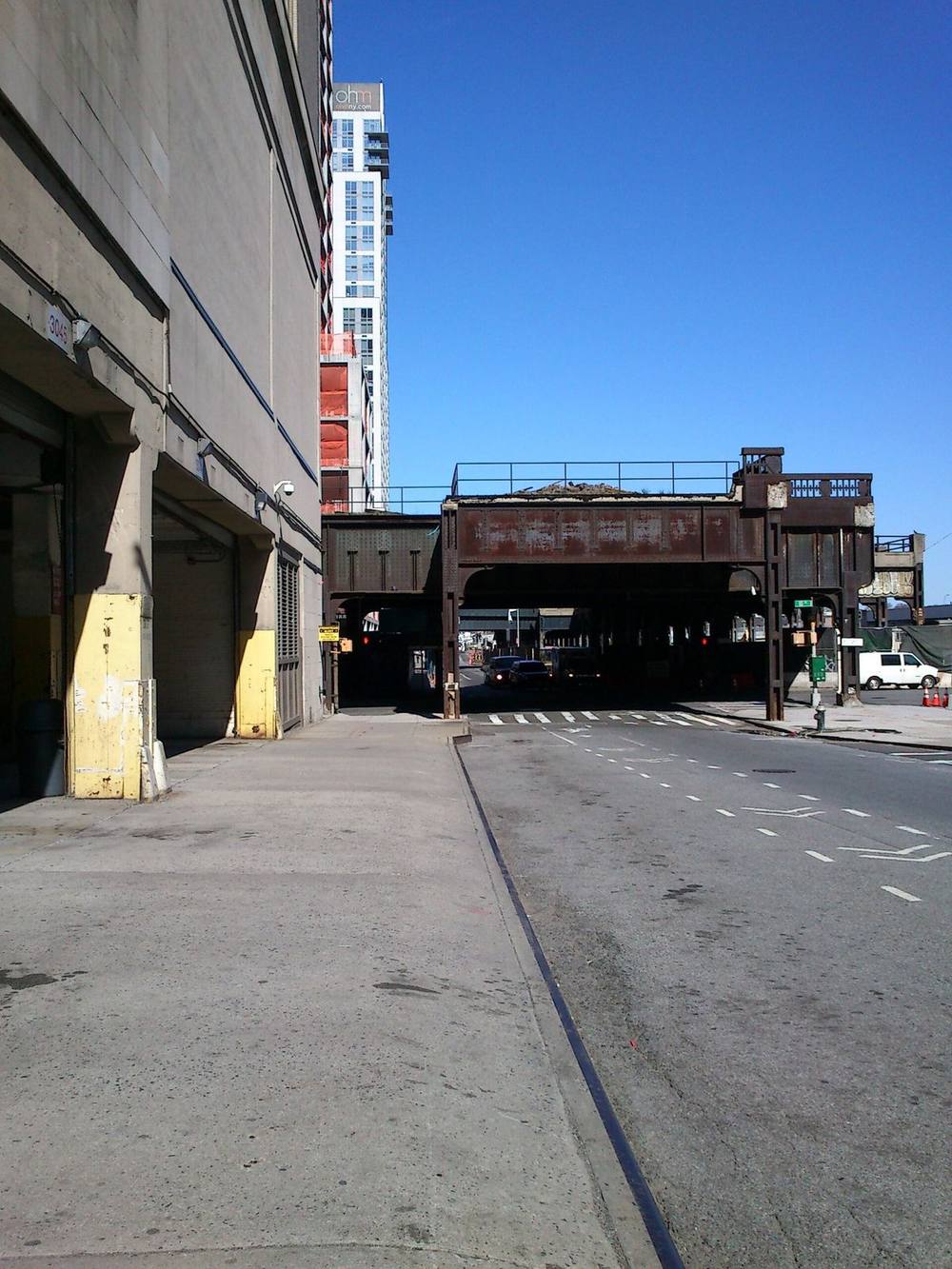
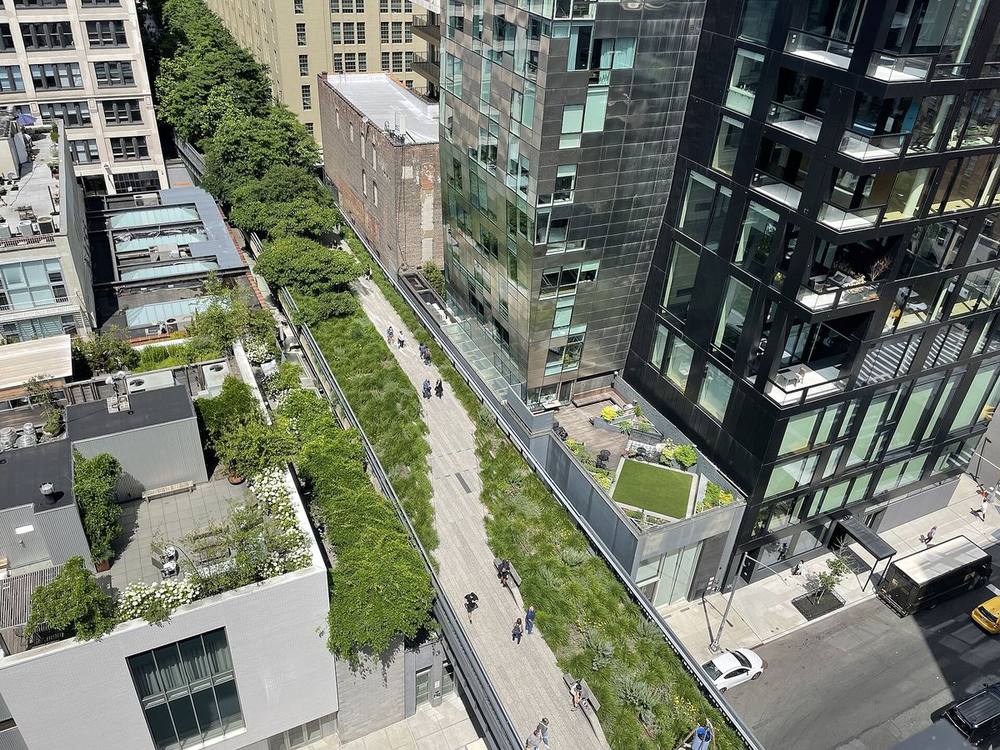
A disused 1930s elevated freight railway reused as a 1.5-mile public park, with Piet Oudolf's planting drawing on what grew there after trains stopped. A 2020 study found nearby homes gained about 35 percent more value than those farther off.
How it came about and changed
- 1920s–1924
Street-level freight tracks on 10th Avenue caused many deaths ('Death Avenue'); in 1924 the city's Transit Commission ordered removal of street-level crossings, starting the West Side Improvement project.1
- 1929–1934
The elevated West Side line was built (HAER gives 1929 as initial construction); the first train ran in 1933 and the line was fully operational by 1934, running directly through buildings such as the Nabisco plant.15
- 1950s–1991
Use declined with trucking; the southern section was demolished in the 1960s, traffic stopped by the 1980s (USDA caption: 1980), and the five blocks from Bank to Gansevoort streets were demolished in 1991.1
- 1983–1999
Peter Obletz formed the West Side Rail Line Development Foundation in 1983; CSX, the owner, commissioned a Regional Plan Association reuse study in 1999 that considered the federal 'Rails to Trails' (railbanking) framework.13
- 1999–2003
Joshua David and Robert Hammond founded Friends of the High Line in 1999 to advocate preservation as public space despite a demolition order signed by Mayor Giuliani; a 2003 ideas competition drew 720 entries from 36 countries.1
- 2004–2006
James Corner Field Operations (lead), Diller Scofidio + Renfro and planting designer Piet Oudolf were selected; in 2005 the city rezoned West Chelsea, entered a Trail Use Agreement with CSX and received the structure south of West 30th Street as a donation; construction began in April 2006.134
- 2009–2014
Section 1 (Gansevoort to 20th Street) opened in June 2009, Section 2 (to 30th Street) in 2011 and the High Line at the Rail Yards (30th–34th streets) in 2014, after CSX donated the rail-yards section to the city in July 2012.123
- 2019–2023
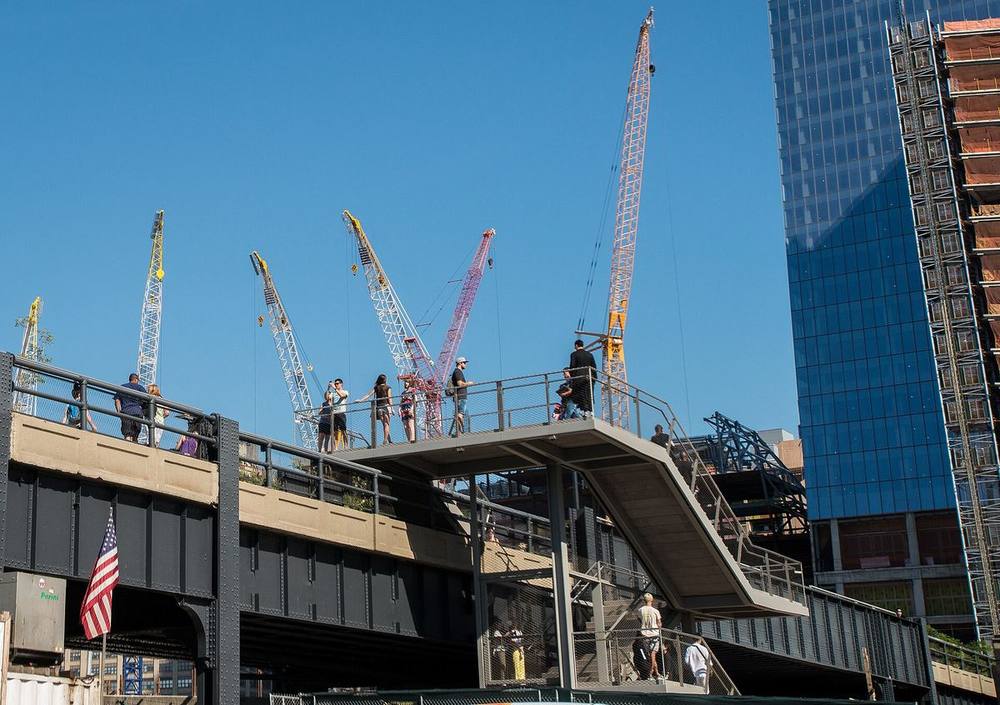
The Spur at 30th Street and 10th Avenue opened on 5 June 2019 after a campaign begun in 2008, and the High Line–Moynihan Connector opened on 22 June 2023.1
- present
The city owns the park; Friends of the High Line maintains, operates and programmes it in partnership with NYC Parks under a license agreement. Research by Black and Richards (Landscape and Urban Planning, 2020), summarised in Scientific American and the Yale Environment Review, found homes within 80 m of the High Line sold for about 35 percent more, framing debate on 'eco-gentrification'.1367


Approvals and legal steps
- 1924 The city's Transit Commission ordered removal of street-level rail crossings, leading to the elevated line.1
- 1983 Federal legislation allowing disused rail lines to be converted to trails (railbanking) is cited by Friends of the High Line as the framework that avoided land-rights problems.13
- 2005 City Council adopted the Special West Chelsea District rezoning (led by the Department of City Planning), one purpose being to facilitate restoration and reuse of the High Line as public open space.431
- 2005 Trail Use Agreement between CSX and the City of New York, and CSX's donation of the structure south of West 30th Street to the city.3
- 2012 City acquired the rail-yards section by donation from CSX (announced 24 July 2012), after a City Planning Commission zoning text amendment enabling the third section.31
Funding
- to 2019 Diller Scofidio + Renfro state that New York City invested $115 million (USD) in the park; they give no period for the figure (the park opened in sections in 2009, 2011, 2014 and 2019).2
- 2005 and 2012 The structure itself was donated to the city by CSX Transportation.3
- ongoing Under its license agreement with the city, Friends of the High Line raises private funds for over 90 percent of the annual budget (2012); FHL now says it raises nearly 100 percent of the annual budget.31
People
- Joshua David and Robert Hammond Co-founders of Friends of the High Line (1999)
- Friends of the High Line Non-profit conservancy; advocacy, fundraising, operation and maintenance
- James Corner Field Operations Landscape architect and project lead
- Diller Scofidio + Renfro Architects (Elizabeth Diller, Ricardo Scofidio, Charles Renfro)
- Piet Oudolf Planting designer
- City of New York (Mayor Michael Bloomberg, City Council, Department of City Planning, NYC Parks) Owner; rezoning; capital funding; partner in operation
- CSX Transportation Former owner; donated the structure (2005, 2012)
- New York Central Railroad Builder and operator of the original freight line
- Peter Obletz Founder of the West Side Rail Line Development Foundation (1983)
Sources for this page
- Friends of the High Line, History
- Diller Scofidio + Renfro, The High Line
- NYC Department of City Planning / Mayor's Office, Mayor Bloomberg, Speaker Quinn and Friends of the High Line announce the City's acquisition of the third section of the High Line from CSX (24 July 2012)
- NYC Department of City Planning, Study for the Potential Expansion of the Special West Chelsea District (28 June 2013)
- Library of Congress, Historic American Engineering Record, New York Central Railroad, West Side Elevated Freight Line (HAER NY-557)
- Scientific American (Opinion), Who Benefits from Public Green Space? (Mallory Richards, 2020)
- Yale Environment Review, The Perils and Promises of Urban Greening (Erin Eck, 2021)
- Wikidata, High Line (Q843869)
Researched on 2026-11-19 from the sources listed; a fact that could not be confirmed in a source was left out. Pictures are public domain or under an open licence, credited as their file page asks.
The question it brings · interpretation
When a new park is likely to raise land values around it, who should be at the table before design starts, and what would you ask them?
Each question is Field Method’s interpretation, not a claim made by the source.
The date
Opening of the first section (Gansevoort Street to 20th Street), 2009. The designers date later phases to 2011, 2014 and 2019.