1871
Golden Gate Park
William Hammond Hall (surveyor, designer and first superintendent); John McLaren (superintendent from 1890); San Francisco Board of Park Commissioners · San Francisco, United States
A 1,017-acre park laid out from 1870–71 by William Hammond Hall over San Francisco's dunes, first stabilised by sowing lupine with barley. The National Register calls it the first major park created on reclaimed land in the West.
How it came about and changed
- 1866–1870
Frederick Law Olmsted, in California in 1866, proposed a park system for San Francisco centred on a sheltered pleasure ground in Hayes Valley. During litigation over title to the Outside Lands, a supervisors' committee arranged for squatters to cede part of their claims for a park in return for clear title; Olmsted's inland scheme was set aside, and on 4 April 1870 the state legislature passed 'An Act to provide for the improvement of Public Parks in the City of San Francisco'.1
- 1870–1876
The new park commission sold bonds to pay for a topographical survey, won by William Hammond Hall, who reported on 15 February 1871 and became engineer and first superintendent in 1871. His plan separated carriage drives from paths, set meadows in low ground framed by tree planting, and began with the 270-acre eastern end and the Panhandle; dunes were stabilised by sowing lupine with barley, and 22,000 trees were set out in 1872. Hall resigned in 1876 under political attack, and the park languished for a decade for lack of funds.13
- 1878–1890
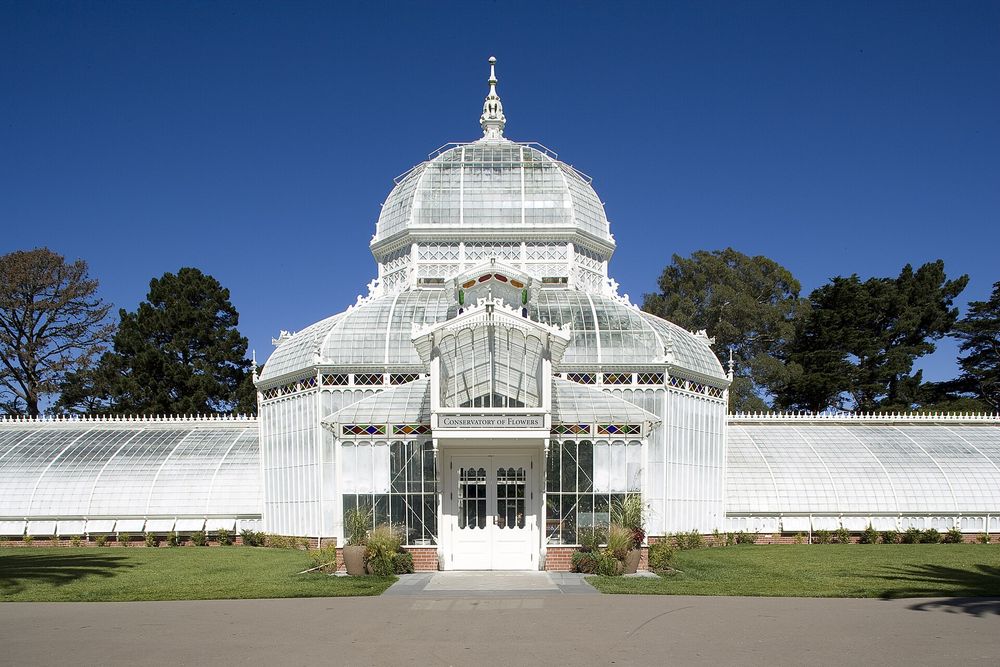
A conservatory was erected in 1878 (SF Rec & Park gives an 1879 opening), a music stand in 1882 and the Children's Quarter in 1888–1889, which the nomination suggests may be the first area of a public park dedicated to children. A reorganised park board brought Hall back (superintendent again 1886–1889), and John McLaren became superintendent in 1890, serving more than half a century.13
- 1894
The California Midwinter International Exposition opened in the park on 27 January 1894; afterwards the Japanese Tea Garden and the Fine Arts Building (the later de Young Museum) remained, the Grand Court became the Music Concourse, and McLaren's crews returned most of the fair site to parkland.13
- 1900–1943
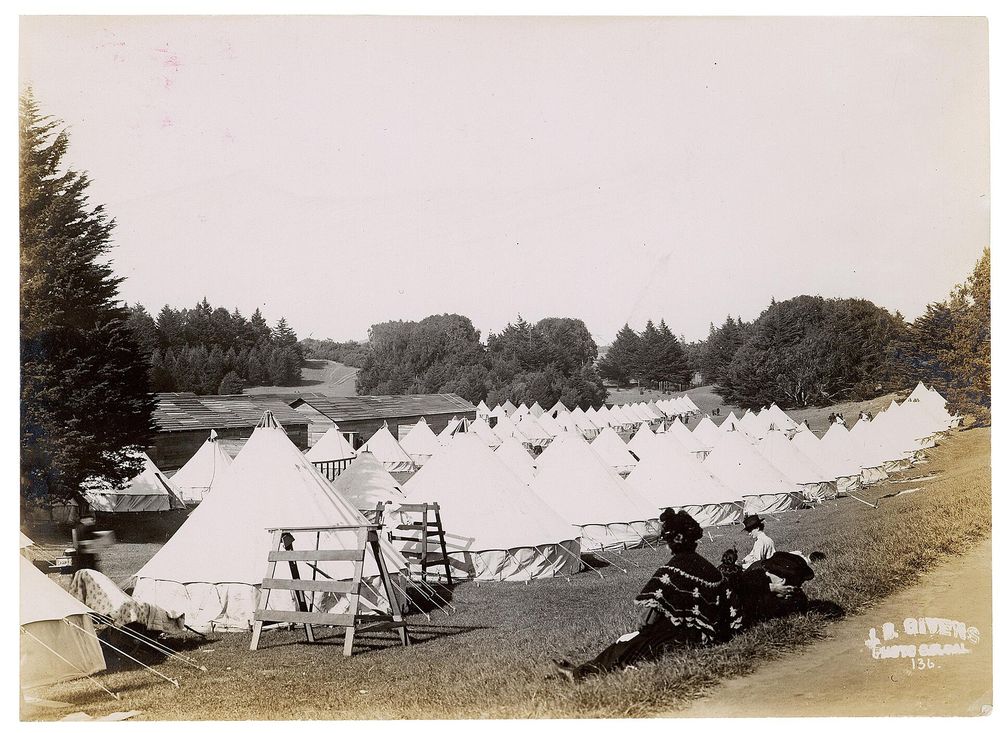
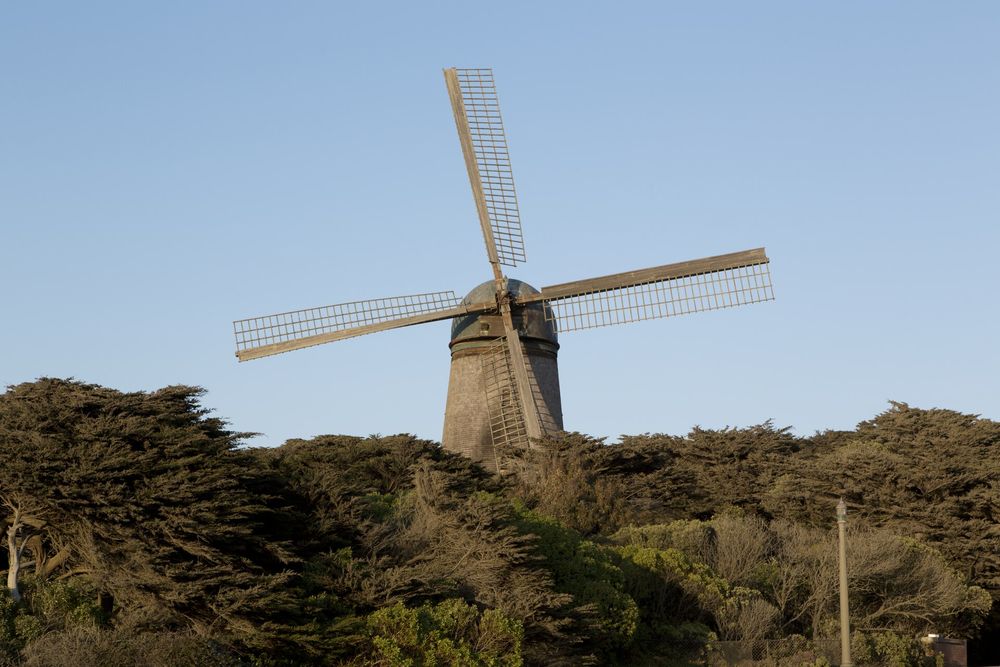
Under a new city charter the park passed from state legislative to city jurisdiction. The western chain of lakes and windmills were added; in 1906 the park sheltered refugees from the earthquake and fire; the California Academy of Sciences moved in after a 1910 vote; the 1920s brought Kezar Stadium, the Beach Chalet and the Shakespeare Garden; New Deal programmes built the Angler's Lodge, Model Yacht Club, Police Stables, Crossover Drive and comfort stations.1
- 1943–2004
Later additions include the Queen Wilhelmina Tulip Garden, Redwood Memorial Grove, Rose Garden, the National AIDS Memorial Grove, a golf course, the County Fair Building (1961) and the McLaren Lodge Annex; the nomination judged that these did not diminish historic integrity. Golden Gate Park was listed in the National Register of Historic Places on 15 October 2004.12
- Today
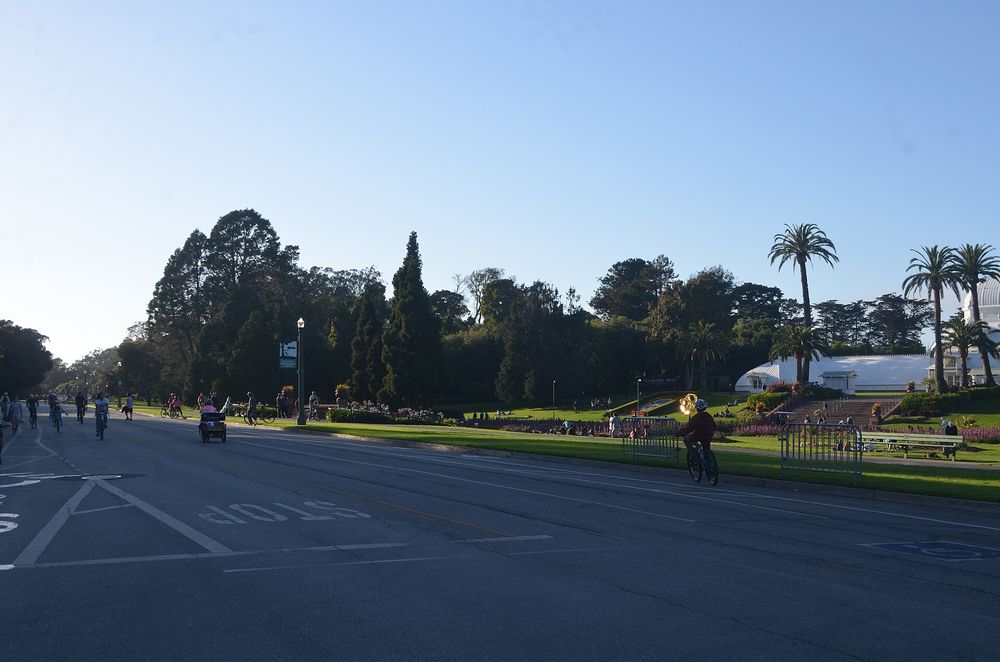
The San Francisco Recreation and Park Department manages the 1,017-acre park, which it describes as including 680 forested acres, 130 acres of meadows, 15 miles of drives and 33 acres of lakes.3


Approvals and legal steps
- 1870 California state act of 4 April 1870, 'An Act to provide for the improvement of Public Parks in the City of San Francisco', following a settlement under which Outside Lands claimants ceded land for the park in return for clear title.1
- c. 1900 A new city charter moved the park from the jurisdiction of the state legislature to the city government.1
- 1910 San Francisco voters approved moving the California Academy of Sciences into the park.1
- 2004 National Register of Historic Places listing (registration 15 October 2004; national significance under Criterion C, local under Criterion A; 135 contributing resources). The Conservatory of Flowers and the Beach Chalet were already individually listed.21
Funding
- 1870–1871 The park commission advertised bonds to fund park improvements; enough were sold to pay for Hall's topographical survey of the park and its approach.1
- 1876–1886 After Hall's resignation the park 'languished due to lack of funds' for about a decade.1
- 1900; 1930s Claus Spreckels donated the music stand (Spreckels Temple of Music, 1900); New Deal public works programmes funded several 1930s recreation buildings and roads.1
People
- William Hammond Hall Surveyor, engineer and designer; first superintendent 1871–1876 and again 1886–1889
- John McLaren Superintendent from 1890 for over half a century; listed with Hall as architect/builder
- Frederick Law Olmsted Sr. Proposed an earlier San Francisco park scheme (1866); praised the park's progress in 1886
- Frank McCoppin Local politician (later mayor) who led the campaign for a park in the Outside Lands
- San Francisco Board of Park Commissioners Commission formed under the 1870 act; issued bonds and employed Hall
- Claus Spreckels Donor of the music stand (1900)
- San Francisco Recreation and Park Department Current manager
Sources for this page
- U.S. National Park Service (NPGallery), National Register of Historic Places Registration Form: Golden Gate Park
- California Office of Historic Preservation, Golden Gate Park (listed resource)
- San Francisco Recreation and Park Department, History of Golden Gate Park
- Wikidata, Golden Gate Park (Q635559)
Researched on 2026-11-19 from the sources listed; a fact that could not be confirmed in a source was left out. Pictures are public domain or under an open licence, credited as their file page asks.
The question it brings · interpretation
How can planting be sequenced to stabilise a hostile ground condition, such as moving sand, before the designed landscape is built on it?
Each question is Field Method’s interpretation, not a claim made by the source.
The date
1871: William Hammond Hall completed his topographic survey (report of 15 February 1871), was appointed engineer of the park in August 1871, prepared the master plan and began construction (grading, drainage, irrigation, nursery); the National Register period of significance runs 1871–1943 (NRHP nomination, NPS ref. 04001137). Other dates: state act of 4 April 1870; first mass visits 1872; John McLaren superintendent from 1890; Midwinter Fair 1894; National Register listing 15 October 2004 (California OHP).