1789
Englischer Garten, Munich
Elector Karl Theodor (decree); Benjamin Thompson, Count Rumford; Friedrich Ludwig von Sckell · Munich, Germany
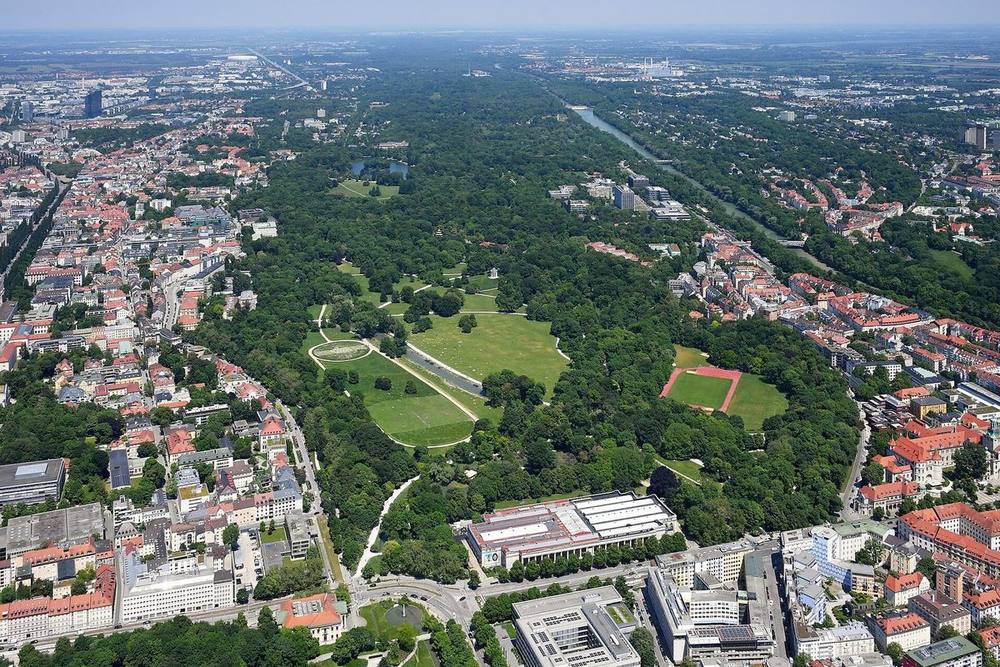
Flood plain and hunting ground on the Isar made into a park that Karl Theodor's 1789 decree opened to the whole population. Rumford proposed and directed the work; Sckell, consulted from 1789, completed it after moving to Munich in 1804.
How it came about and changed
- July–August 1789
At the suggestion of the American-born Benjamin Thompson (later Count Rumford), military gardens were begun in July 1789 on today's Schönfeldwiese; on 13 August 1789 Elector Karl Theodor signed a decree to turn the Hirschanger, an electoral hunting ground in the Isar floodplain, into a public garden for the people of Munich, extending the commission to the immediate laying out of a 'general English garden'.21
- 1789–1798
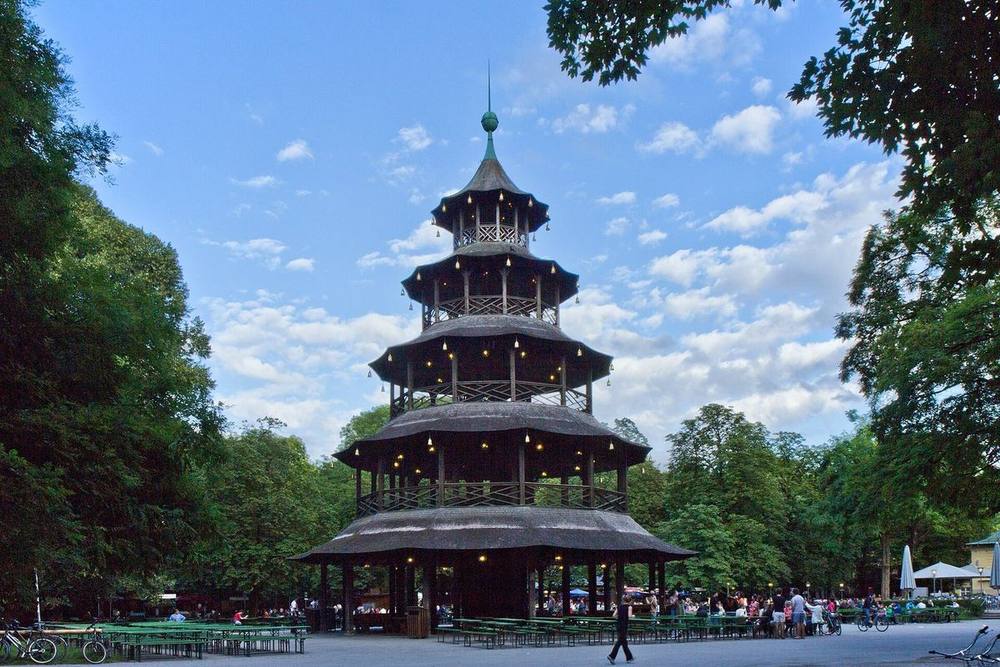
The Schwetzingen court gardener Friedrich Ludwig Sckell was called to Munich in August 1789 to lay out the first part. Under Rumford's direction a dam was built against flooding of the willow and sea-buckthorn floodplain, and paths, plantings and bridges were made; the Chinese Tower (design by military architect Joseph Frey) and the Ökonomiegebäude and Chinese inn (Johann Baptist Lechner) were built in 1790 and the Rumford House in 1791. The garden opened to the public in 1792.21
- 1799–1804
Rumford's successor Reinhard Freiherr von Werneck dissolved the military gardens (1799), enlarged the park northward into the Hirschau (about 100 hectares added in 1800) and created the Kleinhesseloher See from 1804.21
- 1804–1823
Sckell, appointed head of the new court garden intendancy in Munich in 1804, took direct charge; he presented a redesign plan and memorandum to King Max I Joseph in 1807, enlarged the Kleinhesseloher See in 1812, completed the waterfall at the confluence of the Eisbach and Schwabinger Bach in 1815, and reworked paths, plantings and waterways until his death in 1823, creating a landscape garden of the 'classical' phase.21
- 1824–1838
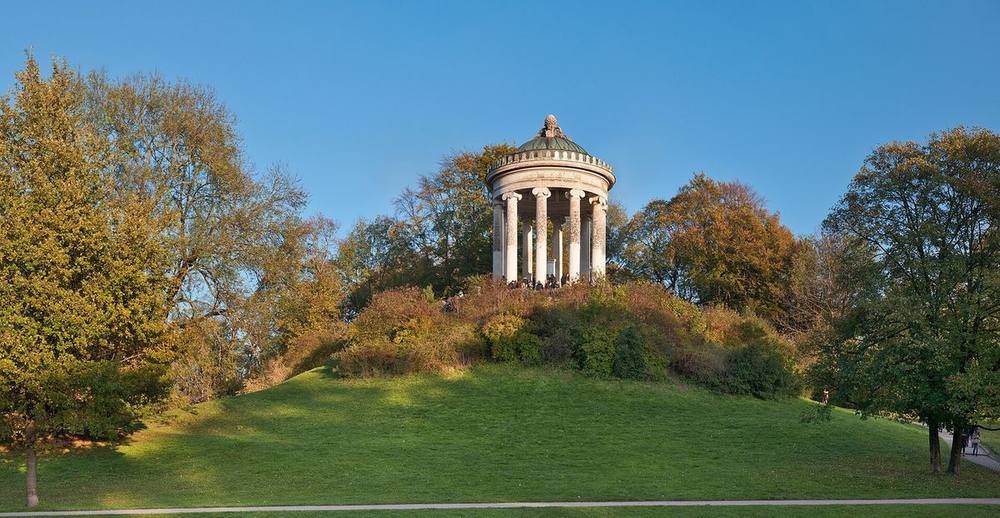
Monuments by Leo von Klenze were added: the Sckell memorial (1824), the Monopteros built for King Ludwig I in 1836–37 on an artificial hill shaped by Carl August Sckell, the stone bench replacing the wooden Apollo temple (1838) and the Werneck memorial (1838).21
- 1944–1985
The Chinese Tower burned in a bombing raid in 1944 and was rebuilt in 1952 with wide public participation. In the 1960s the Mittlerer Ring (Isarring) road was built through the park, impairing its unity; the Japanese teahouse was added in 1972 and the Seehaus rebuilt in 1985.24
- 1999
The Bavarian Landesdenkmalrat (State Monuments Council) resolved on 18 January 1999 that the Englischer Garten is a garden monument of European rank and opposed a planned tram line across the park, appealing to the city and the Free State to keep it undamaged.4
- present
The park (376 ha, or 411 ha including the Maximilian Park and Court and Finance Gardens) is managed by the Bavarian Palace Administration (Bayerische Verwaltung der staatlichen Schlösser, Gärten und Seen) of the Free State of Bavaria; it is protected as a garden monument under the Bavarian Monument Protection Act.13


Approvals and legal steps
- 1789 Decree of Elector Karl Theodor of 13 August 1789 ordering the Hirschanger hunting ground to be laid out for the public's recreation and extending the commission to a 'general English garden'.21
- 1807 Sckell's redesign plan and memorandum submitted to King Max I Joseph (approval process not described in the sources read).2
- current (date of listing not stated) Protected as a garden work of art under the Bavarian Monument Protection Act (Bayerisches Denkmalschutzgesetz).3
- 1999 Resolution of the Bavarian Landesdenkmalrat of 18 January 1999 declaring the park a garden monument of European rank and opposing a tram line through it (advisory body).4
Funding
- 1789–1823 Created by order of the Elector on electoral land (the Hirschanger hunting ground) as a court undertaking under Rumford and later the court garden intendancy; no construction costs are stated in the sources read.2
- 1952 The Chinese Tower was rebuilt in 1952 with active participation of the people of Munich (form of contribution not specified).2
- current (undated page) The Free State of Bavaria invests approximately 2.5 million euros annually in maintaining the park (2.7 million euros including upkeep of the buildings); about 60 employees administer and maintain it.1
People
- Elector Karl Theodor Ruler who decreed the public garden on 13 August 1789
- Sir Benjamin Thompson, Count Rumford Initiator; directed the first phase (1789–1798)
- Friedrich Ludwig (von) Sckell Garden designer; laid out the first part from 1789 and, as court garden intendant from 1804, gave the park its definitive form until 1823
- Reinhard Freiherr von Werneck Rumford's successor; enlarged the park into the Hirschau and created the Kleinhesseloher See
- Joseph Frey Military architect; design of the Chinese Tower (1790)
- Johann Baptist Lechner Builder of the Ökonomiegebäude, Chinese inn (1790) and Rumford House (1791)
- Leo von Klenze Architect of the Monopteros (1836–37), Sckell and Werneck memorials and stone bench
- Carl August Sckell Shaped the artificial hill for the Monopteros
- King Max I Joseph; King Ludwig I Bavarian kings; recipient of Sckell's 1807 plan; commissioner of the Monopteros
- Bayerische Verwaltung der staatlichen Schlösser, Gärten und Seen Current managing authority (Free State of Bavaria)
Sources for this page
- Bayerische Schlösserverwaltung (Bavarian Palace Administration), English Garden – Munich
- BayernPortal (Free State of Bavaria), Englischer Garten München
- Bayerische Schlösserverwaltung, Englischer Garten (visitor leaflet with overview plan, 'Respektieren Sie das Gartendenkmal!')
- Bayerisches Staatsministerium für Wissenschaft und Kunst, Beschluss des Landesdenkmalrats vom 18.01.1999 zum Englischen Garten in München
- Wikidata, Englischer Garten (Wikidata item Q260223)
- Wikipedia (pointer only), Englischer Garten
Researched on 2026-11-19 from the sources listed; a fact that could not be confirmed in a source was left out. Pictures are public domain or under an open licence, credited as their file page asks.
The question it brings · interpretation
When a park is declared public from the outset rather than opened later, which design decisions (entrances, paths, edges, uses) follow from that intent on your own site?
Each question is Field Method’s interpretation, not a claim made by the source.
The date
Year of Elector Karl Theodor's decree (13 August 1789) and the start of laying out; BayernPortal says the garden was first available to Munich residents in 1792.