1935
Curtis Prairie, University of Wisconsin-Madison Arboretum
Norman Fassett and students; Civilian Conservation Corps crews led by Theodore Sperry; named for plant ecologist John Curtis · Madison, Wisconsin, United States
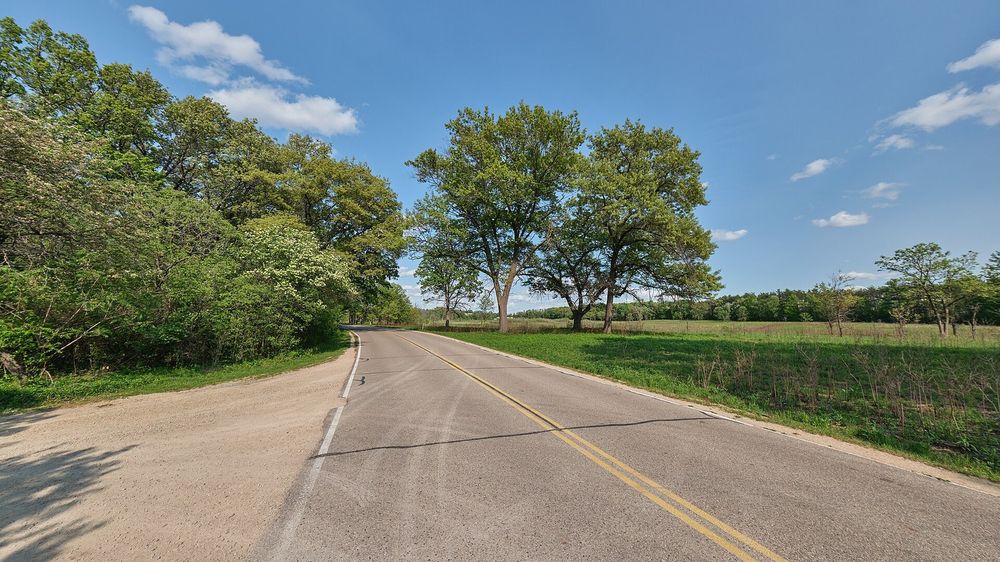
A 72-acre tallgrass prairie begun as experimental plots, using seed and sod gathered from prairie remnants along railways and in cemeteries, with work by Civilian Conservation Corps crews led by Theodore Sperry.
How it came about and changed
- 1909/1911–1927
City planner and landscape architect John Nolen recommended a large park around Lake Wingra and an arboretum for the university. From the 1920s Michael B. Olbrich and the Madison parks association raised money to buy land around Lake Wingra, and in December 1927 Olbrich, then a UW Regent, proposed that the university acquire land on the south side of the lake for an arboretum, wildlife refuge and forest preserve; the Regents accepted, but the 1929 crash and Olbrich's death in 1929 stalled the project.34
- 1932–1934
In 1932 the Madison Parks Foundation transferred the land it had acquired (about 245–246 acres) to the university; an Arboretum Committee was appointed, with horticulturist G. William Longenecker as executive director and Aldo Leopold as research director. Longenecker and others argued successfully for naturalistic rather than formal plantings, work began in 1933, and at the dedication in June 1934 Leopold described the aim as a reconstructed sample of 'original Wisconsin'.341
- 1934/1935–1941
Prairie restoration on the tract later named for plant ecologist John Curtis began as experimental plots in 1935 (some university sources say 1934 for the start of work). Botanist Norman Fassett and students, with about 200 Civilian Conservation Corps workers led by Theodore Sperry, gathered seed and sod from prairie remnants along railways and in cemeteries and developed planting methods by trial and error; CCC crews were stationed at the Arboretum from 1935 to 1941 and supplied most of the labour.2143
- 1940s
John Curtis and Max Partch carried out pioneering research at the Arboretum in the 1940s documenting the importance of fire to prairie restoration; Aldo Leopold took part in controlled prairie burns in the early-to-mid 1940s.51
- 2009
At the Arboretum's 75th anniversary the university described Curtis Prairie as a 72-acre restoration with about 230 plant species, regarded as a regional model, but damaged by stormwater carrying sediment, fertiliser and seeds of invasive reed canary grass; research shifted to sustaining the restoration and to functions such as infiltration.2
- 2015–2021
The Arboretum was listed in the State Register of Historic Places (20 November 2015) and the National Register (28 January 2019), and designated a National Historic Landmark in January 2021, with a period of significance from 1933 to 1966.31
- 2016–2020
As the final phase of a series of stormwater facilities built with local municipalities, Curtis Pond at the west edge of Curtis Prairie was rehabilitated: a failed flume and outlet were rebuilt, sediment removed and invasive species replaced with native plants (design by Strand Associates; construction from December 2019, close-out September 2020).678
- present
The Arboretum manages the prairie with prescribed fire carried out by a trained staff crew under burn plans, alongside invasive-species control and stormwater management in the Lake Wingra watershed.56

Approvals and legal steps
- 1927 The UW Board of Regents accepted Michael Olbrich's proposal that the university acquire land south of Lake Wingra for an arboretum.34
- 1932 Transfer of the Madison Parks Foundation's land to the University of Wisconsin (initial acres acquired 26 April 1932 per the Arboretum).34
- 2015 Listed in the Wisconsin State Register of Historic Places, 20 November 2015.3
- 2019 Listed in the National Register of Historic Places, 28 January 2019.3
- 2021 Designated a National Historic Landmark (status granted 13 January 2021 per the Wisconsin Historical Society; the university reports listing in January 2021), based on its role in restoration ecology, conservation history and Leopold's land ethic.31
- 2009 An Intergovernmental Agreement between the University of Wisconsin, the City of Madison and the Town of Madison dated February 2009 funds stormwater work including the Curtis Pond rehabilitation in part.8
Funding
- 1920s–1932 Land was assembled by the Madison Parks Foundation through fundraising led by Michael Olbrich and others and transferred to the university; the Arboretum states that most of its land came from gifts and purchases during the Great Depression.34
- 1935–1941 Labour for the prairie planting came largely from the federal Civilian Conservation Corps camp at the Arboretum, described by the Wisconsin Historical Society as free labour.342
- 2016–2020 Curtis Pond rehabilitation (DFD #16H2U): UW–Madison Facilities Planning & Management lists total soft costs $165,000, construction $959,000 and total project cost $1,124,000, with funding sources listed as GFSB $550,450, PR cash $203,590 and others $1,354,960; funded in part through the February 2009 intergovernmental agreement with the City and Town of Madison.8
People
- Norman Fassett UW botanist who with students began the prairie planting
- Theodore (Ted) Sperry Led the Civilian Conservation Corps crews on the prairie restoration
- Civilian Conservation Corps Federal work programme; camp at the Arboretum 1935–1941 supplied most labour (about 200 workers on the prairie)
- John T. Curtis Plant ecologist after whom the prairie is named; fire research with Max Partch in the 1940s
- Max Partch Researcher on fire in prairie restoration with Curtis in the 1940s
- Aldo Leopold Arboretum research director; articulated the restoration aim at the 1934 dedication
- G. William Longenecker Horticulturist; Arboretum executive director 1933–1966; argued for naturalistic plantings
- Michael B. Olbrich UW Regent and parks advocate who proposed the arboretum (1927)
- John Nolen City planner and landscape architect who first proposed an arboretum for the university
- University of Wisconsin–Madison Arboretum Owner and manager
- Strand Associates, Inc. Engineer (A/E) for the 2016–2020 Curtis Pond rehabilitation
Sources for this page
- University of Wisconsin–Madison Arboretum, UW–Madison Arboretum Designated as a National Historic Landmark
- University of Wisconsin–Madison News, Birthplace of ecological restoration celebrates 75 years (17 June 2009)
- Wisconsin Historical Society, Property record HI229324 (University of Wisconsin Arboretum)
- University of Wisconsin–Madison Arboretum, History
- University of Wisconsin–Madison Arboretum, Fire (Land Stewardship)
- University of Wisconsin–Madison Arboretum, Stormwater (Land Stewardship)
- University of Wisconsin–Madison Arboretum, UW Arboretum begins final upgrades to stormwater management system
- UW–Madison Facilities Planning & Management, Project Delivery, Curtis Pond Rehabilitation (DFD #16H2U)
- Wikidata, University of Wisconsin–Madison Arboretum (Q5480434)
Researched on 2026-11-19 from the sources listed; a fact that could not be confirmed in a source was left out. Pictures are public domain or under an open licence, credited as their file page asks.
The question it brings · interpretation
If a planting is meant to become a plant community and not a finished picture, what would you record in year one so someone can judge it in year fifty?
Each question is Field Method’s interpretation, not a claim made by the source.
The date
1935 is the year the Arboretum gives for the first experimental plots and the Wisconsin Historical Society gives for the start of planting. A UW-Madison news article says Norman Fassett and students began work in 1934.