2001
Crissy Field restoration
Hargreaves Associates (now Hargreaves Jones), landscape architects; Golden Gate National Parks Conservancy (client and project lead) with the National Park Service, Golden Gate National Recreation Area · San Francisco, United States
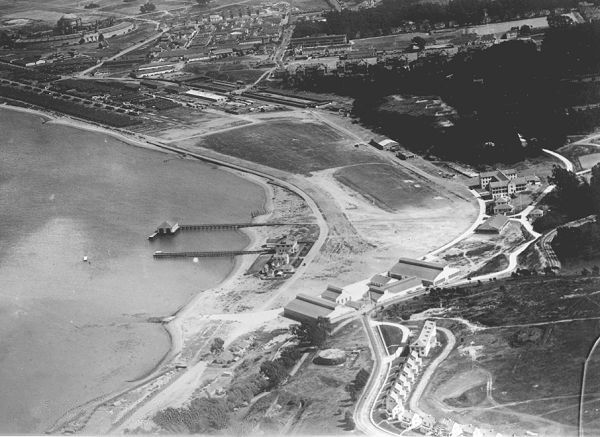
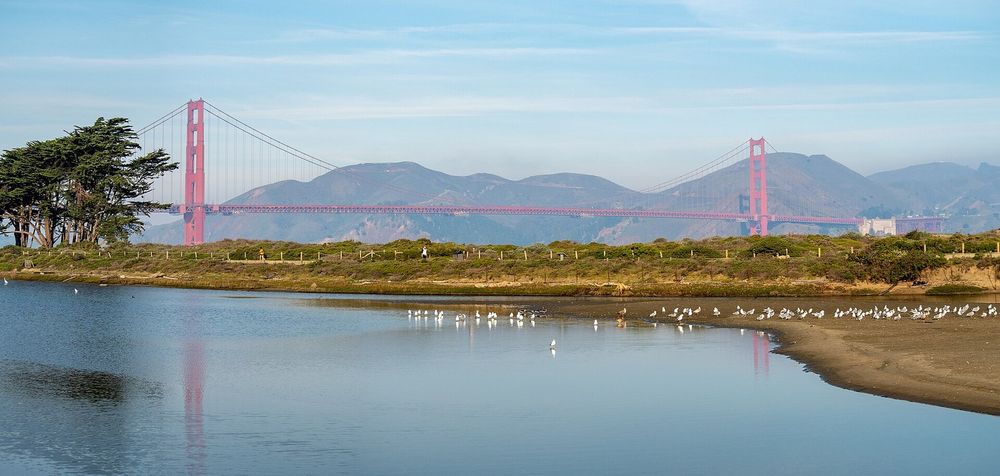
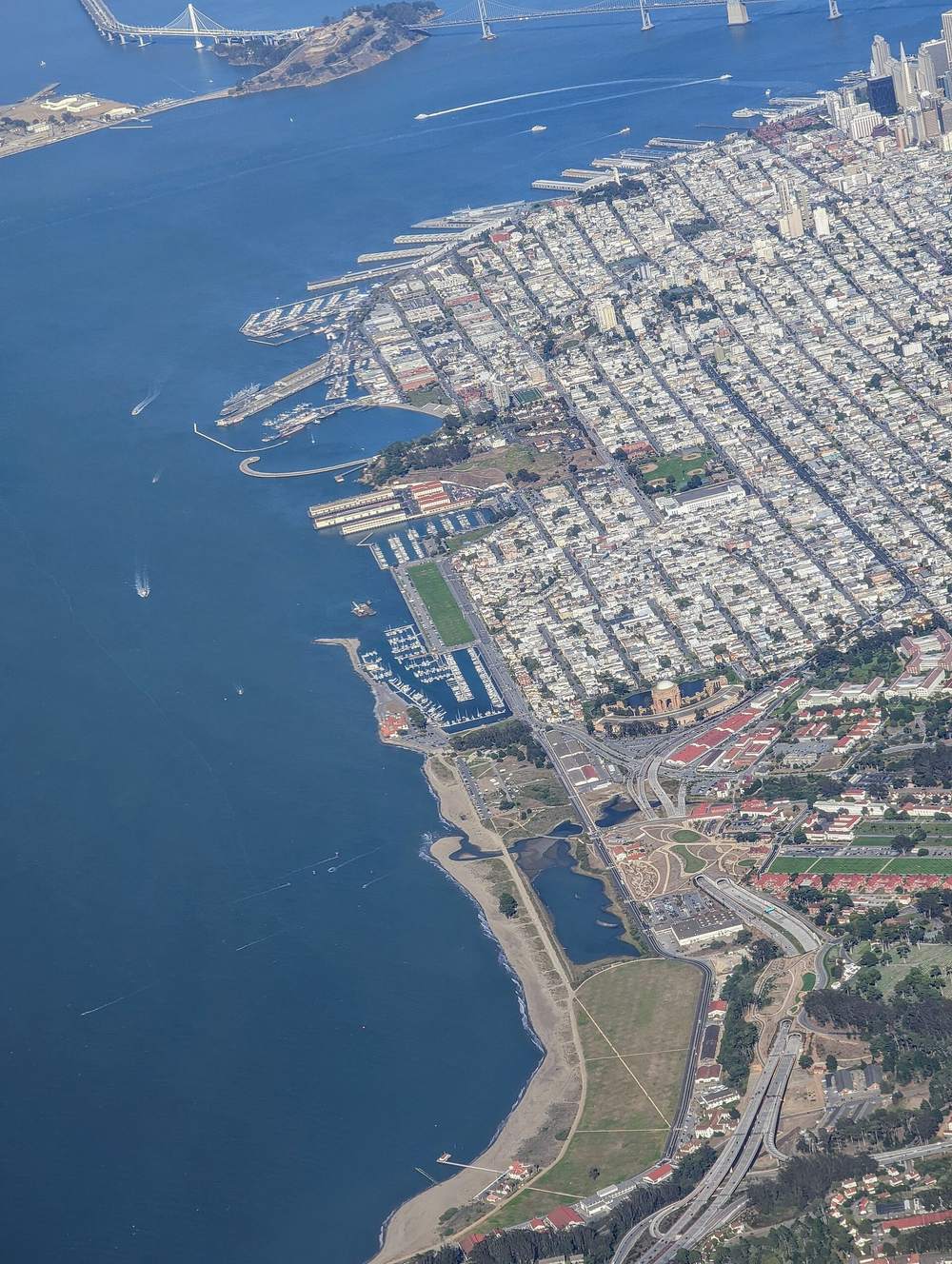
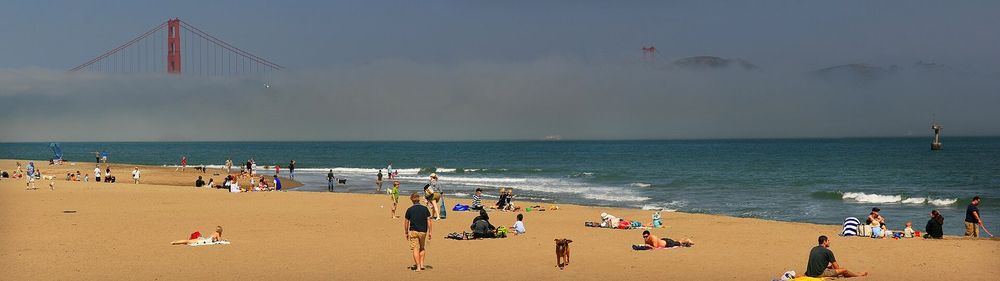
A former Army airfield on the Presidio waterfront became a 100-acre national park site, opened in 2001, with a re-created 18-acre tidal marsh and dunes beside a restored grass airfield and a waterfront promenade.
How it came about and changed
- before 1776–1915
The site was part of an extensive backdune tidal marsh (about 130 acres) draining the Tennessee Hollow watershed to the bay, used seasonally by Ohlone people, whose shell middens survive. After the US Army took control of the Presidio in 1846 the wetland was treated as land for dumping and draining, and the marsh was filled, with the fill completed for the 1915 Panama-Pacific International Exposition.146
- 1919–1936
The Army established Crissy Airfield in 1919 (completed by 1921), named after Major Dana H. Crissy, who died in an Army test flight; it was the first Air Coast Defense Station on the Pacific Coast and the site of aviation firsts such as the 1924 dawn-to-dusk transcontinental flight. Operations moved to Hamilton Field by 1936.6
- 1972–1994
The 1972 law creating Golden Gate National Recreation Area provided that the Presidio would join the park if the Army left; Congress decided in 1989 to close the post under a base-reduction programme, and on 1 October 1994 the Presidio was transferred to the National Park Service. By then Crissy Field was a derelict, largely paved site.71
- 1986–1998
The Evelyn and Walter Haas, Jr. Fund made a planning grant in 1986 for restoring the airfield as public green space and pledged an $18 million lead gift in 1997. NPS ran an extensive public planning process; the ASLA project statement describes two years of public process with 25 community meetings and reviews by agencies, balancing aviation history, marsh restoration, boardsailing and dog walking. Cleanup from 1997 removed almost 90,000 tons of contaminated material.513
- 1998–2001
Hargreaves Associates' design re-established the tidal marsh, dunes and beach, rebuilt the historic grass airfield using excavated fill, and linked the site with a 1.5-mile promenade. More than 230,000 cubic yards of earth were excavated, the marsh channel was opened to the tides in November 1999, about 100,000 native plants of 110 species were planted, and historic buildings were reused for the Crissy Field Center and Warming Hut. The park opened in May 2001; the Conservancy led planning, fundraising and implementation under NPS guidance.1234
- 2000–2005
A monitoring programme funded by NPS and the US Environmental Protection Agency tracked hydrology, geomorphology, water quality, soils, vegetation, fish, invertebrates and birds over five years to guide management.1
- 2007–2016
Further Haas, Jr. Fund grants ($1.5 million in 2007 and $2.5 million in 2015) supported access; in 2010 the Conservancy opened a LEED Platinum interim building at East Beach for the relocated Crissy Field Center; a $2.5 million donation and matching grant in 2016 paid for resurfacing the promenade.524
- 2019–2022
The Presidio Trust, the Conservancy and the National Park Service extended the restoration inland: the Quartermaster Reach project (begun September 2019) replaced seven acres of asphalt and debris with marsh, daylighting 850 feet of buried stream to connect the Tennessee Hollow watershed to the bay through Crissy Marsh, and the Conservancy describes the Presidio Tunnel Tops project as the capstone connecting Crissy Field with the Main Post. The ASLA Landmark Award followed in 2022.923



Approvals and legal steps
- 1972 Federal legislation creating Golden Gate National Recreation Area designated the Presidio to become part of the park if the Army closed the base.7
- 1989 Congress decided to close the Presidio as part of a military base reduction programme.7
- 1994 Final General Management Plan Amendment and Final Environmental Impact Statement for the Presidio (availability notice in the Federal Register, 6 September 1994), which addressed issues including Crissy Field parking and boardsailing access; transfer of the Presidio to NPS on 1 October 1994.87
- 1996–1998 An act of Congress (1996) established the Presidio Trust; on 1 July 1998 management of the Presidio's non-coastal areas passed to the Trust, while coastal areas including Crissy Field remained with NPS.7
Funding
- 1986 Planning grant from the Evelyn and Walter Haas, Jr. Fund to find a way to restore the airfield as accessible green space (amount not stated).5
- 1997 Lead grant of $18 million ($13.5 million from the Haas, Jr. Fund and $4.5 million from Colleen and Robert Haas), pledged in 1997 and described by the Fund as the largest cash gift in National Park Service history at that time; the Conservancy credits the Haas family and thousands of individual donors and volunteers.52
- c. 1998–2001 Project budget of $25 million (Landscape Architecture Foundation case study); on-site thermal treatment of about 38,000 cubic yards of contaminated soil saved an estimated $7.6 million in off-haul costs.43
- 2000–2005 Post-construction monitoring funded by the National Park Service and the US Environmental Protection Agency.1
- 2007, 2015, 2016 Additional Haas, Jr. Fund grants of $1.5 million (2007) and $2.5 million (2015); a $2.5 million donation and matching grant secured in 2016 for promenade resurfacing and amenities.54
People
- Hargreaves Associates (now Hargreaves Jones) Landscape architects
- Golden Gate National Parks Conservancy Client; led planning, fundraising, design management and construction; reused historic structures and managed volunteers
- National Park Service, Golden Gate National Recreation Area Land manager since 1994; ran the public planning process; monitoring
- Evelyn and Walter Haas, Jr. Fund; Colleen and Robert Haas Lead donors
- US Environmental Protection Agency Co-funder of the monitoring programme
- Presidio Trust Federal agency managing the Presidio interior since 1998; led the Quartermaster Reach marsh extension (2019–2020)
- Brian O'Neill GGNRA Superintendent at the 2001 opening
- Ohlone people Original inhabitants who used the marsh; shell middens found during construction
Sources for this page
- National Park Service, Golden Gate National Recreation Area, Crissy Field Restoration
- Golden Gate National Parks Conservancy, Crissy Field (park project)
- American Society of Landscape Architects, Crissy Field: An Enduring Transformation (2022 ASLA Professional Awards, Landmark Award)
- Landscape Architecture Foundation, Landscape Performance Series, Crissy Field (Case Study Brief)
- Evelyn and Walter Haas, Jr. Fund, A Story of Community (Crissy Field)
- National Park Service, Crissy Airfield, Presidio of San Francisco
- National Park Service, Post to Park Transition
- US Government Publishing Office, General Management Plan Amendment; Presidio of San Francisco ... Availability of Final GMPA and Final EIS (Federal Register 59:171, 6 September 1994)
- Presidio Trust, Presidio Begins Milestone Watershed Restoration Project (5 August 2019)
- Wikidata, Crissy Field (Q5186096)
- Wikidata, Crissy Marsh (Q5186098)
Researched on 2026-11-19 from the sources listed; a fact that could not be confirmed in a source was left out. Pictures are public domain or under an open licence, credited as their file page asks.
The question it brings · interpretation
How can a restored marsh share an edge with a busy urban promenade without either the habitat or the public use being pushed out?
Each question is Field Method’s interpretation, not a claim made by the source.
The date
2001 marks the opening of the restored park (Golden Gate National Parks Conservancy gives a completion date of 6 May 2001, with opening-week celebrations in May 2001). Other key dates: Presidio transferred from the Army to the National Park Service 1 October 1994; hazardous-materials cleanup from 1997; restoration works 1998–2000; tidal channel opened November 1999 (NPS); Haas lead gift pledged 1997 (Haas, Jr. Fund); Quartermaster Reach marsh link begun 2019 (Presidio Trust).
Checked against
- National Park Service, Golden Gate National Recreation Area, Crissy Field Restoration
- Golden Gate National Parks Conservancy, Crissy Field (park project)
- American Society of Landscape Architects, Crissy Field: An Enduring Transformation (2022 ASLA Professional Awards, Landmark Award)
- Landscape Architecture Foundation, Landscape Performance Series, Crissy Field (Case Study Brief)