1847
Birkenhead Park
Joseph Paxton (layout); Edward Kemp (construction supervision, later superintendent); Birkenhead Improvement Commissioners · Birkenhead, England, United Kingdom
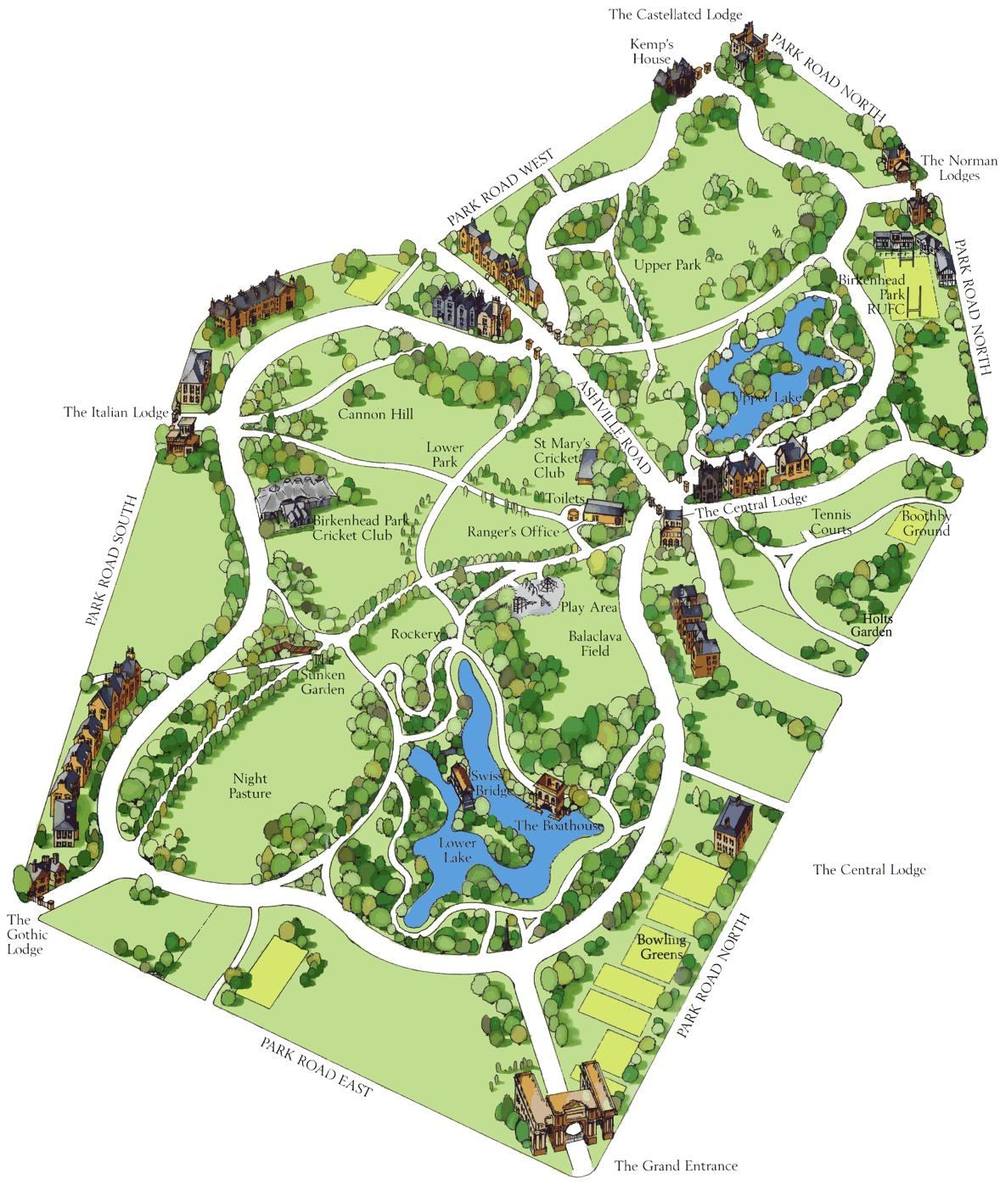
A public park, authorised by an 1843 Act, whose cost was meant to be recovered by selling building plots for houses around its edge. Olmsted visited in 1850, and Parks and Gardens UK says it influenced his Central Park design.
How it came about and changed
- 1841–1843
In 1841 Isaac Holmes, a Liverpool councillor and Birkenhead Improvement Commissioner, suggested a public park for the fast-growing town; the 1843 Improvement Act empowered the Commissioners to borrow money and buy land, much of it former farmland resold to them by local businessmen.23
- 1843–1845
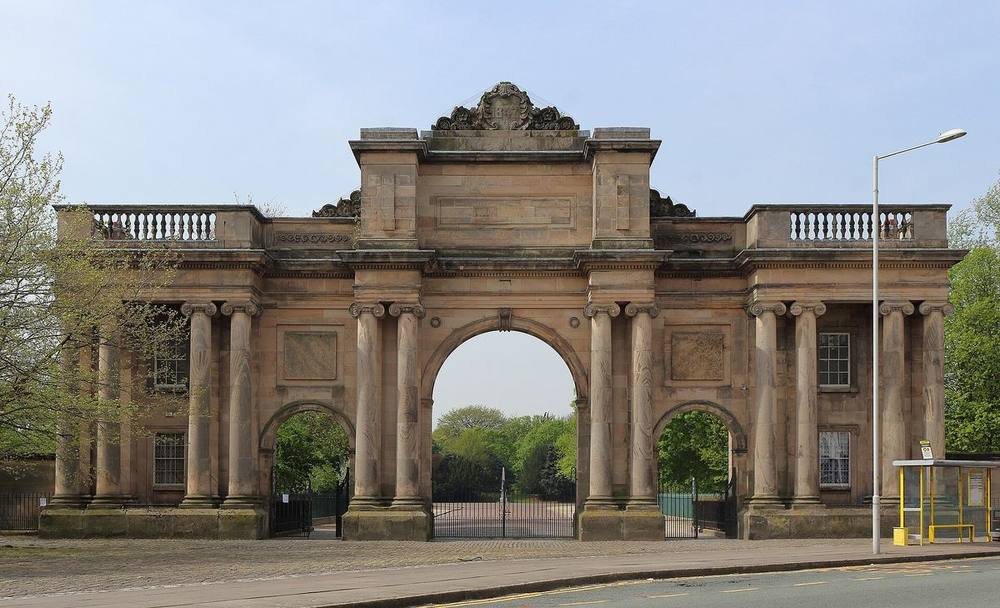
Joseph Paxton, head gardener at Chatsworth, was invited by the Commissioners' chairman to design the park (Parks and Gardens UK says he was appointed by Sir William Jackson), with villa plots on a perimeter belt intended to recoup costs (plan of 1844). Edward Kemp came from Chatsworth to supervise construction in 1843; John Robertson and Lewis Hornblower designed the lodges and Grand Entrance.21
- 1845–1847
In 1845 Paxton altered plans for unsold plots and then withdrew; Kemp, appointed Park Superintendent in 1845, completed the works and was largely responsible for the planting. The public used the park before it opened (Birkenhead Park Cricket Club founded 1846).13
- 1847
Officially opened on Easter Monday, 5 April 1847, by Lord Morpeth, on the same day as the new docks.23
- 1850–1859
Frederick Law Olmsted visited in 1850 and again in 1859; elements of Birkenhead were later reflected in Central Park. A revised sale plan of the villa plots dates from 1850.13
- 1885–1953
Additions included a bandstand (1885), the Boothby Ground (1903) and a palm house (1921, demolished 1947 after Blitz damage); in the Second World War railings were removed and about 15 acres of Upper Park became allotments.3
- 1976–1977
The Friends of Birkenhead Park formed in 1976; the park was designated a Conservation Area in 1977.3
- 1999–2007
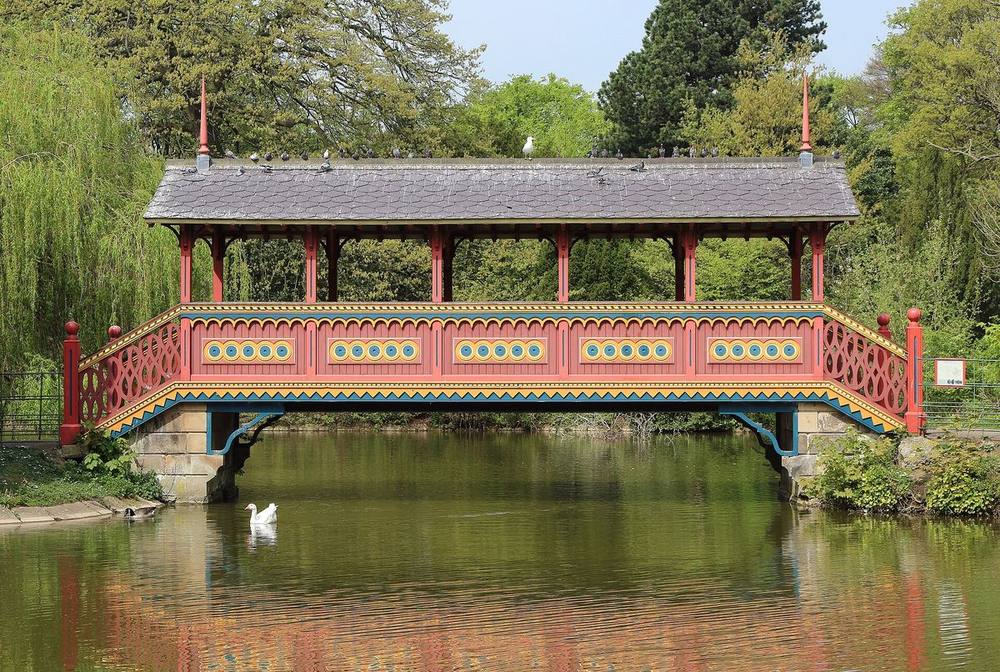
Restoration and management plans (Hilary Taylor Landscape Associates, 1999–2003) preceded a restoration funded from 2002 that repaired the Boat House, Swiss Bridge and Grand Entrance; a new Visitor Centre opened in 2006 and the park received its first Green Flag Award in 2007.13
- 2023
Added to the UK Tentative List for World Heritage nomination (announced 10 April 2023).3


Approvals and legal steps
- 1843 Private Act of Parliament (the Third Birkenhead Improvement Act, 1843) allowed the Improvement Commissioners to borrow and use public money to buy land and create a public park.123
- 1977 Designated a Conservation Area.31
- not stated Registered Grade I on the Register of Parks and Gardens of Special Historic Interest (NHLE list entry 1000994); several lodges and structures are separately listed (Grand Entrance Grade II*, others Grade II).1
- 2023 Placed on the UK Tentative List for possible World Heritage nomination.3
Funding
- 1843–1850 Public money: the Commissioners borrowed under the 1843 Act to buy land; the cost was to be recovered by selling villa plots around the park.213
- 1843 Paxton agreed to design the park for a fee of £800.2
- 1845 Kemp, as superintendent, had a salary of £150 a year and a budget of £1,000 a year.1
- 2002 Restoration grant of over £11 million from the Heritage Lottery Fund, Merseyside Objective One Programme, the European Union and Wirral Borough Council.3
People
- Joseph Paxton (1803-1865) Designer (plan of 1844)
- Edward Kemp Construction supervisor from 1843; Park Superintendent from 1845
- Birkenhead Improvement Commissioners Client and public body that bought the land
- Sir William Jackson Local industrialist who appointed Paxton (per Parks and Gardens UK)
- Isaac Holmes Commissioner who proposed the park in 1841
- Lewis Hornblower Architect of the Grand Entrance
- John Robertson Designer of lodges
- Lord Morpeth Opened the park on 5 April 1847
- Hilary Taylor Landscape Associates Restoration and management plans, 1999–2003
- Wirral Borough Council / Friends of Birkenhead Park Current owner-manager and community group
Sources for this page
- Parks and Gardens UK, Birkenhead Park (incl. text from the Register of Parks and Gardens)
- Birkenhead Park, Birkenhead Park's Conception and Opening
- Birkenhead Park, A Brief History of Birkenhead Park (timeline)
- Wikidata, Birkenhead Park (Q4916438)
Researched on 2026-11-19 from the sources listed; a fact that could not be confirmed in a source was left out. Pictures are public domain or under an open licence, credited as their file page asks.
The question it brings · interpretation
Could the value a new park adds to the land around it be used to pay for building and keeping it, and who would end up living on that edge?
Each question is Field Method’s interpretation, not a claim made by the source.
The date
Date the park opened (5 April 1847, by Lord Morpeth). It was authorised by the Third Improvement Act (Birkenhead) of 1843 and built between 1843 and 1847; the Birkenhead Park site says the opening was held back to coincide with the Morpeth Dock opening.