2016
Superilles (Superblocks): 'Omplim de vida els carrers' government measure
Barcelona City Council (Ajuntament de Barcelona) · Barcelona, Spain
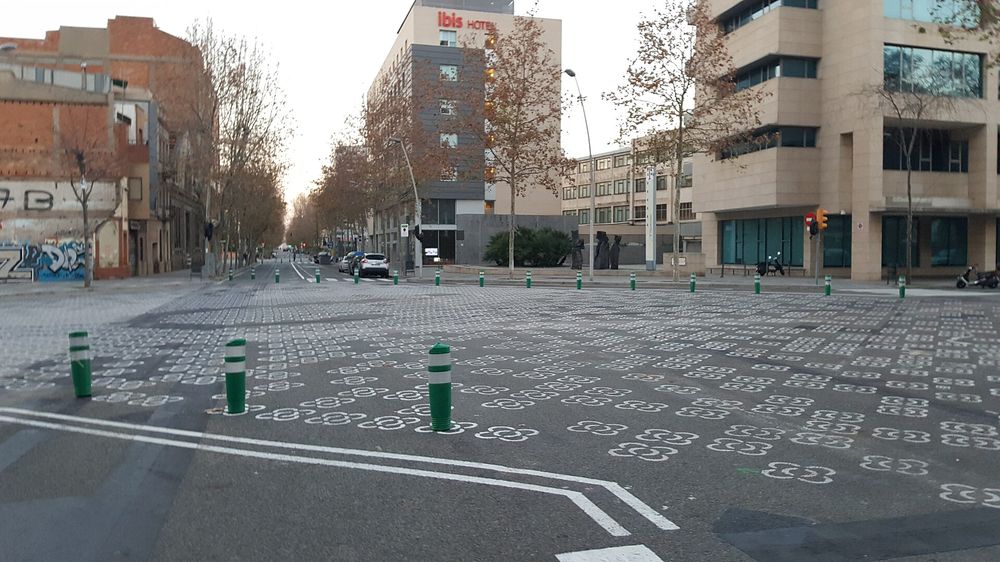
Began reorganising groups of city blocks so interior streets give space back from private cars to residents, starting with pilot superblocks; the city public health agency later evaluated Poblenou, Sant Antoni and Horta for health and wellbeing effects.
How it came about and changed
- 1980s–2015
WHO reports that the Superblock concept had existed since the 1980s, proposed by Salvador Rueda, but struggled to gain support. The council's Sant Martí district page lists a diagnosis of the Poblenou superblock area dated February 2015.14
- 2016
In May 2016 the city government measure 'Omplim de vida els carrers' (Let's fill the streets with life) established the implementation of several superblocks across the city as a starting point to assess feasibility. Each superblock restricts through traffic around a group of at least nine blocks, using basic, tactical (low-cost, temporary) and structural actions. The first pilot, in Poblenou (bounded by Tànger, Badajoz, Pallars and Llacuna), dates from 2016; a public open day on it was held in September 2016.134
- 2017–2019
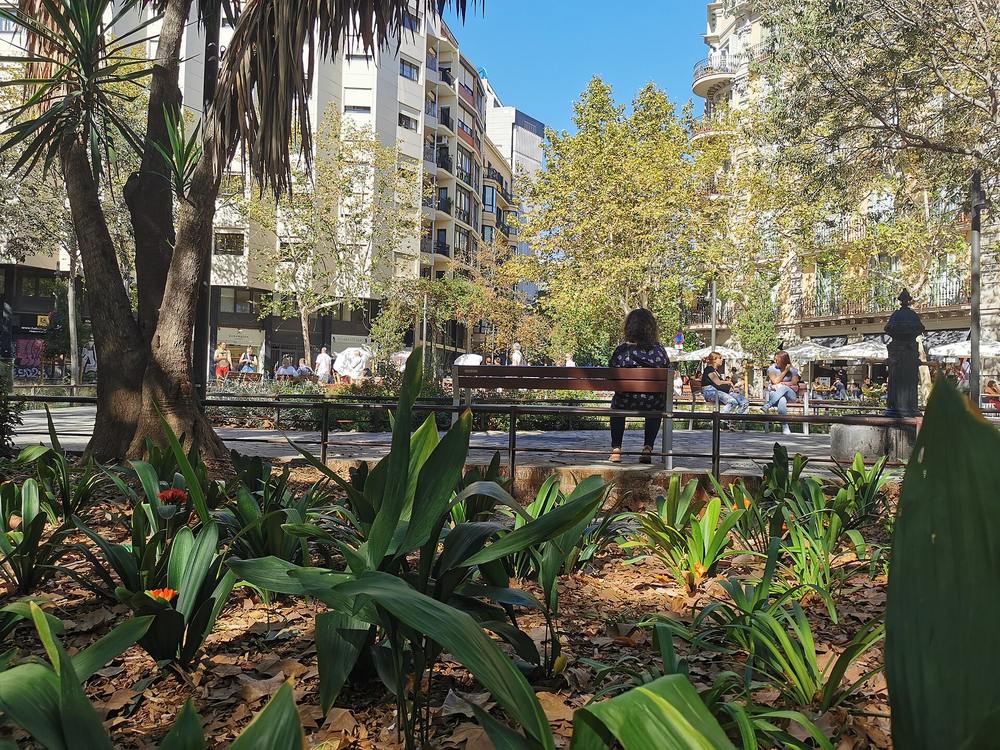
In Sant Antoni a neighbourhood steering group formed in February 2017 shaped the superblock with the council; the first phase, around the renovated Sant Antoni Market, was completed in May 2018, creating a 1,800 m2 square and about 5,000 m2 of pedestrian space; a later phase brought the total recovered pedestrian space to 23,709 m2. The ASPB lists Sant Antoni (2018) and Horta (2019) among the evaluated superblocks.53
- 2020–2021
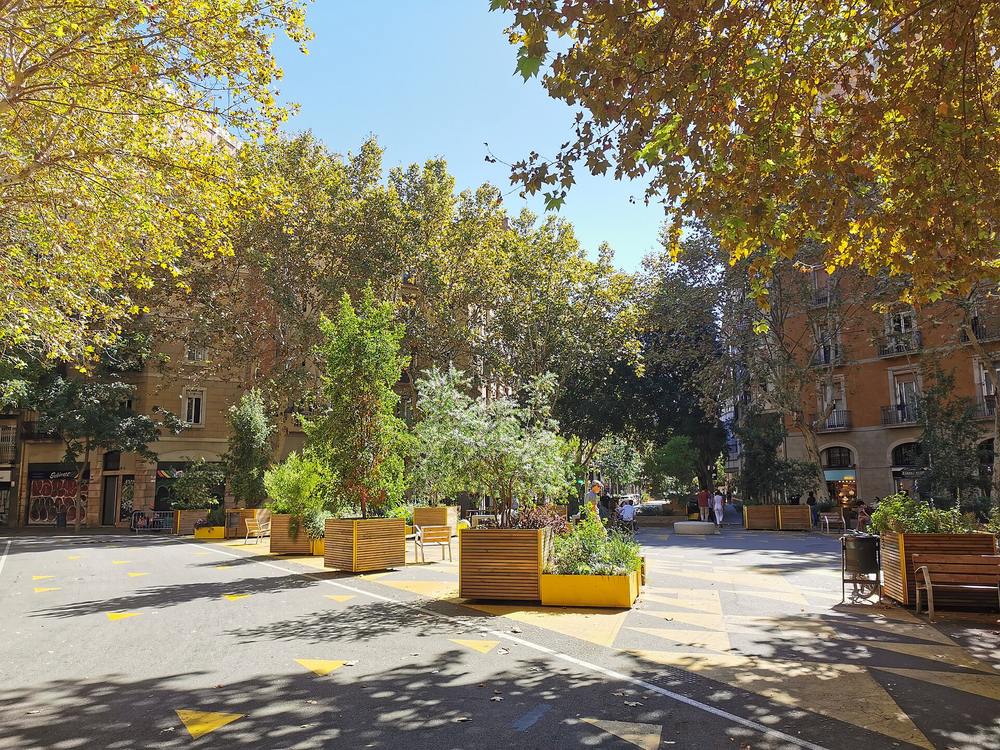
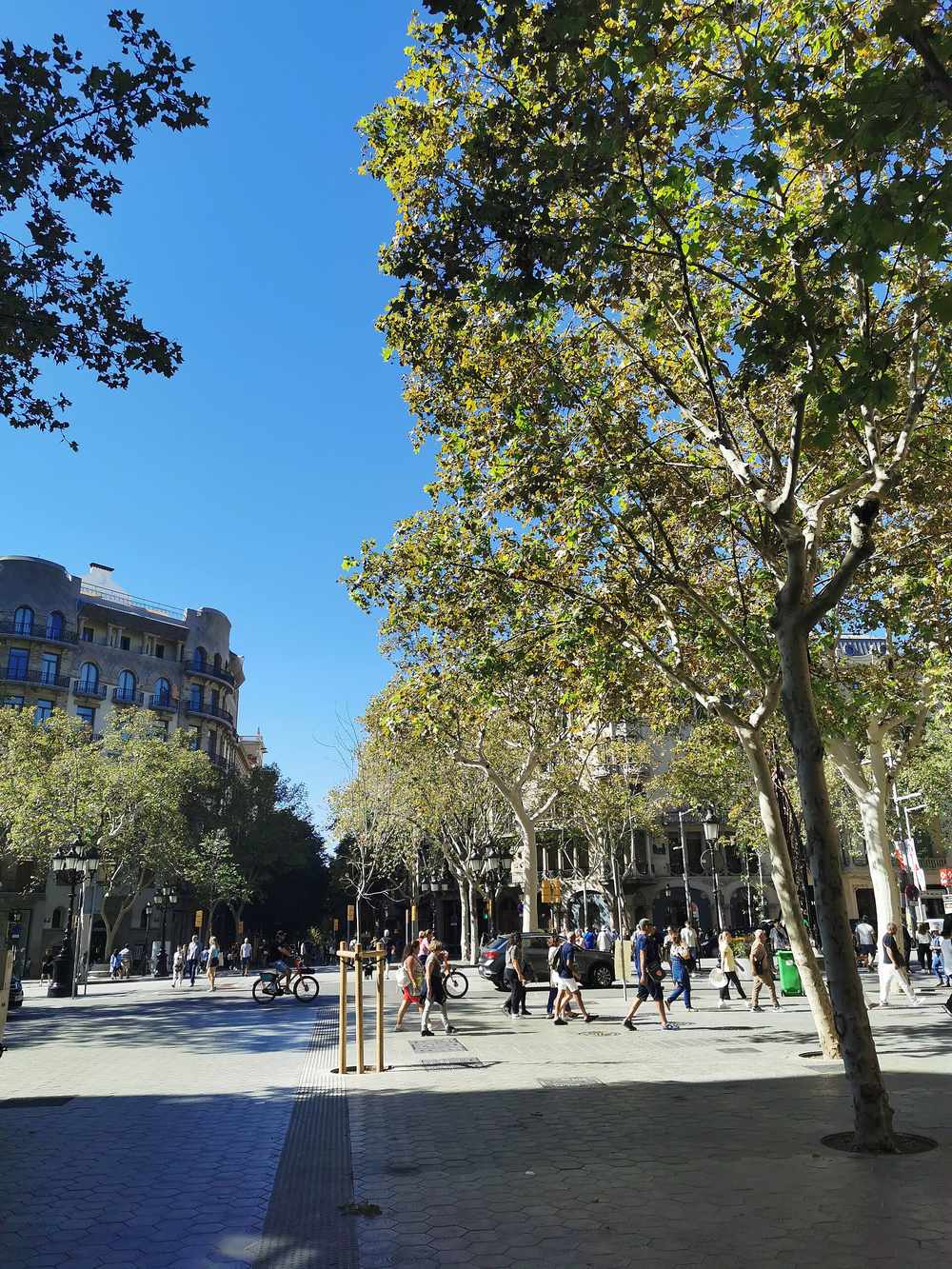
The council scaled the programme up as 'Superilla Barcelona' for the Eixample (Cerdà grid), with a 2030 aim of 21 green hubs and 21 squares (33.4 ha of pedestrian areas, 6.6 ha of urban green space) and a green hub or square within 200 m of every resident. Two design competitions, with 40 entries for green hubs and 46 for squares, were decided in March 2021; the first-placed green hub team was to draft a common public space model with the other three winners.678
- 2021
The Public Health Agency of Barcelona (ASPB) evaluation 'Salut als carrers' of the Sant Antoni, Poblenou and Horta superblocks reported, per WHO, a 25% decrease in NO2 and 17% decrease in PM10 around Sant Antoni market, and perceived gains in well-being and reduced noise.1
- 2022–2023
Executive projects for the four green hubs (Consell de Cent, Girona, Rocafort, Comte Borrell) and four squares were put on public exhibition until early April 2022; the municipal company BIMSA tendered the works in 10 lots, and works-start sessions for residents were held in September 2022. The 2021 timetable aimed to complete works in the first quarter of 2023; Commons photographs show the Consell de Cent green hub in use by September 2023.9107
- 2025
The High Court of Justice of Catalonia (TSJC) dismissed the city's appeal and confirmed a first-instance ruling (Contentious-Administrative Court No. 5 of Barcelona) annulling the municipal agreement for the Consell de Cent green hub between Casanova and Bruc, including the Enric Granados square, holding that the change of the street's function required a modification of the Metropolitan General Plan (PGM). The decision carried a dissenting opinion.11



Approvals and legal steps
- 2016 City government measure (mesura de govern) 'Omplim de vida els carrers. La implantació de les Superilles a Barcelona' approved in 2016 (May 2016 per WHO), establishing the programme.132
- 2022 Executive redevelopment projects for the Eixample green hubs and squares placed on public exhibition (until 6 and 8 April 2022) with notices in the provincial gazette (BOPB); a legal report covered BIMSA's tender of the works in 10 lots (March 2022).9
- 2025 TSJC confirmed the annulment of the municipal agreement for the Consell de Cent green hub (Casanova–Bruc section and Enric Granados square), finding that a PGM modification was required.11
- not stated The council states that the 22@ modification of the Metropolitan General Plan incorporates the green hubs and traffic calming planned under the Superblocks programme in Sant Martí.4
Funding
- 2021 Barcelona City Council announced an investment of €37.8 million during the 2019–2023 term of office for the first Eixample transformation: €32.8 million for the four green hubs and €5 million for the four squares.8
- 2022 Works were tendered by the municipal company Barcelona d'Infraestructures Municipals, S.A. (BIMSA) in 10 lots.9
People
- Barcelona City Council (Ajuntament de Barcelona), Àrea d'Ecologia Urbana Client and promoter of the programme
- Salvador Rueda Proposed the Superblock concept from the 1980s (per WHO)
- Barcelona Superblock Technical Office, Chief Architect's Office (Gerència de l'Arquitecte en Cap) Managed and coordinated the Eixample green hub model
- BIMSA (Barcelona d'Infraestructures Municipals, S.A.) Municipal company that tendered and managed the works
- UTE b67 Palomeras Arquitectes + Cierto Estudio ('Caminar des del centre') First place, green hub competition; drafting the Green Hub Public Space Model
- UTE Esteyco–Cáceres Arquitectura + Estudi Martí Franch Arquitectura del Paisatge + Nablabcn Studio Second place, green hub competition
- UTE González Cavia y Cabrera + Fabric Office ('Giraverd') Third place, green hub competition
- UTE GPO Ingeniería y Arquitectura + Agence Ter + Ana Coello de Llobet ('Galeries de vida') Fourth place, green hub competition
- Estudi08014 Winner, Consell de Cent / Rocafort square ('El parlament de les espècies')
- Clara Solà-Morales + Albert Casas + Frederic Villagrasa Winners, Consell de Cent / Comte Borrell square ('L'illa de les illes')
- GPO Ingeniería y Arquitectura + Land Lab Winners, Consell de Cent / Enric Granados square ('Jardín ILLA')
- Under Project Lab + BOPBA Arquitectura Winners, Consell de Cent / Girona square ('Superescocell')
- Agència de Salut Pública de Barcelona (ASPB) Health evaluation 'Salut als carrers' of three superblocks
Sources for this page
- World Health Organization, Barcelona: using urban design to improve urban health
- Ajuntament de Barcelona, Superblocks (Superilles) programme home page
- Agència de Salut Pública de Barcelona, Salut als carrers: avaluació de l'efecte en salut de les superilles (infographic)
- Ajuntament de Barcelona, Districte de Sant Martí (Superilla Poblenou documents)
- Ajuntament de Barcelona, Superilla de Sant Antoni
- Ajuntament de Barcelona, Superilla Eixample: green streets and squares
- Ajuntament de Barcelona, Resolution of the Superilla Barcelona ideas competitions
- Ajuntament de Barcelona, The Barcelona Superblocks programme starts to take shape (press kit, 3 March 2021)
- Ajuntament de Barcelona, Documents (Superilla Barcelona technical and legal documents)
- Ajuntament de Barcelona, Oficina Tècnica Superilla BCN, Presentació obres eixos verds, Dreta de l'Eixample (14.09.2022)
- Consejo General del Poder Judicial, TSJ Cataluña press office, El TSJ de Cataluña confirma la sentencia contra el eje verde de la calle Consell de Cent de Barcelona
- Wikidata, Barcelona (Q1492)
Researched on 2026-11-19 from the sources listed; a fact that could not be confirmed in a source was left out. Pictures are public domain or under an open licence, credited as their file page asks.
The question it brings · interpretation
If through traffic were taken out of the streets around this site, what everyday uses could the recovered space hold, and how would you find out what residents want?
Each question is Field Method’s interpretation, not a claim made by the source.
The date
Barcelona City Council government measure 'Omplim de vida els carrers' adopted May 2016; first superblock introduced 2016 (WHO). Salvador Rueda proposed the idea in the 1980s.